Apple Reportedly Working on 3D Sensor System for Rear Camera in 2019 iPhones
Apple is developing 3D depth sensing technology for the rear-facing cameras in its 2019 iPhones, according to a new report by Bloomberg on Tuesday. The 3D sensor system will be different to the one found in the iPhone X's front-facing camera, and is said to be the next big step in turning the smartphone into a leading augmented reality device.
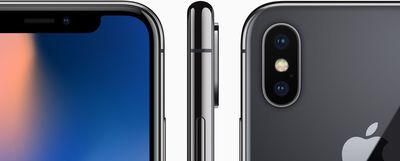
Apple is evaluating a different technology from the one it currently uses in the TrueDepth sensor system on the front of the iPhone X, the people said. The existing system relies on a structured-light technique that projects a pattern of 30,000 laser dots onto a user's face and measures the distortion to generate an accurate 3D image for authentication. The planned rear-facing sensor would instead use a time-of-flight approach that calculates the time it takes for a laser to bounce off surrounding objects to create a three-dimensional picture of the environment.
The existing TrueDepth camera would continue to be used in the front-facing camera of future iPhones in order to power Face ID, while the new system would bring the more advanced "time-of-flight" 3D sensing capability to the rear camera, according to the sources cited. Discussions with manufacturers are reportedly already underway, and include Infineon, Sony, STMicroelectronics, and Panasonic. Testing is said to be still in the early stages, and could end up not being used in the phones at all.
With the release of iOS 11, Apple introduced the ARKit software framework that allows iPhone developers to build augmented reality experiences into their apps. The addition of a rear-facing 3D sensor could theoretically increase the ability for virtual objects to interact with environments and enhance the illusion of solidity.
Apple was reportedly beset with production problems when making the sensor in the iPhone X's front-facing camera, because the components used in the sensor array have to be assembled with a very high degree of accuracy. According to Bloomberg, while the time-of-flight technology uses a more advanced image sensor than the existing one in the iPhone X, it does not require the same level of precision during assembly. That fact alone could make a rear-facing 3D sensor easier to produce at high volume.
Late last month, oft-reliable KGI Securities analyst Ming-Chi Kuo claimed that Apple is unlikely to expand its front-facing 3D sensing system to the rear-facing camera module on iPhones released in 2018. Kuo said the iPhone X's 3D sensing capabilities are already at least one year ahead of Android smartphones, therefore he believes Apple's focus with next year's iPhone models will be ensuring an on-time launch with adequate supply.
Popular Stories
Macworld's Filipe Espósito today revealed a handful of features that Apple is allegedly planning for iOS 26.4, iOS 27, and even iOS 28.
The report said the features are referenced within the code for a leaked internal build of iOS 26 that is not meant to be seen by the public. However, it appears that Espósito and/or his sources managed to gain access to it, providing us with a sneak peek...
Apple seeded the second iOS 26.2 Release Candidate to developers earlier this week, meaning the update will be released to the general public very soon.
Apple confirmed iOS 26.2 would be released in December, but it did not provide a specific date. We expect the update to be released by early next week.
iOS 26.2 includes a handful of new features and changes on the iPhone, such as a new...
Apple today released iOS 26.2, the second major update to the iOS 26 operating system that came out in September, iOS 26.2 comes a little over a month after iOS 26.1 launched. iOS 26.2 is compatible with the iPhone 11 series and later, as well as the second-generation iPhone SE.
The new software can be downloaded on eligible iPhones over-the-air by going to Settings >...
Apple today released new firmware designed for the AirPods Pro 3 and the prior-generation AirPods Pro 2. The AirPods Pro 3 firmware is 8B30, up from 8B25, while the AirPods Pro 2 firmware is 8B28, up from 8B21.
There's no word on what's include in the updated firmware, but the AirPods Pro 2 and AirPods Pro 3 are getting expanded support for Live Translation in the European Union in iOS...
Apple today released macOS Tahoe 26.2, the second major update to the macOS Tahoe operating system that came out in September. macOS Tahoe 26.2 comes five weeks after Apple released macOS Tahoe 26.1.
Mac users can download the macOS Tahoe update by using the Software Update section of System Settings.
macOS Tahoe 26.2 includes Edge Light, a feature that illuminates your face with soft...
The AirTag 2 will include a handful of new features that will improve tracking capabilities, according to a new report from Macworld. The site says that it was able to access an internal build of iOS 26, which includes references to multiple unreleased products.
Here's what's supposedly coming:
An improved pairing process, though no details were provided. AirTag pairing is already...
Apple today released iPadOS 26.2, the second major update to the iPadOS 26 operating system released in September. iPadOS 26.2 comes a month after iPadOS 26.1.
The new software can be downloaded on eligible iPads over-the-air by going to Settings > General > Software Update.
iPadOS 26.2 continues with the multitasking improvements that were added with iPadOS 26.1. You can now drag and...
Apple today released iOS 26.2, iPadOS 26.2, and macOS 26.2, all of which introduce new features, bug fixes, and security improvements. Apple says that the updates address over 20 vulnerabilities, including two bugs that are known to have been actively exploited.
There are a pair of WebKit vulnerabilities that could allow maliciously crafted web content to execute code or cause memory...