

The first reviews of the iPhone 17e were published today by selected publications and YouTube channels, ahead of the device launching on Wednesday.
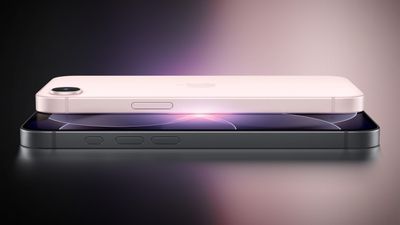
iPhone 17e features the same overall design as the iPhone 16e, but it gained Apple's A19 chip, MagSafe for magnetic wireless charging and magnetic accessories, and Apple's second-generation C1X cellular modem. In the U.S., the iPhone 17e starts at the same $599 as the iPhone 16e did, but it has a doubled 256GB of base storage.
The Verge's Allison Johnson recommended that customers purchase the standard iPhone 17 for an extra $200 over the iPhone 17e, if they can afford to. The standard iPhone 17 has been very popular, and it offers some features the iPhone 17e lacks, including a 120Hz ProMotion display, a Dynamic Island, and an extra Ultra Wide rear camera.
If you do opt for the iPhone 17e, though, MagSafe and the 256GB of base storage are the two key upgrades over the iPhone 16e.
CNN Underscored's Mike Andronico called MagSafe a "huge" addition:
While the iPhone 17e looks and feels just like last year's model, there's one huge change under the hood: MagSafe support. Apple's latest entry level phone works with the wide ecosystem of magnetic accessories out there, including MagSafe wallets, MagSafe battery packs and MagSafe charging stands. It's been so nice being able to plop my iPhone 17e on my Belkin Boost Charge stand while I'm at my desk and snap on my Baseus PicoGo battery pack when I'm on the go, two major conveniences I often have to give up when testing a cheaper phone. MagSafe allows for twice the wireless charging speed at 15W versus 7.5W, and while Google just joined the party with its similar PixelSnap tech, you won't find that feature on the new $500 Google Pixel 10a.
Google's budget Pixel 10a smartphone lacks an equivalent MagSafe feature.
iPhone 17e benchmarks already surfaced last week, revealing that the device's A19 chip is up to 15% faster than the iPhone 16e's A18 chip and unsurprisingly on par with the standard iPhone 17. In other words, performance is totally fine.
iPhone 17e features Apple's latest C1X modem for cellular connectivity. Apple says the C1X is up to twice as fast as the C1 modem in the iPhone 16e.
On AT&T's network in New Jersey, PCMag's Eric Zeman said the iPhone 17e achieved a peak download speed of 419 Mbps, but he did not test any other devices for comparison. In a study published in September, Ookla said the iPhone 16e achieved a median download speed of 169 Mbps on AT&T, so it seems like twice-as-fast 5G is roughly accurate.
CNET, Engadget, and WIRED also shared iPhone 17e reviews, among others.



















Top Rated Comments
Next time you're in a Starbucks or a bar or on public transport, look around you at all the people using iPhones and ask yourself how many of those would care about or even be aware of ProMotion displays or Dynamic Islands. If I told my wife that instead of buying a brand new 17e for her I was spending an extra 33% on a 17 or buying a refurbished 15 Pro for the same price just so she could have features she didn't care about, she'd justifiably ask me why.
But doubting many in the market for a 17e care much about CPU speed. Even if they did, the scores aren't that far off on the A19 pro. Now if they are doing something intense in Metal, that would make a difference, but still doubting most in this market are.
I daily drive a 13 Pro and a 17 Pro. In everything but my photo / video editing tools, or when I am doing 3D modeling in Matterport, the basic speed of both phones is quite similar that I hardly even notice. Compared to the previous 2 scores shared, my 13 pro should be in the trash, but honestly still does good for even some high CPU loading applications.
Pixel 10a
* has a larger screen
* has a full screen (no notch)
* has 120hz refresh
* MUCH higher nits (screen brightness) 2000 with 3000 peak
* Additional ultra wide camera
* USB 3.2 speeds (Apple only supports USB-2 @ 480Mb/s) (WHY DOES APPLE THROTTLE THIS PORT!?)
* 7 years of updates (Apple doesn't list but will likely be the same)
* $100 less (Pixel 10a does have less starting & overall storage)
I get that people wanting Apple's ecosystem will not consider Android regardless of who makes the device. There are differences in the ecosystem. I also get that the 17e has a far faster processor as compared to Tensor.
The point of my comparison is the fact that you get a fair bit of kit for less money (this is just one example) in other areas. Perhaps there is more economics to it on the side of Apple manufacturing, but why put in an A19 processor when the A18 is still in production (even better, maybe use culled copies from the Neo or regular iPhone 16)?