Over 2,000 Participants Received Irregular Heart Rhythm Notification in Apple Watch Study

Stanford Medicine researchers presented their findings of the Apple Heart Study at the American College of Cardiology's 68th Annual Scientific Session and Expo in New Orleans today, as noted by Apple in a press release.
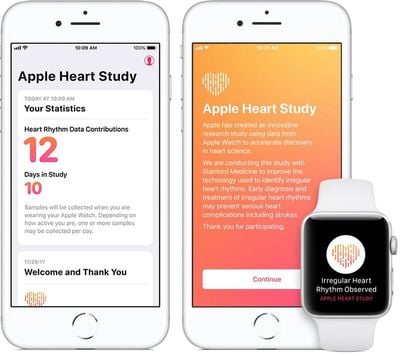
apple heart study
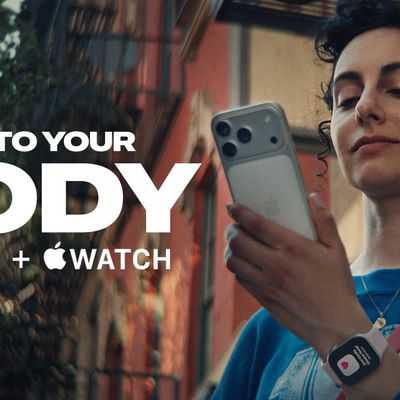
Apple and Stanford created the study to evaluate the Apple Watch's irregular heart rhythm notification feature, which occasionally checks the wearer's heart rhythm in the background and sends a notification if an irregular heart rhythm appears to be suggestive of atrial fibrillation.

419,093 people across the United States participated in the study. As part of the study, if an irregular heart rhythm was identified, participants received a notification on their Apple Watch and iPhone, a phone consultation with a doctor, and an ECG patch for additional monitoring.

Study results showed 0.5 percent of participants - approximately 2,095 people - received an irregular heart rhythm notification. Apple says "many participants sought medical advice following their irregular rhythm notification."

Apple COO Jeff Williams:

We are proud to work with Stanford Medicine as they conduct this important research and look forward to learning more about the impact of Apple Watch alongside the medical community. We hope consumers will continue to gain useful and actionable information about their heart health through Apple Watch.

Apple announced the Heart Study in collaboration with Stanford back in November 2017 and stopped accepting new participants in August 2018.

Related Roundup: Apple Watch 11
Buyer's Guide: Apple Watch (Buy Now)

Popular Stories

iOS 26

iOS 26.4 and iOS 27 Features Revealed in New Leak

Friday December 12, 2025 10:56 am PST by
Macworld's Filipe Espósito today revealed a handful of features that Apple is allegedly planning for iOS 26.4, iOS 27, and even iOS 28. The report said the features are referenced within the code for a leaked internal build of iOS 26 that is not meant to be seen by the public. However, it appears that Espósito and/or his sources managed to gain access to it, providing us with a sneak peek...
apple beta 26 lineup

Apple Leak Confirms Work on Foldable iPhone, AirTag 2, and Dozens More Devices

Monday December 15, 2025 2:05 pm PST by
Last week, details about unreleased Apple devices and future iOS features were shared by Macworld. This week, we learned where the information came from, plus we have more findings from the leak. As it turns out, an Apple prototype device running an early build of iOS 26 was sold, and the person who bought it shared the software. The OS has a version number of 23A5234w, and the first...
Apple Logo Top Half

Early iOS 26 Software Leak Uncovers Dozens of Upcoming Apple Features

Monday December 15, 2025 3:05 pm PST by
Software from an iPhone prototype running an early build of iOS 26 leaked last week, giving us a glimpse at future Apple devices and iOS features. We recapped device codenames in our prior article, and now we have a list of some of the most notable feature flags that were found in the software code. In some cases, it's obvious what the feature flags are referring to, while some are more...
Apple Foldable Thumb

Leak Reveals Foldable iPhone Details

Monday December 15, 2025 9:09 am PST by
The first foldable iPhone will feature a series of design and hardware firsts for Apple, according to details shared by the Weibo leaker known as Digital Chat Station. According to a new post, via machine translation, Apple is developing what the leaker describes as a "wide foldable" device, a term used to refer to a horizontally oriented, book-style foldable with a large internal display....
iOS 26

Apple Releases iOS 26.2 With Alarms for Reminders, Lock Screen Changes, Enhanced Safety Alerts and More

Friday December 12, 2025 10:10 am PST by
Apple today released iOS 26.2, the second major update to the iOS 26 operating system that came out in September, iOS 26.2 comes a little over a month after iOS 26.1 launched. ‌iOS 26‌.2 is compatible with the ‌iPhone‌ 11 series and later, as well as the second-generation ‌iPhone‌ SE. The new software can be downloaded on eligible iPhones over-the-air by going to Settings >...
iOS 26

iOS 26.2 Coming Soon With These 8 New Features on Your iPhone

Thursday December 11, 2025 8:49 am PST by
Apple seeded the second iOS 26.2 Release Candidate to developers earlier this week, meaning the update will be released to the general public very soon. Apple confirmed iOS 26.2 would be released in December, but it did not provide a specific date. We expect the update to be released by early next week. iOS 26.2 includes a handful of new features and changes on the iPhone, such as a new...
macOS Tahoe 26 Thumb

Apple Releases macOS Tahoe 26.2 With Edge Light

Friday December 12, 2025 10:08 am PST by
Apple today released macOS Tahoe 26.2, the second major update to the macOS Tahoe operating system that came out in September. macOS Tahoe 26.2 comes five weeks after Apple released macOS Tahoe 26.1. Mac users can download the macOS Tahoe update by using the Software Update section of System Settings. macOS Tahoe 26.2 includes Edge Light, a feature that illuminates your face with soft...
airpods max 2024 colors

AirPods Max 2 Likely to Offer These 10 New Features

Monday December 15, 2025 7:41 am PST by
Apple released the AirPods Max on December 15, 2020, meaning the over-ear headphones launched five years ago today. While the AirPods Max were updated with a USB-C port and new color options last year, followed by support for lossless audio and ultra-low latency audio this year, the headphones lack some of the features that have been introduced for newer generations of the regular AirPods and the ...

Top Rated Comments

GubbyMan Avatar
88 months ago
So what did this lead to? 0.5% got the notification and then what? Did they all really have irregular heart rhythm or were there false positives?
Score: 31 Votes (Like | Disagree)
ThunderSkunk Avatar
88 months ago
A couple times a month I get a few dropped heartbeats and some fluttering around for a bit while I wonder if this is finally it. But every time, it ends in disappointment. I still have to get up the next day and go to work to prop up this barbaric culture for absolutely no good reason.
Score: 18 Votes (Like | Disagree)
DoctorTech Avatar
88 months ago
No medical screening test is 100% accurate. Early pregnancy tests are about 99% accurate. Even mammogram screening for breast cancer is only 87% accurate https://ww5.komen.org/BreastCancer/AccuracyofMammograms.html

Most people in the medical community agree it is better to have a false positive than a false negative because a false negative would discourage someone from seeking medical treatment and could ultimately lead to worse effects than someone seeking medical treatment for a condition they do not have.

For such a new, low cost, and non-intrusive device, I think the results of this study are actually pretty amazing.
Score: 12 Votes (Like | Disagree)
KPandian1 Avatar
88 months ago
Irregular rhythm happens everyday, even by narrow medical definition; there is variation even with breathing.

The irregularity detected here is reported "if an irregular heart rhythm appears to be suggestive of atrial fibrillation." The software is setup by a medical team with oversight to eliminate the daily variations - A Fib is characteristically different. Even on a 12-lead ECG with Holter monitoring, the interpretation is physician based, preferably a cardiologist.

So, if 200-20 or even 2 of these detected were found with real atrial fibrillation rhythm, it is a win; these are from people with no known heart problems.

The worst a false positive does is send someone for further rhythm monitoring by a pro - worth the hassle.

The first post is sarcasm.
Score: 11 Votes (Like | Disagree)
Khedron Avatar
88 months ago
So what did this lead to? 0.5% got the notification and then what? Did they all really have irregular heart rhythm or were there false positives?
34% were confirmed to have atrial fibrillation with a follow-up.

Not all the other 66% would be false positive since it's an intermittent condition.
Score: 9 Votes (Like | Disagree)
kpeex Avatar
88 months ago
So what did this lead to? 0.5% got the notification and then what? Did they all really have irregular heart rhythm or were there false positives?
I enrolled on the first day that the AHS app was available to the public. From the app, I had 3,144 data contributions in 459 days. As info, I cycled about 6,000 miles during that period, probably about half those days. My heart rate normally goes way up when cycling. RHR tends to be kind of low. I received an "Irregular Heart Rhythm Observed" notification about 45 days into the study:

* I initiated an in-app video call to an AHS cardiologist using the direct link on the notification that popped up. She interviewed me for about 30 minutes. During the interview, she discussed the study as having flagged me for single digit number of SVT events during five different 60-second measurement periods. (Supra-ventricular Tachycardia)
* They overnighted a 7-day ambulatory ECG monitor that I returned at the end of the week.
* When the results were ready, they notified me and sent another in-app video call link.
* A second video conference explained the results -- a few more instances of SVT detected. She recommended that I follow-up with a cardiologist, who was provided the monitor results. I also got pdfs of all records.
* I went to a locally recommended cardiologist, who discussed the SVT events that the watch and monitor picked up.
* He recommended I have an echocardiogram done to establish a baseline, which I did.
* There was a follow-up to discuss the results.

I guess it wasn't a false positive and it wasn't A-fib. The cardiologist seemed surprised that a fitness tracker caught it.
Score: 9 Votes (Like | Disagree)