As rumored, Steve Jobs announced today at the Apple Worldwide Developers Conference that the Macintosh will make a transition to Intel processors.
Jobs reviewed the two previous major transitions, from Motorola 680x0 processors to the PowerPC in 1994 thru 1996 (before Steve Jobs was back at the helm), and from Mac OS 9 to Mac OS X in 2001 through 2003. Saying "It's time for a third transition," he explained that the need for the change was more than just the inability to deliver a 3.0GHz Power Mac, as he promised 2 years ago, but that Intel offers increased performance AND reduced power consumption ("Intel chips runs cooler"), a critical factor for PowerBooks, and an exceptional "roadmap" into 2006 and beyond.
He said that Mac OS X has been living a secret double life for the past five years (see Marklar rumor) and gave a demonstration. The design for Mac OS X has always been processor independent and cross-platform capable by design. The technology to let existing PowerPC applications run on Intel is named Rosetta and performs dynamic translation transparent to users (see QuickTransit from Transitive).
Mac OS on Intel is to be given to developers (ADC "Select" and "Premier" members) now and to customers "this time next year." The transition will be completed in less than 2 years, by the end of 2007. Dashboard widgets, scripts, and Java programs do not need porting. With Xcode 2.1 (out today and distributed at the Keynote), developers can make a "tweak" and recompile for Cocoa applications, and port Carbon applications in a matter of weeks. Mathematica was ported in 2 hours, although the porting team had direct support from Apple. A universal version of MS Office is coming. Photoshop and its plug-ins run with typical performance but take longer to load.All demonstrations during the Keynote were performed on a 3.6GHz Pentium 4, to the surprise of many in the audience.
Tuesday February 3, 2026 7:47 am PST by Joe Rossignol
We are still waiting for the iOS 26.3 Release Candidate to come out, so the first iOS 26.4 beta is likely still at least a week or two away. Following beta testing, iOS 26.4 will likely be released to the general public in March or April.
Below, we have recapped known or rumored iOS 26.3 and iOS 26.4 features so far.
iOS 26.3
iPhone to Android Transfer Tool
iOS 26.3 makes it easier...
Sunday February 1, 2026 12:31 pm PST by Joe Rossignol
The calendar has turned to February, and a new report indicates that Apple's next product launch is "imminent," in the form of new MacBook Pro models.
"All signs point to an imminent launch of next-generation MacBook Pros that retain the current form factor but deliver faster chips," Bloomberg's Mark Gurman said on Sunday. "I'm told the new models — code-named J714 and J716 — are slated...
Tuesday February 3, 2026 8:55 am PST by Joe Rossignol
In 2022, Apple introduced a new Apple Home architecture that is "more reliable and efficient," and the deadline to upgrade and avoid issues is fast approaching.
In an email this week, Apple gave customers a final reminder to upgrade their Home app by February 10, 2026. Apple says users who do not upgrade may experience issues with accessories and automations, or lose access to their smart...
Sunday February 1, 2026 10:08 am PST by Joe Rossignol
Last year, Apple launched CarPlay Ultra, the long-awaited next-generation version of its CarPlay software system for vehicles. Nearly nine months later, CarPlay Ultra is still limited to Aston Martin's latest luxury vehicles, but that should change fairly soon.
In May 2025, Apple said many other vehicle brands planned to offer CarPlay Ultra, including Hyundai, Kia, and Genesis.
In his Powe...
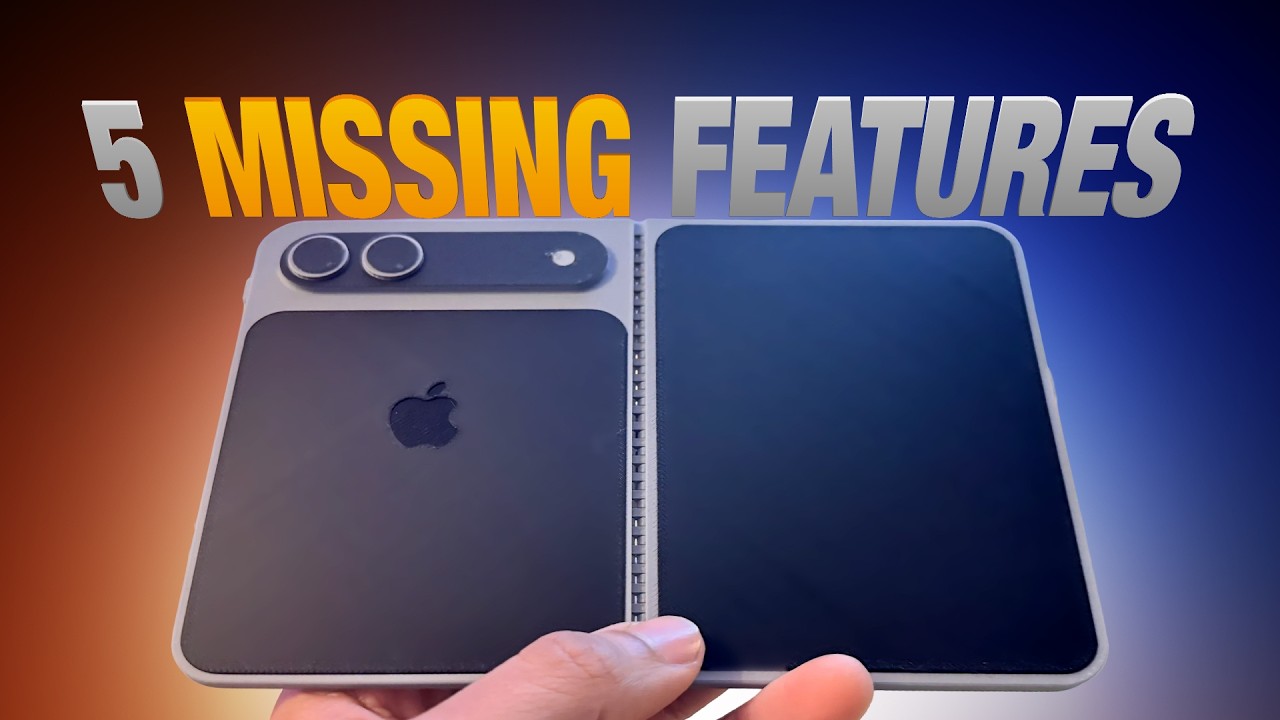
Apple's first foldable iPhone will feature relocated volume buttons, an all-black camera plateau, a smaller Dynamic Island, and more, according to design leaks from a known Weibo leaker.
The user known as "Instant Digital" today claimed to share several key details about the design of the foldable iPhone:
The volume buttons will be located on the top edge of the device, aligned to the...