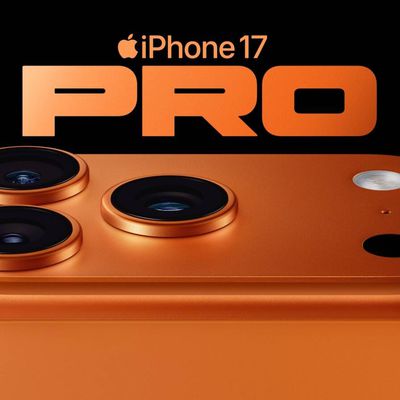
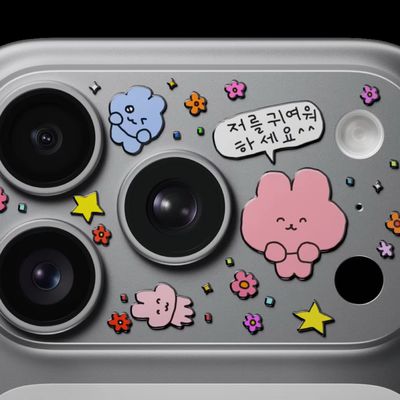
With the iPhone 17 Pro and 17 Pro Max, Apple introduced a new design for the rear of the device. Instead of a camera bump, we now have a camera plateau that spans almost the entire back of the iPhone. The camera plateau houses an upgraded camera system that includes a revamped Telephoto lens.
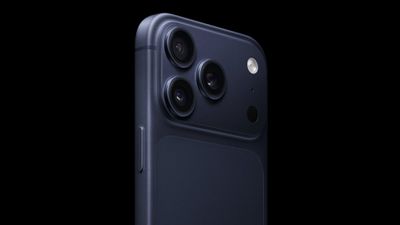
All three of the iPhone 17 Pro and Pro Max cameras are 48 megapixels, and there are five zoom options across the lenses.
Telephoto Lens
The 48-megapixel Fusion Telephoto lens is new, and an upgrade over the 12-megapixel Telephoto lens in the iPhone 16 Pro models. It supports 4x zoom, or a 100mm focal length equivalent. At 4x zoom, you can capture 48-megapixel images.
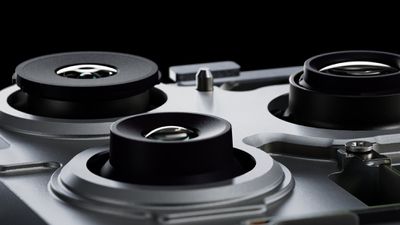
It also supports 8x zoom, or a 200mm focal length equivalent. 8x zoom images are limited to 12 megapixels. Apple says that the Telephoto sensor is 56 percent larger, allowing for improved performance in poor lighting conditions.
The Telephoto lens supports Hybrid Focus Pixels, 3D sensor-shift optical image stabilization and autofocus, and it has the tetraprism design that Apple introduced last year.
The 8x optical zoom can be expanded to 40x digital zoom. It doesn't quite match the 100x zoom that Samsung's smartphones are known for, but it does expand the zoom range compared to prior iPhones.
Wide Lens
The 48-megapixel wide-angle lens, or Fusion Main lens as Apple refers to it, hasn't changed much compared to the iPhone 16 Pro.
You can take 24-megapixel or 48-megapixel images at the standard 24mm focal length, or 12-megapixel 2x Telephoto images at a 48mm focal length.
Features include second-generation sensor-shift optical image stabilization, 100 percent Focus Pixels, and an f/1.78 aperture.
Ultra Wide-Angle Lens
Apple calls the 48-megapixel ultra wide lens the Fusion Ultra Wide. It has a 13mm focal length, an f/2.2 aperture, and a 120 degree field of view. It supports taking close-up 48-megapixel macro shots, and has support for what Apple calls Hybrid Focus Pixels.
LiDAR and Flash
At the right side of the camera plateau, there's an Adaptive True Tone Flash and LiDAR Scanner.
Other Camera Features
Other camera technology that Apple has introduced over the years is included.
- Photonic Engine - Combines the best pixels from a high-resolution image and an image optimized for light capture, producing a 24-megapixel image with detail sourced from an image twice the resolution. The Photonic Engine kicks in for low light images.
- Deep Fusion - Works in mid to low lighting conditions and brings out the texture and detail in the image. It improves images with medium lighting.
- Smart HDR 5 - Recognizes one or more people in a scene and optimizes contrast, lighting, and skin tones so everyone looks their best.
- Portrait images with Focus and Depth Control - You don't need to choose Portrait mode before capturing an image to get a portrait shot. You can just snap a photo, and if there's a person or a pet, depth information is collected and Portrait mode is enabled automatically with a blurred background. It works for Night mode, too.
- Portrait Lighting - Changes the lighting of Portrait mode photos with effects that include Natural, Studio, Contour, Stage, Stage Mono, and High-Key Mono.
- Night mode - Takes a series of images over a few seconds and aggregates them to allow for photography in extreme low lighting situations.
- Panorama - Captures panoramic shots that are up to 63 megapixels in size.
- Photographic Styles (including a new Bright option this year) - Photographic Styles are filters that you can apply before an image is captured, previewing them as you take a shot.
- Spatial photos and videos - Videos and photos captured in spatial mode can be viewed in 3D on the Vision Pro.
- ProRAW - A pro video recording option.
- Lens correction (for the Ultra Wide) - Eliminates distortion.
- Auto image stabilization - Corrects for camera shake.
- Burst mode - Allows a series of images to be captured all at once, which is good for high-action shots.
Video Capabilities
The iPhone 17 Pro models support recording 4K Dolby Vision video at up to 120 frames per second.
4K 120fps ProRes video recording is available with an external storage device attached, and the iPhone 17 Pro models support ProRes RAW recording, a new feature this year. There's also support for Apple Log 2 and Genlock video synchronization, pro features aimed at filmmakers.
Apple added a Dual Capture feature that records from the front and back cameras at the same time. Dual Capture supports up to 4K Dolby Vision recording at 30 frames per second.
Other video features that Apple has added over the years are also available.
- Cinematic mode up to 4K Dolby Vision at 30 fps for keeping the focus on the main subject while you move
- Action mode up to 2.8K Dolby Vision at 60 fps for enhancing stabilization to reduce shake
- Spatial video recording at 1080p at 30 fps, with spatial audio
- Academy Color Encoding System
- Macro video recording, including slo-mo and time-lapse
- 1080p Slo-mo support at up to 240 fps, or 4K Dolby Vision at 120 fps
- Time-lapse
- QuickTake
- Digital zoom up to 15x
- Cinematic video stabilization
- Continuous autofocus video
- Audio Mix and wind noise reduction
Front Camera
Apple added a new 18-megapixel Center Stage front-facing camera for selfies and video calls. It has an f/1.8 aperture, and as the name suggests, it supports Center Stage. Center Stage is the feature that keeps you in frame during video calls as you move around.
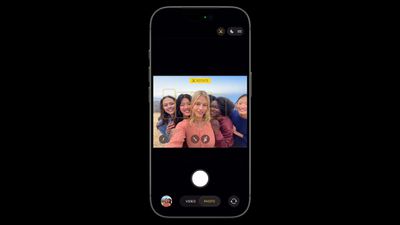
The updated front camera sensor is larger and it is square-shaped, which means more can fit in the frame than before. You can even take front-facing cameras in landscape or portrait mode without rotating your phone. Apple also improved stabilization when capturing video.
Dual Capture video works with both the front and rear cameras, so you can record a scene and your reaction at the same time.
Other iPhones
The iPhone 17 Pro models are the only devices that have the three-camera setup. The standard iPhone 17 has a dual-lens camera setup with wide and ultra-wide lenses, while the iPhone Air has a single-lens camera that's equivalent to the Main camera on the 17 Pro.