PSA: Google Authenticator's Cloud-Synced 2FA Codes Aren't End-to-End Encrypted

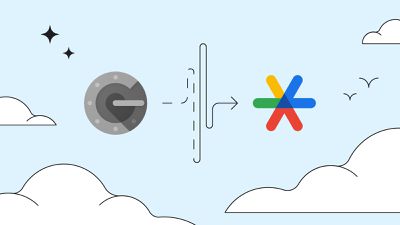
Earlier this week, Google updated its Authenticator app to enable the backup and syncing of 2FA codes across devices using a Google Account. Now an examination by Mysk security researchers has found that the sensitive one-time passcodes being synced to the cloud aren't end-to-end encrypted, leaving them potentially exposed to bad actors.
google authenticator
Prior to the integration of Google Account support, all codes in the Google Authenticator app were stored on device, which meant that if the device was lost, so too were the one-time passcodes, potentially causing loss of account access as well. But it seems that by enabling cloud-based syncing, Google has opened up users to a security risk of a different sort.

"We analyzed the network traffic when the app syncs the secrets, and it turns out the traffic is not end-to-end encrypted," said Mysk via Twitter. "This means that Google can see the secrets, likely even while they're stored on their servers. There is no option to add a passphrase to protect the secrets, to make them accessible only by the user."

"Secrets" is a term used to refer to private pieces of information that act as keys to unlock protected resources or sensitive information; in this case, one-time passcodes.

Mysk said that its tests found the unencrypted traffic contains a "seed" that's used to generate the 2FA codes. According to the researchers, anyone with access to that seed can generate their own codes for the same accounts and break in to them.

"If Google servers were compromised, secrets would leak," Mysk told Gizmodo. Since the QR codes involved with setting up two-factor authentication contain the name of the account or service, the attacker can also identify the accounts. "This is particularly risky if you're an activist and run other Twitter accounts anonymously," added the researchers.

Mysk subsequently advised users not to enable the Google account feature that syncs 2FA codes across devices and the cloud.


Responding to the warning, a Google spokesperson told CNET it had added the sync feature early for convenience's sake, but that end-to-end encryption is still on its way:

End-to-End Encryption (E2EE) is a powerful feature that provides extra protections, but at the cost of enabling users to get locked out of their own data without recovery. To ensure that we're offering a full set of options for users, we have also begun rolling out optional E2EE in some of our products, and we plan to offer E2EE for Google Authenticator in the future."

Until that happens, there are alternative services for syncing authentication codes across devices, such as Apple's own 2FA code generator and third-party apps like Authy.
Popular Stories

Aston Martin CarPlay Ultra Screen

Apple's CarPlay Ultra to Expand to These Vehicle Brands Later This Year

Sunday February 1, 2026 10:08 am PST by
Last year, Apple launched CarPlay Ultra, the long-awaited next-generation version of its CarPlay software system for vehicles. Nearly nine months later, CarPlay Ultra is still limited to Aston Martin's latest luxury vehicles, but that should change fairly soon. In May 2025, Apple said many other vehicle brands planned to offer CarPlay Ultra, including Hyundai, Kia, and Genesis. In his Powe...
Apple Logo Black

Apple Just Made Its Second-Biggest Acquisition Ever After Beats

Thursday January 29, 2026 10:07 am PST by
Apple today confirmed to Reuters that it has acquired Q.ai, an Israeli startup that is working on artificial intelligence technology for audio. Apple paid close to $2 billion for Q.ai, according to sources cited by the Financial Times. That would make this Apple's second-biggest acquisition ever, after it paid $3 billion for the popular headphone and audio brand Beats in 2014. Q.ai has...
Apple Logo Black

Apple's Next Launch is 'Imminent'

Sunday February 1, 2026 12:31 pm PST by
The calendar has turned to February, and a new report indicates that Apple's next product launch is "imminent," in the form of new MacBook Pro models. "All signs point to an imminent launch of next-generation MacBook Pros that retain the current form factor but deliver faster chips," Bloomberg's Mark Gurman said on Sunday. "I'm told the new models — code-named J714 and J716 — are slated...
14 inch MacBook Pro Keyboard

Apple Changes How You Order a Mac

Saturday January 31, 2026 10:51 am PST by
Apple recently updated its online store with a new ordering process for Macs, including the MacBook Air, MacBook Pro, iMac, Mac mini, Mac Studio, and Mac Pro. There used to be a handful of standard configurations available for each Mac, but now you must configure a Mac entirely from scratch on a feature-by-feature basis. In other words, ordering a new Mac now works much like ordering an...
Apple MacBook Pro M4 hero

New MacBook Pros Reportedly Launching Alongside macOS 26.3

Sunday February 1, 2026 5:42 am PST by
Apple is planning to launch new MacBook Pro models with M5 Pro and M5 Max chips alongside macOS 26.3, according to Bloomberg's Mark Gurman. "Apple's faster MacBook Pros are planned for the macOS 26.3 release cycle," wrote Gurman, in his Power On newsletter today. "I'm told the new models — code-named J714 and J716 — are slated for the macOS 26.3 software cycle, which runs from...

Top Rated Comments

icanhazmac Avatar
36 months ago
Shocking! /s

This, along with the privacy scorecard, makes this a hard pass.


Keep in mind, this is an authenticator app, what could it possibly need all that identifiable data for besides wholesale collection? This is basically spyware!

Attachment Image
Score: 16 Votes (Like | Disagree)
szw-mapple fan Avatar
36 months ago
Way top destroy the reputation of this service by launching early. End-to-end encryption for 2FA Codes is a must and should be ready on day one. This not only demonstrates that the service itself might be vulnerable but also that Google is not serious about security and encryption and only implementing it as kind of an afterthought.
Score: 11 Votes (Like | Disagree)
andrewxgx Avatar
36 months ago
so you can encrypt passwords with separate password, but cant encrypt 2FA seeds?
comedy gold
Score: 10 Votes (Like | Disagree)
mystery hill Avatar
36 months ago
iCloud Keychain is really good if you’re only using Apple devices - it auto fills and is end-to-end encrypted.
Score: 8 Votes (Like | Disagree)
sw1tcher Avatar
36 months ago

Shocking! /s

This, along with the privacy scorecard, makes this a hard pass.


Keep in mind, this is an authenticator app, what could it possibly need all that identifiable data for besides wholesale collection? This is basically spyware!
Wait until you see how much data is linked to you from this "wholesale collection" app :p

https://apps.apple.com/us/app/apple-music/id1108187390


Attachment Image
Score: 7 Votes (Like | Disagree)
szw-mapple fan Avatar
36 months ago

Wait until you see how much data is linked to you from this "wholesale collection" app :p

https://apps.apple.com/us/app/apple-music/id1108187390


To be fair, Apple Music is also a music store with social media features and provides personalized music recommendations. It needs to collect/store most of these kinds of info since it literally needs them to function. An authenticator app should require none of these things. If you look at Apple apps that don't need these data and compare them with similar apps in the same category, Apple's data collection is typically minimal.

For example,

Apple Mail:


Versus Gmail:


Attachment Image

Attachment Image
Score: 7 Votes (Like | Disagree)