Apple's long-rumored augmented reality (AR) headset project is set to bear its first fruit late next year with the launch of the first device carrying a pair of processors to support its high-end capabilities, according to a new research report from noted analyst Ming-Chi Kuo seen by MacRumors.
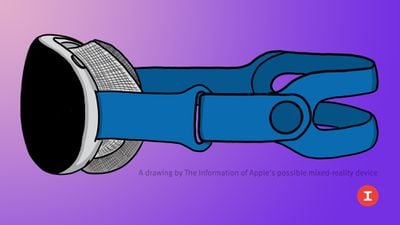
According to Kuo, the higher-end main processor is said to be similar to the M1 chip Apple introduced for its first set of Apple silicon Macs last year, while a lower-end processor will manage the sensor-related aspects of the device.
Kuo says the initial AR headset will be able to operate independently without needing to be tethered to a Mac or iPhone, and Apple is intending it to support a "comprehensive range of applications" with an eye toward replacing the iPhone within ten years.
We predict that Apple's AR headset to be launched in 4Q22 will be equipped with two processors. The higher-end processor will have similar computing power as the M1 for Mac, whereas the lower-end processor will be in charge of sensor-related computing.
The power management unit (PMU) design of the high-end processor is similar to that of M1 because it has the same level of computing power as M1.
In addition to AR, Kuo says the headset will also be able to support virtual reality (VR) experiences thanks to a pair of 4K Micro OLED displays from Sony, which require the computing horsepower of an M1-like chip.
Apple’s AR headset requires a separate processor as the computing power of the sensor is significantly higher than that of the iPhone. For example, the AR headset requires at least 6-8 optical modules to simultaneously provide continuous video see-through AR services to users. In comparison, an iPhone requires up to 3 optical modules running simultaneously and does not require continuous computing.
Last week, Kuo said that both the upcoming headset and the iPhone 14 coming next year will support Wi-Fi 6E technology, which offers the increased bandwidth and lower interference needed for AR and VR experiences.