Supreme Court Allows App Store Monopoly Lawsuit Against Apple to Proceed [Updated]

The U.S. Supreme Court on Monday ruled 5-4 against Apple in an anticompetitive case involving the App Store, allowing iPhone users to move forward with their class action lawsuit against the company, as first reported by CNBC.
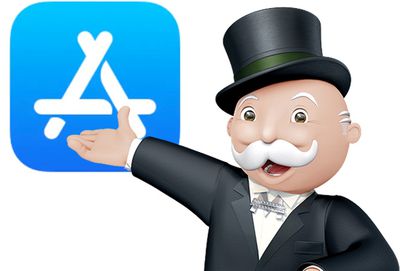
app store monopoly
From the Supreme Court's ruling:

In this case, however, several consumers contend that Apple charges too much for apps. The consumers argue, in particular, that Apple has monopolized the retail market for the sale of apps and has unlawfully used its monopolistic power to charge consumers higher-than competitive prices.

A claim that a monopolistic retailer (here, Apple) has used its monopoly to overcharge consumers is a classic antitrust claim. But Apple asserts that the consumer plaintiffs in this case may not sue Apple because they supposedly were not "direct purchasers" from Apple under our decision in Illinois Brick Co. v. Illinois, 431 U. S. 720.

We disagree. The plaintiffs purchased apps directly from Apple and therefore are direct purchasers under Illinois Brick. At this early pleadings stage of the litigation, we do not assess the merits of the plaintiffs' antitrust claims against Apple, nor do we consider any other defenses Apple might have. We merely hold that the Illinois Brick direct-purchaser rule does not bar these plaintiffs from suing Apple under the antitrust laws. We affirm the judgment of the U. S. Court of Appeals for the Ninth Circuit.

The lawsuit was filed in 2011 by a group of ‌iPhone‌ users who believe Apple violates federal antitrust laws by requiring apps to be sold through its ‌App Store‌, where it collects a 30 percent commission from all purchases, leading to inflated prices as developers pass on the cost of the commission to customers.

In other words, the ‌iPhone‌ users believe that apps would be priced lower outside of the ‌App Store‌, as Apple's 30 percent cut would not be baked in to prices.

The lawsuit was initially dismissed in 2013 by a California district court due to errors in the complaint, but the U.S. Court of Appeals for the Ninth Circuit revived the case in 2017. Apple then appealed with the Supreme Court.

From the start, Apple has argued that it doesn't set prices for paid apps, and that charging a 30 percent commission on the distribution of paid apps and in-app purchases does not violate antitrust laws in the United States. In 2017, the U.S. Department of Justice filed an amicus brief in support of Apple.

Update: Apple has issued a statement (via John Packzowski) regarding the decision:

Today's decision means plaintiffs can proceed with their case in District court. We're confident we will prevail when the facts are presented and that the App Store is not a monopoly by any metric.

We're proud to have created the safest, most secure and trusted platform for customers and a great business opportunity for all developers around the world. Developers set the price they want to charge for their app and Apple has no role in that. That vast majority of apps on the App Store are free and Apple gets nothing from them. The only instance where Apple shares in revenue is if the developer chooses to sell digital services through the App Store.

Developers have a number of platforms to choose from to deliver their software — from other apps stores, to Smart TVs to gaming consoles — and we work hard every day to make our store is the best, safest and most competitive in the world.

The Supreme Court's full ruling is embedded ahead.
Popular Stories

iOS 26

iOS 26.4 and iOS 27 Features Revealed in New Leak

Friday December 12, 2025 10:56 am PST by
Macworld's Filipe Espósito today revealed a handful of features that Apple is allegedly planning for iOS 26.4, iOS 27, and even iOS 28. The report said the features are referenced within the code for a leaked internal build of iOS 26 that is not meant to be seen by the public. However, it appears that Espósito and/or his sources managed to gain access to it, providing us with a sneak peek...
iOS 26

iOS 26.2 Coming Soon With These 8 New Features on Your iPhone

Thursday December 11, 2025 8:49 am PST by
Apple seeded the second iOS 26.2 Release Candidate to developers earlier this week, meaning the update will be released to the general public very soon. Apple confirmed iOS 26.2 would be released in December, but it did not provide a specific date. We expect the update to be released by early next week. iOS 26.2 includes a handful of new features and changes on the iPhone, such as a new...
iOS 26

Apple Releases iOS 26.2 With Alarms for Reminders, Lock Screen Changes, Enhanced Safety Alerts and More

Friday December 12, 2025 10:10 am PST by
Apple today released iOS 26.2, the second major update to the iOS 26 operating system that came out in September, iOS 26.2 comes a little over a month after iOS 26.1 launched. ‌iOS 26‌.2 is compatible with the ‌iPhone‌ 11 series and later, as well as the second-generation ‌iPhone‌ SE. The new software can be downloaded on eligible iPhones over-the-air by going to Settings >...
AirPods Pro Firmware Feature

Apple Releases New Firmware for AirPods Pro 2 and AirPods Pro 3

Thursday December 11, 2025 11:28 am PST by
Apple today released new firmware designed for the AirPods Pro 3 and the prior-generation AirPods Pro 2. The AirPods Pro 3 firmware is 8B30, up from 8B25, while the AirPods Pro 2 firmware is 8B28, up from 8B21. There's no word on what's include in the updated firmware, but the AirPods Pro 2 and AirPods Pro 3 are getting expanded support for Live Translation in the European Union in iOS...
macOS Tahoe 26 Thumb

Apple Releases macOS Tahoe 26.2 With Edge Light

Friday December 12, 2025 10:08 am PST by
Apple today released macOS Tahoe 26.2, the second major update to the macOS Tahoe operating system that came out in September. macOS Tahoe 26.2 comes five weeks after Apple released macOS Tahoe 26.1. Mac users can download the macOS Tahoe update by using the Software Update section of System Settings. macOS Tahoe 26.2 includes Edge Light, a feature that illuminates your face with soft...
AirTag 2 Mock Feature

Apple AirTag 2: Four New Features Found in iOS 26 Code

Thursday December 11, 2025 10:31 am PST by
The AirTag 2 will include a handful of new features that will improve tracking capabilities, according to a new report from Macworld. The site says that it was able to access an internal build of iOS 26, which includes references to multiple unreleased products. Here's what's supposedly coming: An improved pairing process, though no details were provided. AirTag pairing is already...
ipados 26 1 slide over

Apple Releases iPadOS 26.2 With Multitasking Improvements

Friday December 12, 2025 10:09 am PST by
Apple today released iPadOS 26.2, the second major update to the iPadOS 26 operating system released in September. iPadOS 26.2 comes a month after iPadOS 26.1. The new software can be downloaded on eligible iPads over-the-air by going to Settings > General > Software Update. iPadOS 26.2 continues with the multitasking improvements that were added with iPadOS 26.1. You can now drag and...
bug security vulnerability issue fix larry

Update Now: iOS 26.2 Fixes 20+ Security Vulnerabilities

Friday December 12, 2025 11:11 am PST by
Apple today released iOS 26.2, iPadOS 26.2, and macOS 26.2, all of which introduce new features, bug fixes, and security improvements. Apple says that the updates address over 20 vulnerabilities, including two bugs that are known to have been actively exploited. There are a pair of WebKit vulnerabilities that could allow maliciously crafted web content to execute code or cause memory...

Top Rated Comments

johnrlaporta Avatar
86 months ago
How ridiculous. If they stopped charging the 30%, the companies would just keep the price the same and pocket the 30% Who wouldn't?
Score: 46 Votes (Like | Disagree)
macjoshua Avatar
86 months ago
They can always buy an Android phone if they want a more open and potentially insecure way of getting apps.
Score: 45 Votes (Like | Disagree)
Rogifan Avatar
86 months ago
Good. It IS a monopoly.

As I've said repeatedly, it's not Apple's iPhone, it's MY iPhone. I should have the choice to install apps from whatever source I desire, and I shouldn't have to go through ridiculous machinations with Xcode every week to do it.
It’s not though. You’re basically buying a license to software that comes with an end user license agreement (EULA) which dictates what can and can’t be done with the software. It’s not a monopoly because one can easily buy something else.
Score: 44 Votes (Like | Disagree)
Victor Mortimer Avatar
86 months ago
Good. It IS a monopoly.

As I've said repeatedly, it's not Apple's iPhone, it's MY iPhone. I should have the choice to install apps from whatever source I desire, and I shouldn't have to go through ridiculous machinations with Xcode every week to do it.
Score: 36 Votes (Like | Disagree)
TimFL1 Avatar
86 months ago
Will be interesting to see how this plays out....
It wont. This will go nowhere, platform holders take cuts everywhere (console stores, Steam, Epic Store, literally any marketplace on earth does so to finance the delivery of said content).
30% is the average fee, it‘s ugly but everyone does it.

I, for one, am against having other places than the App Store for app distribution. One unified place to get your apps (securely and up-to-date) from beats out the mess you find on Android.
Score: 33 Votes (Like | Disagree)
Rogifan Avatar
86 months ago
No You can’t!
Because apple has a walled garden too. If You have a watch?
Again no one is personally forced to own any Apple product.
Score: 24 Votes (Like | Disagree)