Tim Cook Urges U.S. Congress to Pass Comprehensive Federal Privacy Legislation in Op-Ed - MacRumorsOpen MenuShow RoundupsShow Forums menuVisit ForumsOpen Sidebar
Skip to Content

Tim Cook Urges U.S. Congress to Pass Comprehensive Federal Privacy Legislation in Op-Ed

U.S. Senator Marco Rubio (R-FL) on Wednesday introduced the American Data Dissemination Act, legislation that would require the U.S. Federal Trade Commission to submit detailed recommendations for privacy requirements that Congress can impose on tech companies like Apple, Facebook, Google, and Twitter.
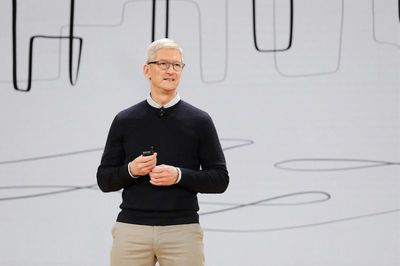
chicago tim cook
The bill is intended to address the lack of a single, comprehensive federal law regulating the collection and use of personal data in the United States with clear protections that consumers can understand and the FTC can enforce.

Well timed with the news, Apple CEO Tim Cook has penned an op-ed for Time Magazine calling on Congress to pass comprehensive federal privacy legislation in the United States. He also challenges companies to strip identifying information from customer data or avoid collecting it in the first place.

In the op-ed, Cook said he believes "data broker" companies that collect, package, and sell personal information should be required to register with the FTC and provide critical transparency information to the agency, and that consumers should have the power to easily access and delete that data if desired.

"Right now, all of these secondary markets for your information exist in a shadow economy that's largely ­unchecked," wrote Cook.

In 2014, the FTC published a report stating that "data brokers collect and store a vast amount of data on almost every U.S. household." Of the nine data brokers it examined, the FTC said one had a database with "information on 1.4 billion consumer transactions and over 700 billion aggregated data elements."

Cook's full op-ed was provided to MacRumors in advance:

In 2019, it's time to stand up for the right to privacy—yours, mine, all of ours. Consumers shouldn't have to tolerate another year of companies irresponsibly amassing huge user profiles, data breaches that seem out of control and the vanishing ability to control our own digital lives.

This problem is solvable—it isn't too big, too challenging or too late. Innovation, breakthrough ideas and great features can go hand in hand with user privacy—and they must. Realizing technology's potential ­depends on it.

That's why I and others are calling on the U.S. Congress to pass comprehensive federal privacy ­legislation—a landmark package of reforms that protect and empower the consumer. Last year, before a global body of privacy regulators, I laid out four principles that I believe should guide legislation:

First, the right to have personal data minimized. Companies should challenge themselves to strip identifying information from customer data or avoid collecting it in the first place. Second, the right to ­knowledge—to know what data is being collected and why. Third, the right to access. Companies should make it easy for you to access, correct and delete your personal data. And fourth, the right to data security, without which trust is impossible.

But laws alone aren't enough to ensure that individuals can make use of their privacy rights. We also need to give people tools that they can use to take action. To that end, here's an idea that could make a real difference.

One of the biggest challenges in protecting privacy is that many of the violations are invisible. For example, you might have bought a product from an online ­retailer—­something most of us have done. But what the retailer doesn't tell you is that it then turned around and sold or transferred information about your purchase to a "data broker"—a company that exists purely to collect your information, package it, and sell it to yet another buyer.

The trail disappears before you even know there is a trail. Right now, all of these secondary markets for your information exist in a shadow economy that's largely ­unchecked—out of sight of consumers, regulators, and lawmakers.

Let's be clear: you never signed up for that. We think every user should have the chance to say, "Wait a minute. That's my information that you're selling, and I didn't consent."

Meaningful, comprehensive federal privacy legislation should not only aim to put consumers in control of their data, it should also shine a light on actors trafficking in your data behind the scenes. Some state laws are looking to accomplish just that, but right now there is no federal standard protecting Americans from these practices. That's why we believe the Federal Trade Commission should establish a data-­broker clearinghouse, requiring all data brokers to register, enabling consumers to track the transactions that have bundled and sold their data from place to place, and giving users the power to delete their data on demand, freely, easily and online, once and for all.

As this debate kicks off, there will be plenty of proposals and competing interests for policymakers to consider. We cannot lose sight of the most important constituency: individuals trying to win back their right to privacy. Technology has the potential to keep changing the world for the better, but it will never achieve that potential without the full faith and confidence of the people who use it.

Cook's op-ed is consistent with Apple's belief that privacy is a "fundamental human right." Apple aims to "minimize its collection of personal data," according to its privacy website, and stresses that the "the customer is not our product."

Apple emphasized its commitment to privacy with a billboard near CES 2019 that read "what happens on your iPhone, stays on your iPhone."

Note: Due to the political nature of the discussion regarding this topic, the discussion thread is located in our Politics, Religion, Social Issues forum. All forum members and site visitors are welcome to read and follow the thread, but posting is limited to forum members with at least 100 posts.
Popular Stories

iPhone 18 Pro Deep Red Feature

iPhone 18 Pro Launching Later This Year With These 12 New Features

Wednesday March 18, 2026 7:39 am PDT by
While the iPhone 18 Pro and iPhone 18 Pro Max are not expected to launch for another six months or so, there are already plenty of rumors about the devices. It was initially reported that the iPhone 18 Pro models would have fully under-screen Face ID, with only a front camera visible in the top-left corner of the screen. However, the latest rumors indicate that only one Face ID component...
imac video apple feature

Apple Released Yet Another New Product Today

Friday March 20, 2026 2:39 pm PDT by
Apple has unveiled a whopping nine new products so far this March, including an iPhone 17e, iPad Air models with the M4 chip, MacBook Air models with the M5 chip, MacBook Pro models with M5 Pro and M5 Max chips, the all-new MacBook Neo, an updated Studio Display, a higher-end Studio Display XDR, AirPods Max 2, and now the Nike Powerbeats Pro 2. iPhone 17e features the same overall design as...
ios 26 4 yellow

Here Are Apple's Release Notes for iOS 26.4

Wednesday March 18, 2026 11:56 am PDT by
Apple provided developers and public beta testers with the release candidate versions of iOS 26.4 and iPadOS 26.4, which means we're going to see a public launch as soon as next week. The RC versions of the software include Apple's official release notes, giving us final details on what's included in the update. Apple Music - Playlist Playground (beta) generates a playlist from your...

Top Rated Comments

94 months ago
And while you're at it, enforce the right to repair.
Score: 23 Votes (Like | Disagree)
Gorms Avatar
94 months ago
Blah, blah, blah ... posturing

Easy to promote, Cook, when you monetize hardware. [And, only when Apple services are nascent proportionally to hardware revenues.]

The solution to privacy is libertarian, and remains with the individual:
[LIST=1]
* do not participate on any social network -- facebook, tweeter, et al
* do not login with a single identifier
* do not register with mobile apps
* ...

Just say no.
Sorry dude, turns out people are stupid and need rules in place to protect them from themselves. Even when it seems obvious to superior humans like yourself.

Here is a real world example: a wet floor must have a sign next to it to warn others that it's a trip hazard. By your logic, the solution is individual vigilance. Whilst that might protect some people, most people aren't on guard, or have an awareness, all the time, so we as a society put rules in place to help protect others for the benefit of all. Plus if we don't have those rules, some people will find ways to take advantage of the lack of rules, some might create trip hazards for a laugh for example, especially if they could monetise videos of people tripping over. We need to protect people from things like that and more.

You see how that works?
Score: 16 Votes (Like | Disagree)
TheShadowKnows! Avatar
94 months ago
Blah, blah, blah ... posturing

Easy to promote, Cook, when you monetize hardware. [And, only when Apple services are nascent proportionally to hardware revenues.]

The solution to privacy is libertarian, and remains with the individual:
[LIST=1]
* do not participate on any social network -- facebook, tweeter, et al
* do not login with a single identifier
* do not register with mobile apps
* ...

Just say no.
Score: 12 Votes (Like | Disagree)
DoctorTech Avatar
94 months ago
Blah, blah, blah ... posturing

Easy to promote, Cook, when you monetize hardware. [And, only when Apple services are nascent proportionally to hardware revenues.]

The solution to privacy is libertarian, and remains with the individual:
[LIST=1]
* do not participate on any social network -- facebook, tweeter, et al
* do not login with a single identifier
* do not register with mobile apps
* ...

Just say no.
As a Libertarian, you forgot to mention 3 other ways of individuals can protect their privacy...

1) If you don't want companies like Digital Recognition Network (https://drndata.com) using their vast network of privately owned, automated license plate reader equipped vehicles to create a database of where and when you travel and where you park your car at night, just don't own a car.

2) If you don't want private companies creating a database of when and where you go based on the signals given off by the cell phone in your pocket, don't carry your cell phone when you leave your house. https://lifehacker.com/how-retail-stores-track-you-using-your-smartphone-and-827512308

3) If you don't a network of private companies maintaining a database of your movements via facial recognition, don't leave your house. https://www.aclu.org/blog/privacy-technology/surveillance-technologies/are-stores-you-shop-secretly-using-face

I have strong libertarian leanings. The Libertarian Party used to say the purpose of government is "to protect citizens from force and fraud". I think much of what Tim Cook is talking about falls into the realm of "fraud" (and the necessary infrastructure to protect us from companies that would steal our privacy without our knowledge). If someone takes my car, I know it. However, someone can take all types of personal information about me and I might not ever know about it. I rarely look to government for solutions to problems but this is a case where I am 100% with Tim Cook that there is a legitimate role for government to play in this issue.

With that said, I still have very little hope that Congress will do anything meaningful. As the old saying about Congress goes, "If you think our problems are bad, just wait until you see our solutions."
Score: 10 Votes (Like | Disagree)
DNichter Avatar
94 months ago
Hell of a business move. Good for consumers and good for Apple. Any CEO in his position would be taking the same stance.
Score: 10 Votes (Like | Disagree)
DNichter Avatar
94 months ago
Blah, blah, blah ... posturing

Easy to promote, Cook, when you monetize hardware. [And, only when Apple services are nascent proportionally to hardware revenues.]

The solution to privacy is libertarian, and remains with the individual:
[LIST=1]
* do not participate on any social network -- facebook, tweeter, et al
* do not login with a single identifier
* do not register with mobile apps
* ...

Just say no.
So we can’t have services like you mention AND privacy? Doesn’t seem like a better solution to me.
Score: 8 Votes (Like | Disagree)
Related Apple News: Travel | Ipad | News | Iphone | Buyers Guide