Visa Dropping Signature Requirement for Chip Cards and Apple Pay Starting in April
Visa today announced it will eliminate its signature requirement for EMV payments beginning April 2018 in the United States and Canada.

The change will apply to both chip-and-signature credit and debit cards, and contactless payment solutions like Apple Pay when linked to a Visa credit or debit card. The change is designed to allow for a more consistent, streamlined, and quicker checkout experience for both merchants and cardholders.
For years, customers have been required to sign the receipt when making a purchase to verify they own the debit or credit card they are attempting to use. A cashier is supposed to match the signature on the receipt against the one on the back of the card, but in reality, this process is often skipped nowadays.
Currently, even when using Apple Pay, a signature can be required on occasion for purchases over $25 made with a Visa card in the United States. But with EMV technology and other modern safeguards, Visa is now moving to fully eliminate this requirement, in line with Mastercard, American Express, and Discover.
The signature requirement is already much less common in Canada, where customers insert their chip card into a payment terminal and verify ownership by entering a four-digit PIN. You also can't use contactless payments for transactions over $100 in Canada (update: excluding American Express — thanks Gary Ng!)
Visa says its partners have deployed EMV-chip enabled readers at more than 2.5 million locations around the world. Less than two years since the technology launched in the United States, counterfeit fraud declined 66 percent at EMV-chip enabled merchants, according to the company.
Merchants will remain able to collect signatures if required to do so by an applicable law in a particular jurisdiction.

Popular Stories
We are still waiting for the iOS 26.3 Release Candidate to come out, so the first iOS 26.4 beta is likely still at least a week or two away. Following beta testing, iOS 26.4 will likely be released to the general public in March or April.
Below, we have recapped known or rumored iOS 26.3 and iOS 26.4 features so far.
iOS 26.3
iPhone to Android Transfer Tool
iOS 26.3 makes it easier...
The calendar has turned to February, and a new report indicates that Apple's next product launch is "imminent," in the form of new MacBook Pro models.
"All signs point to an imminent launch of next-generation MacBook Pros that retain the current form factor but deliver faster chips," Bloomberg's Mark Gurman said on Sunday. "I'm told the new models — code-named J714 and J716 — are slated...
In 2022, Apple introduced a new Apple Home architecture that is "more reliable and efficient," and the deadline to upgrade and avoid issues is fast approaching.
In an email this week, Apple gave customers a final reminder to upgrade their Home app by February 10, 2026. Apple says users who do not upgrade may experience issues with accessories and automations, or lose access to their smart...
Last year, Apple launched CarPlay Ultra, the long-awaited next-generation version of its CarPlay software system for vehicles. Nearly nine months later, CarPlay Ultra is still limited to Aston Martin's latest luxury vehicles, but that should change fairly soon.
In May 2025, Apple said many other vehicle brands planned to offer CarPlay Ultra, including Hyundai, Kia, and Genesis.
In his Powe...
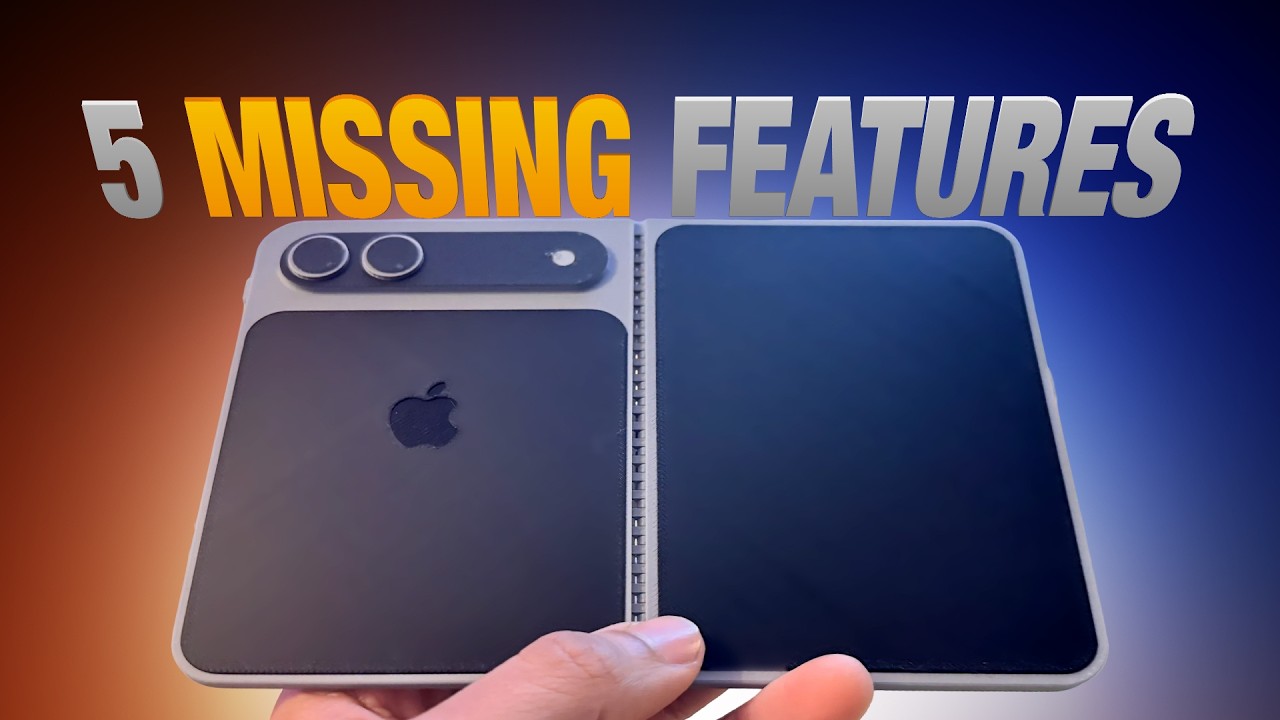
Apple's first foldable iPhone will feature relocated volume buttons, an all-black camera plateau, a smaller Dynamic Island, and more, according to design leaks from a known Weibo leaker.
The user known as "Instant Digital" today claimed to share several key details about the design of the foldable iPhone:
The volume buttons will be located on the top edge of the device, aligned to the...