Korean Carriers Reportedly Negotiating with Apple for 800/1800 MHz LTE Service on Next iPhone
Apple's next-generation iPhone is of course expected to support LTE connectivity in at least some markets, but given differences in LTE frequency bands around the world it is interesting to note that The Korea Times reports (via The Next Web) on comments from sources at current iPhone partners SK Telecom and KT claiming that they are currently in negotiations with Apple over LTE service for the forthcoming device.
"KT is in negotiation with Apple to persuade the latter to support KT’s 1.8-gigahertz frequency in Korea for the upcoming iPhone," said one senior KT executive, asking not to be identified. KT spokeswoman Kim Yoon-jeong declined to confirm.
The company, which joined the race for LTE-enabled smartphones later rivals SK and LG, is trying to persuade Apple to have its new iPhone support LTE connectivity, according to KT officials.
SK Telecom is also pushing for the same. Officials from the nation's biggest mobile carrier are currently in Apple headquarters in California to persuade Apple to support SK's LTE frequency for its local customers.
It is unclear, however, exactly what SK Telecom and KT are attempting to achieve in their efforts to "persuade" Apple to support their LTE frequencies on the next-generation iPhone, given that the hardware capabilities of the device have long been finalized. If the hardware does support the Korean carriers' frequencies and the negotiations are simply over contractual terms, it would suggest that there could be significant expansion of international LTE compatibility for the iPhone compared to the third-generation iPad.

The third-generation iPad supports LTE only over the 700 MHz and 2100 MHz frequency bands, with only a handful of carriers including AT&T and Verizon in the United States and Bell, Rogers, and Telus in Canada being supported for the device. With SK Telecom using the 800 MHz band as its primary LTE spectrum and 1800 MHz as a secondary band, and KT operating solely on 1800 MHz, the next-generation iPhone hardware would need to have new LTE frequency support for service on those carriers to even be possible. Notably, the 800 MHz and 1800 MHz bands are also the spectrum being used for LTE in Europe, Australia, and other markets, and thus hardware compatibility with those frequencies could significantly expand the number of countries and carriers on which the next iPhone could support LTE connectivity.
Popular Stories
Macworld's Filipe Espósito today revealed a handful of features that Apple is allegedly planning for iOS 26.4, iOS 27, and even iOS 28.
The report said the features are referenced within the code for a leaked internal build of iOS 26 that is not meant to be seen by the public. However, it appears that Espósito and/or his sources managed to gain access to it, providing us with a sneak peek...
Software from an iPhone prototype running an early build of iOS 26 leaked last week, giving us a glimpse at future Apple devices and iOS features. We recapped device codenames in our prior article, and now we have a list of some of the most notable feature flags that were found in the software code.
In some cases, it's obvious what the feature flags are referring to, while some are more...
Last week, details about unreleased Apple devices and future iOS features were shared by Macworld. This week, we learned where the information came from, plus we have more findings from the leak.
As it turns out, an Apple prototype device running an early build of iOS 26 was sold, and the person who bought it shared the software. The OS has a version number of 23A5234w, and the first...
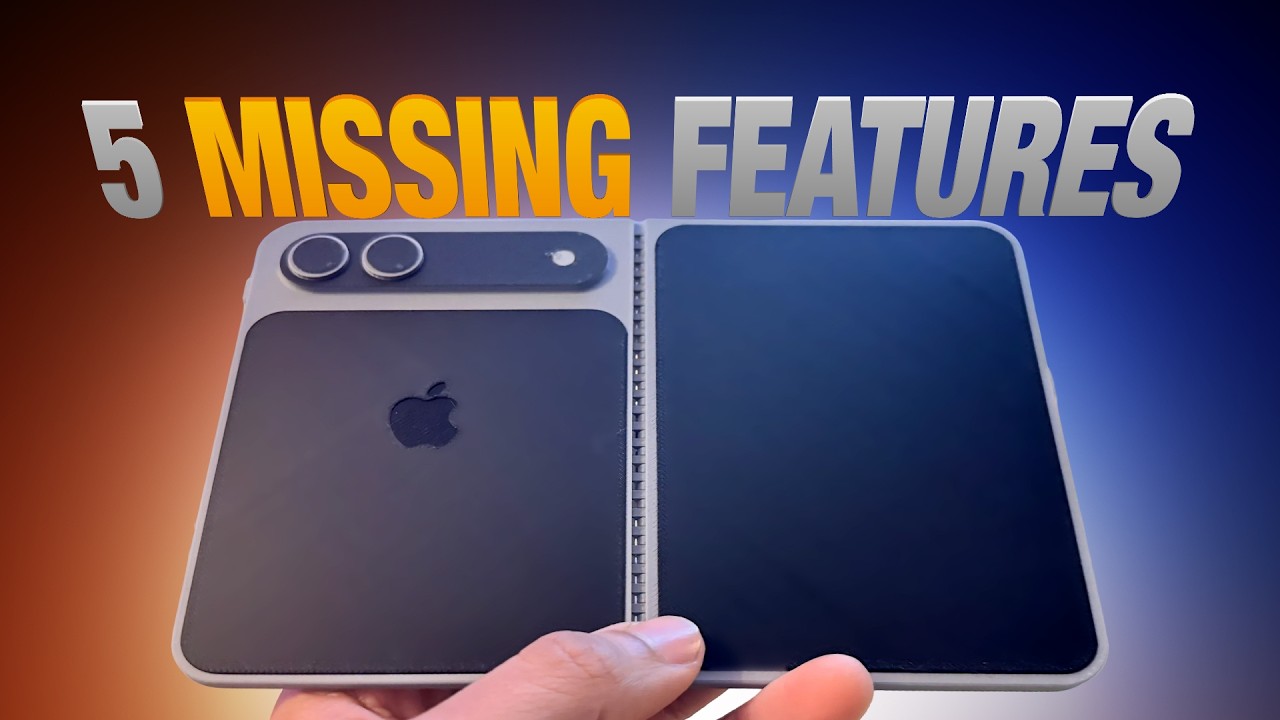
The first foldable iPhone will feature a series of design and hardware firsts for Apple, according to details shared by the Weibo leaker known as Digital Chat Station.
According to a new post, via machine translation, Apple is developing what the leaker describes as a "wide foldable" device, a term used to refer to a horizontally oriented, book-style foldable with a large internal display....
Apple is testing iOS 26.3, the next version of iOS 26 that will launch around January. Since iOS 26.3's testing is happening over the holidays, it is a smaller update with fewer features than we've seen in prior betas.
We've rounded up what's new so far, and we'll add to our list with subsequent betas if we come across any other features.
Transfer to Android
Apple is making it simpler...
Apple today released iOS 26.2, the second major update to the iOS 26 operating system that came out in September, iOS 26.2 comes a little over a month after iOS 26.1 launched. iOS 26.2 is compatible with the iPhone 11 series and later, as well as the second-generation iPhone SE.
The new software can be downloaded on eligible iPhones over-the-air by going to Settings >...
Apple seeded the second iOS 26.2 Release Candidate to developers earlier this week, meaning the update will be released to the general public very soon.
Apple confirmed iOS 26.2 would be released in December, but it did not provide a specific date. We expect the update to be released by early next week.
iOS 26.2 includes a handful of new features and changes on the iPhone, such as a new...
Apple released the AirPods Max on December 15, 2020, meaning the over-ear headphones launched five years ago today. While the AirPods Max were updated with a USB-C port and new color options last year, followed by support for lossless audio and ultra-low latency audio this year, the headphones lack some of the features that have been introduced for newer generations of the regular AirPods and the ...