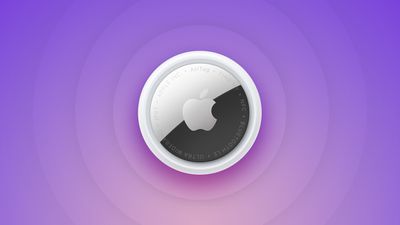
Apple is facing over 30 lawsuits from people who claim to have been stalked using Apple AirTags. The filings come after an AirTaglawsuit from 2022 (Hughes v. Apple) failed to get class certification.
In each filing, Apple is accused of releasing the AirTag while being aware that it could be "purchased and used by abusive, dangerous individuals, to track, coerce, control, and otherwise endanger and abuse innocent victims."
Further, the lawsuits say that Apple knew adequate safeguards were not in place when the AirTag launched in 2021, and Apple is aware that "AirTags remain a profound risk" to people like the plaintiffs. Apple reportedly received more than 40,000 stalking reports between April 2021 and April 2024, and Apple internal documents sourced from the original lawsuit show the company knew its safeguards would only "deter as opposed to prevent malicious use." The company also acknowledged that it "should have consulted domestic abuse organizations on the unwanted tracking policy before shipping."
Multiple news reports of AirTags being used for stalking are referenced, including cases that ended in murder. The lawsuits claim that AirTags "revolutionized the scope, breadth, and ease of location-based stalking."
While there are other tracking options on the market, the AirTag uses the Find My network that leverages any nearby device to relay the AirTag's location back to its owner.
Apple has put multiple anti-stalking measures in place, including cross-platform notifications that let potential stalking victims know that an unknown AirTag is following them, but the plaintiffs don't feel that Apple's protections are adequate. The lawsuit cites the 4-to-8-hour delay before a notification is received, and notes that originally, AirTags didn't send a notification to potential stalking victims until 72 hours had passed.
One of the ways an AirTag alerts users to its presence is by playing a sound, but the speaker can be removed. Sellers on sites like eBay even offer modified silent AirTags.
Each lawsuit includes the personal story of the plaintiff involved and all of whom claim to have been stalked using an AirTag. Plaintiffs are seeking compensatory damages, punitive damages, attorney's fees, and an order preventing Apple from engaging in the unlawful business practices alleged in the filings.
The judge overseeing the 2022 AirTag lawsuit denied class certification because of the difference in state laws and the individual nature of each stalking incident. The plaintiffs were advised to file individual lawsuits within 28 days of the class certification denial.
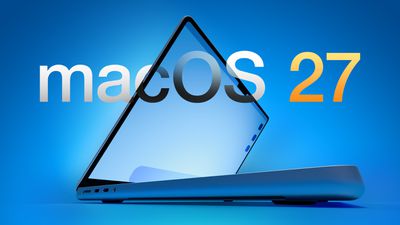
Apple will unveil its latest software platforms during its WWDC 2026 keynote on Monday, June 8, and one of them will be macOS 27 for the Mac.
The first developer beta of macOS 27 will likely be available immediately following the keynote, and a public beta typically follows in July. Following beta testing, the software update should be released to all users in September.
macOS 26 is known as macOS Tahoe, but the name of macOS 27 has yet to leak.
macOS 27 should also include the personalized Siri features that Apple previewed all the way back at WWDC 2024. For example, Apple showed a user asking Siri about their mother's flight and lunch reservation based on info retrieved from the Mail and Messages apps. This functionality was previewed on an iPhone, but it will extend to the iPad and Mac.
"We look forward to bringing a more personalized Siri to users coming this year," said Apple's CEO Tim Cook, on an earnings call this week.
More Apple Intelligence Features
Earlier this year, Apple and Google announced that Google Gemini will help power future Apple Intelligence features, and that will extend beyond the more personalized version of Siri. However, exactly which features arrive remains to be seen.
For example, if a user touches a button or control on the screen, the report said a relevant set of commands will instantly appear in a menu surrounding their finger. And if a user taps on an item in the menu bar at the top of the screen, the report said the controls will enlarge so they are easier to select with a finger.
Gurman expects a MacBook Pro or MacBook Ultra with a touchscreen to be released by early 2027, so these touch optimizations will presumably arrive in macOS 27. However, the changes might be hidden until the laptop launches.
Improved Stability
macOS 27 will reportedly be similar to 2009's Mac OS X Snow Leopard, in the sense that Apple is apparently very focused on improving "quality and underlying performance." Apple is expected to implement many bug fixes and stability improvements, and there may also be some much-needed Liquid Glass design enhancements.
No Intel Macs
Last year, Apple announced that macOS Tahoe would be the final major macOS release for Intel-based Macs, meaning that macOS 27 will be compatible with Apple silicon Macs with the M1 chip and newer only. However, Apple will likely continue to release security fixes for some Intel-based Macs for at least a few more years.
No AirPort Time Capsule Support
Starting with macOS 27, Macs will not support the AirPort Time Capsule or any other storage drives that use the Apple Filing Protocol (AFP), according to a warning shown by Apple on macOS Tahoe. Time Capsule backups will require a storage drive that supports more current file-sharing protocols like SMBv2 and SMBv3.
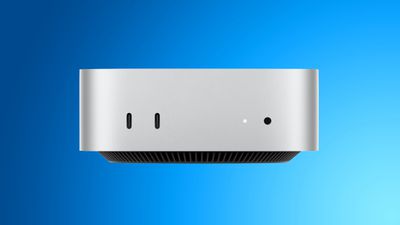
Apple this week stopped offering a 256GB storage option for the Mac mini worldwide. As a result, the desktop computer now has a higher starting price.
In the U.S., for example, the Mac mini now starts at $799 with the M4 chip, 16GB of RAM, and 512GB of storage, whereas it previously started at $599 with the M4 chip, 16GB of RAM, and 256GB of storage.
While the 512GB configuration always started at $799, customers who want a new Mac mini from Apple for $599 no longer have such an option.
Mac mini models with the M4 Pro chip already had a minimum of 512GB of storage, so there are no pricing changes for those configurations.
The base Mac mini with 256GB of storage had already been unavailable to order since last week, but it has now been removed from Apple's configurator entirely. We have reached out to Apple for comment and will update this story if we hear back.
On an earnings call this week, Apple CEO Tim Cook acknowledged that Mac mini and Mac Studio supply is constrained, and he said it may take "several months" for Apple to achieve supply-demand balance. He said both of these Macs are "amazing platforms for AI and agentic tools," resulting in higher-than-expected demand.
These changes to Mac mini and Mac Studio configurations are occurring amid a global memory chip shortage, driven by companies building out AI server facilities. Cook said Apple is expecting "significantly higher memory costs" in the current quarter, and tight availability of RAM is likely forcing Apple to make tough business decisions.
You'll find great deals on Apple's M5 MacBook Air, Apple Watch Series 11, and a few AirPods models this week. The highlight is the 46mm cellular Apple Watch Series 11 at the new all-time low price of $399.00, a $130 discount that can be found on Amazon.
Note: MacRumors is an affiliate partner with some of these vendors. When you click a link and make a purchase, we may receive a small payment, which helps us keep the site running.
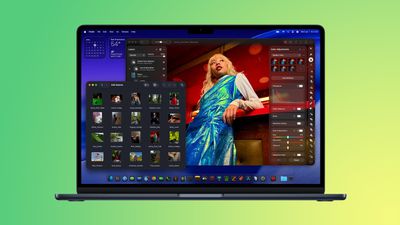
Amazon has a few record low prices on the new M5 MacBook Air this week, with $149 off select models of the brand new notebook. You can get the 512GB 13-inch M5 MacBook Air for $949.99, down from $1,099.00, available in all colors.
Apple Watch Series 11
What's the deal? Take up to $130 off Apple Watch Series 11
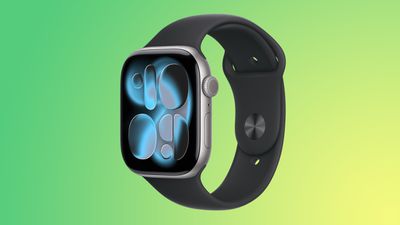
Amazon this week has all-time low prices on the Apple Watch Series 11, with up to $130 off numerous models of the smartwatch. This sale includes nearly every aluminum model of the Series 11 on sale at a record low price, plus new steep markdowns on cellular models.
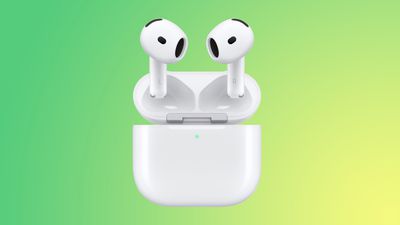
Amazon this week has the AirPods Pro 3 available for $199.99, down from $249.00. This is a match of the all-time low price on the AirPods Pro 3, and it's accompanied by a solid deal on the AirPods 4.
If you're on the hunt for more discounts, be sure to visit our Apple Deals roundup where we recap the best Apple-related bargains of the past week.
Deals Newsletter
Interested in hearing more about the best deals you can find in 2026? Sign up for our Deals Newsletter and we'll keep you updated so you don't miss the biggest deals of the season!
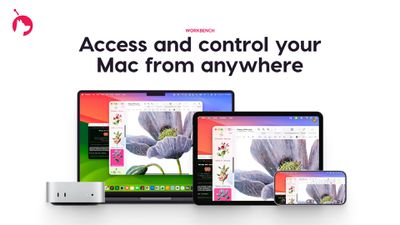
For this week's giveaway, we've teamed up with Astropad to offer MacRumors readers a chance to win a Mac mini to use with Astropad's new Workbench app. For those unfamiliar with Astropad, it is the company behind Astropad Studio and Luna Display. Astropad Studio lets you use an iPad as a drawing tablet connected to a Mac and Luna Display turns an iPad into a secondary display for a Mac, so Workbench is a natural evolution of Astropad's existing products.
The Mac mini has become the must-have platform for local agentic AI, and Astropad Workbench is the perfect companion app. Workbench is a remote desktop app for the Mac, and Astropad built it for use with AI. Workbench uses the LIQUID engine that Astropad designed for Luna Display and Astropad Studio.
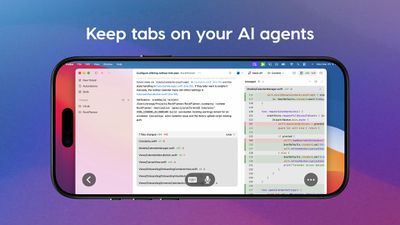
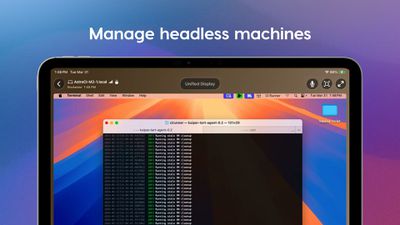
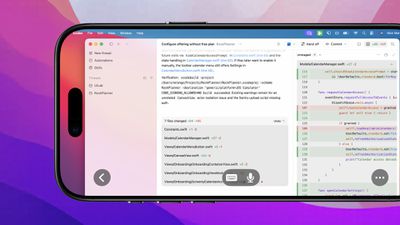
Using Workbench, you can control your AI agents remotely on an iPhone, making it ideal for people who have set up a Mac mini as a personal server for OpenClaw and other agentic AI platforms. Workbench can be used to check logs and verify agent work, restart failed tasks, or reconnect to long-running jobs. Workbench is more full-featured than options like Remote Control for Claude Code, because Anthropic's tool only provides terminal access, while Workbench offers access to your full desktop.
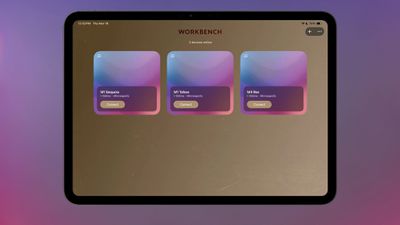
Workbench lets you monitor your AI agents from anywhere with no need to be tied to a desk. Astropad has native apps for Mac, iPhone, and iPad, so you can interface with your Mac desktop from an iPhone or iPad no matter where you are. There are even tools for quickly switching between multiple Macs connected to a Workbench account.
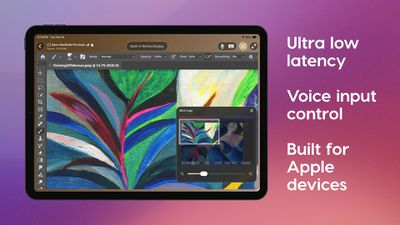
The app supports high-fidelity streaming with a unified virtual display for multiple monitors, low latency, voice dictation, and multiple control options, including gestures, keyboard input, mouse, and Apple Pencil. For large desktops, there's a mini-map that helps with navigation.
Setup is simple thanks to a global relay network across 11 regions, with no network configuration required. End-to-end encryption protects your data, and no display recordings are captured and saved.
Workbench requires macOS 15 or later, iPadOS 26 or later, and iOS 26 or later. It will work best on Apple silicon Macs, with limited support on Intel Macs.
Workbench is free to use for 20 minutes each day, with an unlimited paid plan available for $10 per month or $50 per year.
Astropad is giving away a 16GB Mac mini with a 512GB SSD. To enter to win, use the widget below and enter an email address. Email addresses will be used solely for contact purposes to reach the winner(s) and send the prize(s). You can earn additional entries by subscribing to our weekly newsletter, subscribing to our YouTube channel, following us on Twitter, following us on Instagram, following us on Threads, or visiting the MacRumorsFacebook page.
Due to the complexities of international laws regarding giveaways, only U.S. residents who are 18 years or older, UK residents who are 18 years or older, and Canadian residents who have reached the age of majority in their province or territory are eligible to enter. All federal, state, provincial, and/or local taxes, fees, and surcharges are the sole responsibility of the prize winner. To offer feedback or get more information on the giveaway restrictions, please refer to our Site Feedback section, as that is where discussion of the rules will be redirected.
The contest will run from today (May 1) at 9:00 a.m. Pacific Time through 9:00 a.m. Pacific Time on May 8. The winner will be chosen randomly on or shortly after May 8 and will be contacted by email. The winner will have 48 hours to respond and provide a shipping address before a new winner is chosen.
On this week's episode of The MacRumors Show, we answer your listener questions about the future of Apple's product lineup, the software and services shaping the ecosystem, and our own personal histories with the company and its devices.
Some questions center on the iPhone Air and its future direction, including whether Apple might adopt silicon-carbon battery technology for a second-generation model, or prioritize adding a second camera lens instead. There is also interest in how iPhone Air might evolve with features like a vibrating surface speaker.
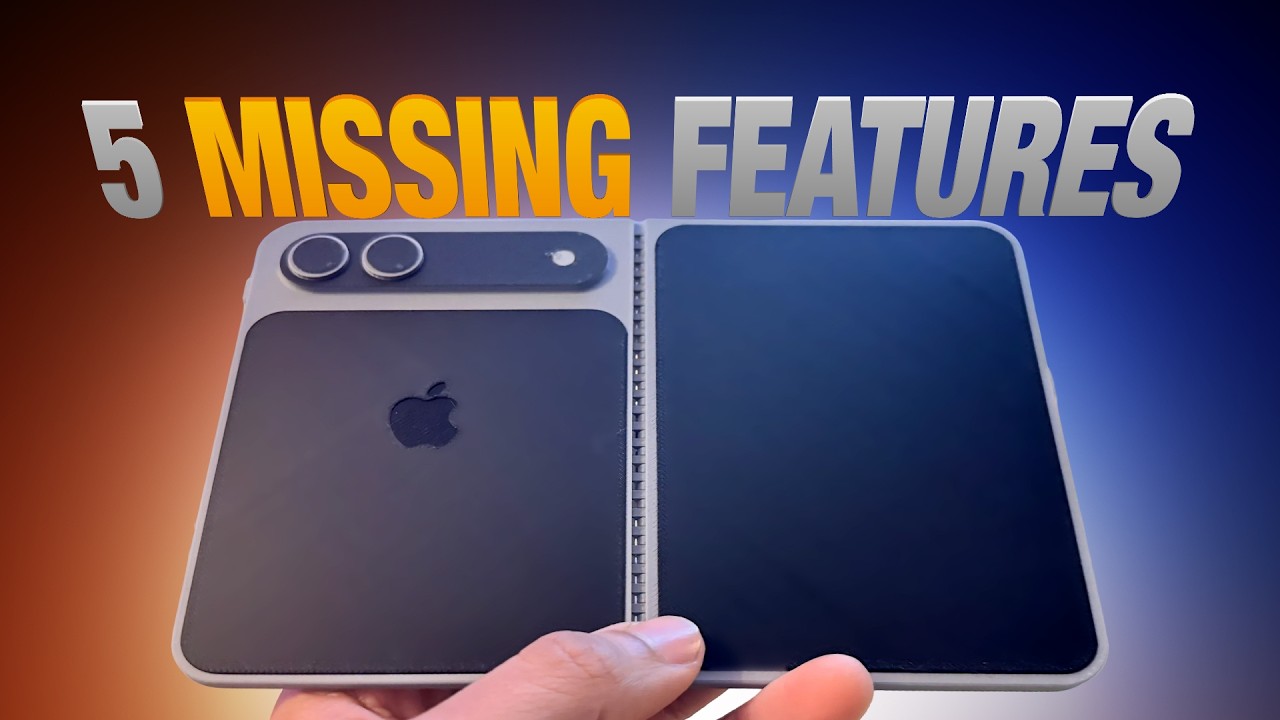
The foldable iPhone generates a lot of discussion, with questions touching on whether listeners would choose it over an iPhone Air, whether it could replace both an iPhone and iPad mini, and whether its arrival signals the end of the dedicated compact tablet.
Broader hardware questions include when the 11th-generation iPad will be updated, when Apple plans to complete the OLED with ProMotion rollout across its entire laptop lineup, whether the MacBook Neo risks cannibalizing iPad sales, and what the future holds for Apple Vision Pro given its underwhelming reception.
On the software side, questions cover what visionOS might look like several years down the line, Photomator's future and whether Apple intends to develop it into a proper Lightroom alternative, and whether Apple is falling behind competitors like Alexa on basic smart home automation, pointing out that HomePod still relies on Shortcuts for many routines that Alexa handles natively.
The general tech questions are the most varied, asking which Apple device would cause the biggest bottleneck if swapped for an entry-level version, whether we would attempt an Apple Watch-only week without an iPhone, and what device combinations we actually rely on day to day. There is also curiosity about Nothing as a brand and whether it is worth taking seriously, as well as concerns about the escalating cost of MacBook Pro models and where the ceiling might be.
A number of questions are more personal, asking about our first Apple products, what originally drew us to the ecosystem, our favorite and oldest devices, and whether family members using non-Apple products causes any friction. The MacRumors Show has its own YouTube channel, so make sure you're subscribed to keep up with new episodes and clips.
If you haven't already listened to the previous episode of The MacRumors Show, catch up to hear our discussion about Apple's bombshell announcement that Tim Cook will step down as CEO on September 1, 2026, with hardware engineering chief John Ternus set to succeed him.
The MacRumors Show is on X @MacRumorsShow, so be sure to give us a follow to keep up with the podcast. You can also email us at podcast@macrumors.com or head over to The MacRumors Show forum thread. Remember to rate and review the podcast, and let us know what subjects and guests you would like to see in the future.
Apple's most affordable MacBook ever appears to be a resounding hit with customers, based on comments shared by CEO Tim Cook this week.
On an earnings call on Thursday, Cook said that customer response to the MacBook Neo has been "off the charts" since the laptop was unveiled in March.
"We could not be happier with how things are going at the moment," he said.
Apple was very optimistic about the MacBook Neo before announcing it, but the company still "undercalled" the level of enthusiasm that the laptop would generate, according to Cook. He said that MacBook Neo demand has exceeded Apple's expectations and helped to drive a record number of first-time Mac buyers last quarter.
"We're very focused on customers new to the Mac and customers that have been holding on to their Mac a very long period of time," said Cook.
As a result of high demand, Cook added that the MacBook Neo is currently "supply constrained." For orders placed today, Apple's online store in the U.S. currently shows a 2-3 week delivery estimate for all configurations of the laptop.
Apple released the MacBook Neo on March 11, following a week of pre-orders. In the U.S., pricing starts at just $599 for the general public and an even lower $499 for college students and qualifying educational staff. Powered by a version of the iPhone 16 Pro's A18 Pro chip, the laptop is available in Citrus, Blush, Indigo, and Silver finishes.
A new entry-level iPad 12 with Apple Intelligence support likely remains months away, based on a comment shared by an Apple executive this week.
On an earnings call on Thursday, Apple's CFO Kevan Parekh said that the company's iPad revenue in the March-June quarter will face a "difficult compare" due to the the launch of the entry-level iPad 11 with the A16 chip in March 2025.
Parekh is essentially saying that Apple's year-over-year iPad revenue growth might be impacted in the current quarter, likely due to the company having no plans to update the entry-level iPad this quarter like it did in the year-ago quarter. If an iPad 12 were to be coming this quarter, this "difficult compare" remark would have been unlikely.
In short, do not expect an iPad 12 to be released during Apple's current fiscal quarter, which runs through June 27. That seemingly rules out a product announcement at the WWDC 2026 conference taking place from June 8 through June 12.
Here is Parekh's full comment:
We expect our June quarter total company revenue to grow by 14 to 17 percent year-over-year, which comprehends our best view of constrained supply. On iPad, keep in mind, we face a difficult compare driven by the launch of the A16-powered iPad in the prior year.
While it appears that an iPad 12 will not be released through June, a launch later this year is still possible. In March, Bloomberg's Mark Gurman said an entry-level iPad with an A18 chip was "ready to go" and "still coming this year."
An earlier report from Macworld's Filipe Espósito claimed that the iPad 12 will actually have an A19 chip, so we will have to see which report turns out to be accurate. In any case, both the A18 and A19 chips are compatible with Apple Intelligence, which is something that the current iPad base model with an A16 chip lacks.
Apple Intelligence is already available on all other current-generation iPad models, including the iPad mini, iPad Air, and iPad Pro.
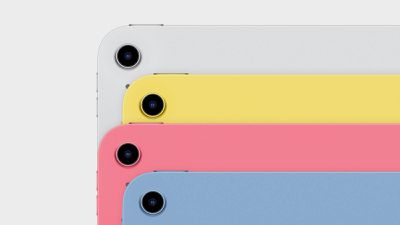
No other major changes have been rumored so far for the iPad 12, so we expect the device to have the same overall design as the current model. In the U.S., the device currently starts at $349 and is available in pink, yellow, blue, and silver.
A Weibo leaker today suggested that Apple's iPhone Air 2 may be the only next-generation ultra-thin flagship smartphone from a major brand, after the original model's poor sales performance appears to have led competing manufacturers to abandon plans for their own follow-up products.
The leaker known as "Digital Chat Station" today posted on Weibo, claiming that the iPhone Air barely surpassed 700,000 unit activations even after multiple rounds of price reductions. The post also noted that an unspecified domestic Chinese ultra-thin device managed only 50,000 activations, and that the rival's planned follow-up now looks "highly precarious" and is in all likelihood going to be scrapped. The leaker concluded that the iPhone Air 2 may end up as the sole ultra-thin flagship of the next generation.
The device's poor reception has reverberated across the industry. Xiaomi reportedly planned a "true Air model" to rival Apple's offering, while Vivo targeted thinness within its mid-range S series. Both companies are said to have halted related projects. Samsung similarly cancelled the Galaxy S26 Edge after the Galaxy S25 Edge sold poorly.
Despite all of this, a separate leaker claimed last month that Apple will push ahead with at least two generations of the device regardless of sales performance. Reports are now aligned around a spring 2027 launch, with the delay attributed both to poor sales of the original and to Apple's new split launch strategy, which moves the standard iPhone 18, iPhone 18e, and iPhone Air 2 to a spring window while reserving fall 2026 for the iPhone 18 Pro, iPhone 18 Pro Max, and foldable iPhone. Reports from Nikkei Asia, Bloomberg's Mark Gurman, and The Information all point to an early 2027 release.
Apple is said to be significantly revising the iPhone Air 2 to address the main criticisms of the original. The Information reported that Apple is considering adding a second rear camera, likely an Ultra Wide lens to complement the existing 48-megapixel Fusion camera, along with lower pricing. Other rumored changes include reduced weight, vapor chamber cooling, and increased battery capacity. Apple is believed to have requested an ultra-thin Face ID module from suppliers to free up internal space for the additional camera. According to The Elec, Apple also plans to bring a thinner, brighter Samsung OLED technology called CoE (Color Filter on Encapsulation) to the iPhone Air 2, after debuting it first on the foldable iPhone.
MacRumors is pleased to announce our Seventeenth Annual MacRumors Blood Drive, throughout the month of May 2026. Let's save lives together by encouraging donations of blood, platelets, and plasma, and signing up as bone marrow and organ donors. While most blood drives are specific to a geographic location, our blood drive is online and worldwide. Anyone can participate.
Over the past 16 years, MacRumors Blood Drives have recorded donations of 1,795 units of blood, platelets, and plasma, cheered for donors, and celebrated new signups for the bone marrow and organ donor registries. We've heard from hundreds of forum members who donate or whose lives were saved by the donations of strangers.
This year's featured donor is user m53rd. Not only is he a blood donor, registered as an organ donor, and registered as a bone marrow donor, but he's already been an organ donor, having donated a kidney and then 60% of his liver to people in need. It's a magnificent example how a single person can save many lives.
Whether you're a regular donor or someone overcoming apprehension to donate for the very first time, we welcome and congratulate you.
How to participate in the MacRumors Blood Drive
If you are an eligible donor, schedule a blood, platelet, or plasma donation (FAQ) at any donation center near you. Post in the MacRumors 2026 Blood Drive! thread to tell us about it. Also post if you sign up for the bone marrow registry (FAQ) or register as an organ donor. We'll add all registrants to our Honor Roll.
Not everyone is eligible to donate blood, due to their health status or based on risk factors that result in deferrals (see LGBTQ+ donor information). If you aren't eligible to donate blood, please encourage a friend or relative to make a donation, and let us know. If they donate, you'll both be added to our Honor Roll.
Share our #MacRumorsBloodDrive message with friends, relatives, and followers. Help us thank the forum members who post in the MacRumors 2026 Blood Drive! thread.
After the MacRumors Blood Drive ends on May 31, continue recording your blood, platelet, and plasma donations, from June 2026 through next April 2027, on our Team MacRumors 2026-2027 page (instructions). We'll tally your donations and count them for the MacRumors 2027 Blood Drive next May.
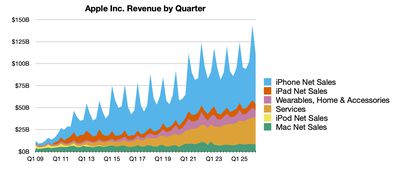
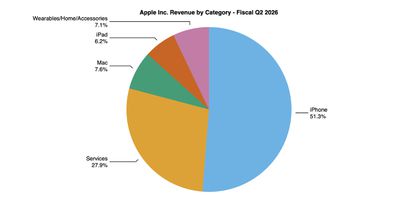
Apple held its earnings call for the second fiscal quarter (first calendar quarter) of 2026 today after announcing its best March quarter ever. Apple saw revenue of $111.2 billion with double-digit growth across every geographic segment and across every product category. Apple CEO Tim Cook and Apple CFO Kevan Parekh provided insight into iPhone sales, Mac sales, RAM supply issues, and more.
We've rounded up the most interesting takeaways from the call.
iPhone 17 Sales
Apple attributed its success to the new iPhone models. Cook said "demand was off the charts," but Apple was facing supply constraints that impacted revenue. Had there not been supply issues, Apple would have seen higher revenue.
The A19 and A19 Pro chips from TSMC proved to be a bottleneck because TSMC uses the same 3nm process for AI chips that are in high demand. Cook said iPhone constraints were "primarily driven" by the availability of the advanced nodes Apple's SoCs are produced on.
According to Parekh, the iPhone 17 family is Apple's best-selling iPhone lineup to date. "The iPhone 17 family is now the most popular lineup in our history... we believe we gained market share during the quarter," he said.
iPhone revenue was $57 billion, up 22 percent year-over-year, which is a new March quarter record. Apple saw strong demand from upgraders and customers choosing an iPhone for the first time. Cook said Apple is "enormously pleased" with how the iPhone 17 lineup has been received.
Memory Costs
Apple had higher memory costs during the March quarter, and the impact is expected to get worse as the year goes on. Apple CEO Tim Cook said that Apple is expecting "significantly higher memory costs" in the June quarter, and beyond June, memory costs will "drive an increasing impact" on Apple's business.
Mac Sales
Mac revenue was $8.4 billion, up six percent year-over-year. Cook said sales were impacted by supply constraints "driven by higher than expected levels of demand."
The MacBook Neo that was introduced during the quarter was a hit, and Apple sold out. Shipping times for new machines reached several weeks. Apple also saw high demand for the Mac mini and the Mac Studio from people buying the machines for use with AI.
Apple set March quarter records for upgraders and customers new to the Mac, leading to a new all-time record for the overall Mac install base. Apple is focused on customers new to the Mac and customers who have been holding onto their Mac for a long period of time, and the Neo is selling well to those customers.
Apple expects Macs to face supply constraints in the June quarter due to continued high demand and "less flexibility in the supply chain."
Mac Studio and Mac mini Supplies
Apple expects it to take months to reach supply/demand balance on the Mac Studio and Mac mini, suggesting they are going to be hard to get for months to come.
Apple underestimated demand for the Mac mini and the Mac Studio. "Both of these are amazing platforms for AI and agentic tools and the customer recognition of that is happening faster than what we had predicted, and so we saw higher than expected demand," Cook said.
John Ternus
Cook addressed John Ternus, who will take over as Apple's CEO on September 1, 2026.
As I have said, there is no one on this planet I trust more to lead Apple into the future than John Ternus. John is a brilliant engineer, a deep thinker, a person of remarkable character, and a born leader. I know he will push us to go further than we think is possible in order to deliver the greatest products and services for our users. I have been so proud to call him a colleague and a friend, and I will be even more proud to call him Apple's CEO.
Ternus also spoke on the call, where he teased Apple's upcoming product lineup.
As Tim mentioned, we have an incredible roadmap ahead. And while you're not going to get me to talk about the details of that roadmap, suffice it to say this is the most exciting time in my 25-year career at Apple to be building products and services.
There are so many opportunities before us, and I couldn't be more optimistic about what's to come. For now, let me simply say I am deeply grateful to Tim, to the executive team and to everyone at Apple, and I look forward to all of the important work ahead with that.
Wearables
Wearables revenue was $7.9 billion, an increase of five percent year-over-year. Apple's wearables install base hit a new all-time high, and more than half of customers who purchased an Apple Watch during the quarter were new to the product.
Services
Apple's services revenue reached $31 billion, a new all-time revenue record.
Apple has an install base of over 2.5 billion active devices, a new all-time high across all major product categories. Both transacting and paid accounts hit new all-time highs in the quarter.
Retail
Apple had a March quarter revenue record for retail, with "very high levels of store traffic throughout the quarter."
AI
Parekh said that AI is a "really important investment area" for Apple, and the company plans to continue to invest in AI "incrementally on top of" what it normally invests in its product roadmap.
Apple's R&D spending accelerated during the quarter, and Cook said that Apple is investing in products and services. "We see opportunities in both of those," he said. "We could not be more excited about how the future is playing out."
On the collaboration with Google, Cook said things are going well. "We're happy with where things are, and we're happy with the work that we're doing independently as well," he said.
Tariffs
From Q1 to Q2, Apple saw less impact from tariffs due to the reduction in IEEPA tariff rates, and the reduced global tariff rate under Section 122. Cook said Apple is following the established processes of applying for a refund of tariffs paid, and any amount received will be invested back into U.S. innovation and advanced manufacturing. Any investment of refunded tariff fees will be in addition to Apple's prior commitments in the U.S.
Next Quarter
Parekh said June quarter total revenue is expected to grow 14 to 17 percent year-over-year. Services revenue is expected to grow at a similar rate to what was reported in the March quarter.
Parekh warned investors about iPad revenue because last year, Apple released the A16 iPad. "Keep in mind, we face a difficult compare driven by the launch of the A16-powered iPad in the prior year," Parekh said.
Apple's guidance for the June quarter relies on global tariff rates and policies remaining as they are today.
During today's earnings call for the second fiscal quarter of 2026, Apple CEO Tim Cook said that the Mac mini and Mac Studio could be hard to get for months to come.
"We think, looking forward, that the Mac mini and Mac Studio may take several months to reach supply demand balance," Cook said.
Apple underestimated demand for the Mac mini and the Mac Studio. "Both of these are amazing platforms for AI and agentic tools and the customer recognition of that is happening faster than what we had predicted, and so we saw higher than expected demand," Cook said.
Shipping delays for the Mac mini and the Mac Studio have been increasing over the last few months, and the waits for some models stretch into months. Apple stopped selling the Mac Studio with 512GB RAM entirely, and it stopped accepting orders for some models with higher amounts of RAM. As of last week, the base Mac mini was listed as "Currently Unavailable" from Apple's online store because it is out of stock.
Apple had higher memory costs during the March quarter, and the impact is expected to get worse as the year goes on. Apple CEO Tim Cook said that Apple is expecting "significantly higher memory costs" in the June quarter, and beyond June, memory costs will "drive an increasing impact" on Apple's business.
Cook said the higher memory costs have been partially offset because the company is selling existing inventory that it has stockpiled. As those supplies dwindle, Apple's costs will go up.
According to Cook, Apple is going to look at a "range of options" and the company is "continuing to evaluate" the situation. Cook declined to provide more insight into how Apple plans to deal with the problem.
Memory costs have been soaring due to global supply constraints caused by AI server demand. Chip makers are prioritizing memory for AI servers rather than consumer devices, causing prices to go up.
Apple's iPhone 17 models are its most popular iPhones to date, Apple CFO Kevan Parekh told the Financial Times. Both Parekh and Apple CEO Tim Cook attributed Apple's stellar Q2 2026 performance to iPhone sales.
"The iPhone 17 family is now the most popular line-up in our history... we believe we gained market share during the quarter," said Parekh. Cook told Reuters that iPhone demand was "off the charts," and that supply was constrained despite the impressive sales.
"And there's just a little less flexibility in the supply chain at the moment for getting more parts," Cook said. Apple's iPhone sales were held back by the A19 and A19 Pro chips that it gets from TSMC, as TSMC also manufactures AI chips.
Parekh said that memory had an "increasing impact" between the first and second quarters of 2026.
Issues with chip supply and increasing problems acquiring RAM could potentially have an impact on the iPhone 18 lineup that Apple is expected to introduce this September. The lineup will include Apple's first foldable iPhone.
Apple today announced financial results for the second fiscal quarter of 2026, which corresponds to the first calendar quarter of the year.
For the quarter, Apple posted revenue of $111.2 billion and net quarterly profit of $29.6 billion, or $2.01 per diluted share, compared to revenue of $95.4 billion and net quarterly profit of $24.8 billion, or $1.65 per diluted share, in the year-ago quarter. Services revenue again reached an all-time high during the quarter, while company revenue, earnings per share, and iPhone revenue all set March quarter records.
Gross margin for the quarter was 49.3 percent, compared to 47.1 percent in the year-ago quarter. Apple's board of directors also authorized an additional $100 billion for share repurchases and declared an increased dividend payment of $0.27 per share, up from $0.26 per share. The dividend is payable May 14 to shareholders of record as of May 11.
"Today Apple is proud to report our best March quarter ever, with revenue of $111.2 billion and double-digit growth across every geographic segment," said Tim Cook, Apple's CEO. "iPhone achieved a March quarter revenue record, fueled by such extraordinary demand for the iPhone 17 lineup. During the quarter, Services achieved yet another all-time record, and we were excited to introduce remarkable new products to our strongest lineup ever. That included the addition of the iPhone 17e and the M4-powered iPad Air, along with the launch of MacBook Neo, which is captivating customers all around the world."
Apple will provide live streaming of its fiscal Q2 2026 financial results conference call at 2:00 pm Pacific, and MacRumors will update this story with coverage of the conference call highlights.
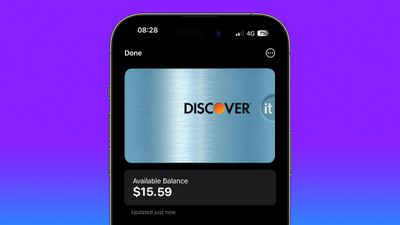
Discover is planning to eliminate some of the Apple Wallet integrations that it introduced in 2023, according to letters that cardholders are receiving. As of June 4, 2026, Discover users will no longer be able to see their total card balance and transaction history in the iPhone's Wallet app, or use the Pay with Rewards feature in Apple Pay.
Apple has a Connected Cards feature that allows credit cards from participating companies to display balances and recent transactions when they're added to the Wallet app. Discover has supported the feature for nearly three years, as have many UK banks, but other credit card companies in the U.S. did not add support.
Pay with Rewards, which is also being eliminated, allows Discover cardholders use their cashback bonuses toward Apple Pay purchases.
Discover says that while several Apple Pay features are being eliminated, Discover users will still be able to use the Discover card to make Apple Pay purchases in retail locations and online. Here's a full list of the changes Discover is making:
Enrollment Cancellation - If applicable, your enrollment in Connected Account and Pay with Rewards with Apple Pay from Discover will be canceled on June 4, 2026.
Access to Information - You will continue to have full access to your account, rewards, balances, transactions and payments on Discover.com, the Discover mobile app, and on your monthly statements. Starting June 4, 2026, you will no longer have access to such details within your Apple Wallet. You will continue to see your Apple Pay transactions in your wallet.
Pay with Rewards - Starting June 4, 2026, you will no longer be able to use rewards to cover an Apple Pay purchase directly at digital checkout. Your options for redeeming your Discover rewards otherwise remain the same.
Terms - Connected Accounts and Pay with Rewards with Apple Pay cancellation does not affect any other terms of your Discover accounts and agreements. Eligibility, service, and cancellation are subject to the Apple Pay terms.
It is not clear if these features are being eliminated because Apple is ending the integrations, or because Discover is opting out. The changes will go into effect on June 4, 2026.
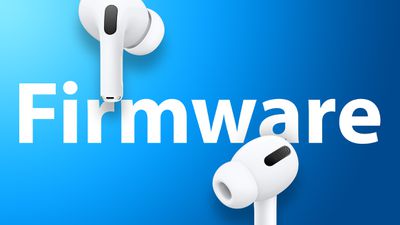
Apple today released new firmware for the AirPods Pro 3. The firmware has a version number of 8B40, up from 8B39.
There is no word on what's included in the new firmware, but Apple has a support document with limited notes. Most updates are limited to bug fixes and performance improvements.
To get the updated firmware, make sure your AirPods Pro are in range of your iPhone, iPad, or Mac and are connected via Bluetooth.
From there, connect your Apple device to Wi-Fi, put your AirPods in the Charging Case, and connect the Charging Case to power. Keep the case closed and wait at least 30 minutes for the firmware update to install. After that, check the version number and repeat the process if the update hasn't been installed.
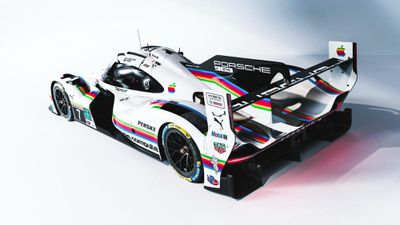
Porsche today announced a new collaboration with Apple that will see two Porsche 963 vehicles outfitted with an Apple Computer-inspired wrap in round four of the IMSA WeatherTech SportsCar Championship at Laguna Seca. The event is set to take place on Sunday, May 3.
Porsche says that the one-time design is meant to celebrate the 75th anniversary of Porsche Motorsport and the 50th anniversary of Apple's founding. The wrap pays homage to the Porsche 935 K3, which competed in the 1980 season and raced at Le Mans.
In a statement, Apple Music, Sports, and Beats Vice President Oliver Schusser said that Apple is proud to once again partner with Porsche.
We've enjoyed a longstanding relationship with Porsche, going back to 1980 when a Porsche race car first carried the Apple logo. That moment marked the beginning of a shared passion for innovation and creativity that continues to define our collaboration today. As Apple celebrates its 50th anniversary, we're proud to once again partner with Porsche on a design that pays tribute to that original 1980 livery.
Porsche Motorsport Vice President Thomas Laudenbach said Porsche and Apple are both "icons that stand for innovation and continuous development by experts in Zuffenhausen, Weissach and Cupertino."
The Laguna Seca Raceway is located 80 miles south of the Apple Park campus, and the fourth round is set to last for two hours and 40 minutes. The No. 6 Porsche 963 will be shared by France's Kévin Estre and Belgium's Laurens Vanthoor, while the No. 7 car will be shared by France's Julien Andlauer and Brazil's Felipe Nasr. The No. 7 vehicle currently leads the IMSA championship standings after winning the opening two rounds at Daytona and Sebring.


 Note: MacRumors is an affiliate partner with some of these vendors. When you click a link and make a purchase, we may receive a small payment, which helps us keep the site running.