This month, Apple introduced the M2 chip – the second-generation custom silicon chip for the Mac. The M2 now sits below the M1 Pro chip in Apple's custom silicon lineup, but why is the M1 Pro, based on chip technology from 2020, still better than the latest M2?
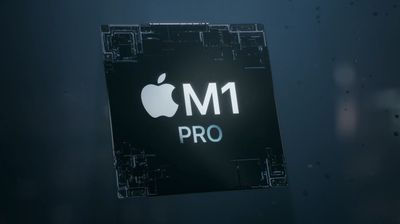
Apple says that the M2 chip takes the performance per watt of the M1 even further with an 18 percent faster CPU, a 35 percent more powerful GPU, and a 40 percent faster Neural Engine. There are also other significant enhancements such as more memory bandwidth and support for up to 24GB of unified memory. Nevertheless, the M1 Pro remains a more capable and powerful chip, with up to four additional performance cores, support for 32GB of memory, and more.
The M2 chip debuts in the 13-inch MacBook Pro and the redesigned MacBook Air, so the extent to which the M2 can compete with the M1 Pro could be an important consideration when purchasing a new Mac – especially if you are considering a 14- or 16-inch MacBook Pro. Read on to learn more about the differences between the two chips.
M2 Chip
- Made with TSMC's enhanced 5nm process (N5P)
- 20 billion transistors
- 4 high-performance "Avalanche" cores
- 4 energy-efficient "Blizzard" cores
- 3.49GHz CPU clock speed
- CPU cores first seen in the iPhone 13 lineup's A15 Bionic chip
- 10-core GPU
- Support for 8GB, 16GB, or 24GB unified memory
- 100GB/s memory bandwidth
- Neural Engine
- Media engine for hardware-accelerated H.264, HEVC, ProRes, and ProRes RAW
- Higher-bandwidth video decode engine
- Video encode engine
- ProRes encode and decode engine
- "New" image signal processor (ISP)
M1 Pro Chip
- Made using TSMC's 5nm process (N5)
- 33.7 billion transistors
- Up to 8 high-performance "Firestorm" cores
- 2 energy-efficient "Icestorm" cores
- 3.2GHz CPU clock speed
- CPU cores first seen in the iPhone 12 lineup's A14 Bionic chip
- Up to 16-core GPU
- Support for 16GB or 32GB unified memory
- 204GB/s memory bandwidth
- Neural Engine
- Media engine for hardware-accelerated H.264, HEVC, ProRes, and ProRes RAW
- Higher-bandwidth video decode engine
- Video encode engine
- ProRes encode and decode engine
- Image signal processor (ISP)
Fabrication Process and Transistors
Like the A14 Bionic, the M1 Pro chip is built using TSMC's first-generation 5nm fabrication process. On the other hand, the M2 uses TSMC's second-generation 5nm process like the A15 Bionic chip. The enhanced 5nm fabrication process is at the heart of many of M2's performance and efficiency improvements, but the M1 Pro has 13.7 billion additional transistors for a total of 33.7 billion – almost 70 percent more than the M2. This is a key reason as to why the M1 Pro is more powerful than the M2 despite being produced with older technology.
CPU
The M2 offers four high-performance and four energy-efficient cores, while the M1 Pro has up to eight high-performance cores and two energy-efficient cores. The M1 Pro features "Firestorm" and "Icestorm" cores from the A14 Bionic chip, but as a more modern chip, the M2 has "Avalanche" and "Blizzard" from the A15 Bionic chip.
In early Geekbench benchmarks, the M2, which runs at 3.49GHz compared to 3.2GHz for the M1 Pro, earned a single-core score of 1,919, which is roughly 11 percent faster than the 1,731 single-core score of the eight-core 14-inch MacBook Pro. The M2 earned a multi-core score of 8,928, about six percent less than the 9,511 score of the eight-core M1 Pro 14-inch MacBook Pro and about 25 percent less than the 12,011 score of the ten-core M1 Pro 14-inch MacBook Pro.
The M2's high-performance cores share a 16MB L2 cache and the energy-efficient cores share a 4MB L2 cache. The chip also has an 8MB system level cache (SLC) shared by the GPU. In the M1 Pro, the high-performance cores share a 12MB L2 cache and the two high-efficiency cores share a 4MB L2 cache. The M1 Pro also has 24MB of system level cache.
GPU
The M1 Pro features up to eight more GPU cores over the M2, resulting in a major boost in graphics performance. In early Geekbench Metal benchmarks, the M2 chip scored 30,627, noticeably less than the 39,758 score obtained by the M1 Pro. The added graphics cores make the M1 Pro much more capable in GPU-intensive tasks.
Unified Memory
The M2 comes configured with 8GB, 16GB, or 24GB of unified memory, while the M1 Pro is simply available with either 16GB or 32GB of memory. The M1 Pro's memory controller can also deliver 204GB/s of unified memory bandwidth, a substantial boost over the M2's 100GB/s memory bandwidth.
Other Custom Silicon Technologies
The M2 features improvements to several of Apple's custom silicon technologies, such as the Neural Engine. The chip contains Apple's latest Secure Enclave and a new image signal processor (ISP) for better image noise reduction. Despite these improvements, the M1 Pro and the M2 have the same dedicated video encode and decode engines for hardware-accelerated H.264, HEVC, ProRes, and ProRes RAW.
Final Thoughts
Overall, the M2 chip is much closer to the M1 than it is to the M1 Pro, prioritizing efficiency over performance. The M2 levelled the playing field in some senses by adopting the capabilities of the M1 Pro's dedicated media engine and the chip is more powerful in single-core tasks with its higher 3.49GHz CPU clock speed, but the M1 Pro is considerably better in multi-core and graphics tasks.
While the M2 is ostensibly a more modern chip, being fabricated with next-generation 5nm process and offering the latest core technology, the M1 Pro remains more capable due to its scale. With significantly more transistors, performance CPU cores, and GPU cores, not to mention larger quantities of unified memory and higher memory bandwidth, the M1 Pro remains a powerful chip for professionals with demanding workflows. The M2, on the other hand, is more of a consumer-oriented chip focused on delivering impressive performance for day-to-day tasks and excellent efficiency to keep temperatures down and prolong battery life.