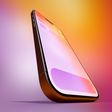
Apple's first foldable iPhone, expected to be called the "iPhone Ultra," is shaping up to launch with a noticeably restrained selection of colors, according to multiple leakers, with sources pointing to as few as two options and a deliberate avoidance of bold or vibrant finishes for the device.

In February, the Weibo leaker known as "Instant Digital" shared a broader account of the foldable iPhone's design, describing it with just two color options, with white as the only "confirmed" shade at the time. The leaker did not reveal the second option. Instant Digital revisited their February report earlier this month without walking back any color details, keeping the two-option account intact.
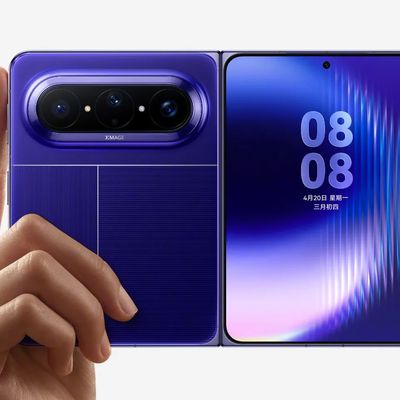
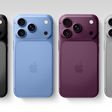
More recently, Macworld cited a supply chain source to provide new details about the foldable's color options: a classic silver and white model, and an indigo option described as similar to the iPhone 17 Pro's Deep Blue finish. The same source said the device will offer fewer choices than the iPhone 18 Pro models, with no bold or vibrant colors.
The approach is reminiscent of the iPhone X, which similarly launched in just two colors, Silver and Space Gray, when it debuted in November 2017 at a then record starting price of $999. Like the foldable iPhone, the iPhone X was a generational leap that introduced an entirely new design language. The iPhone XS that followed a year later added Gold to the lineup, suggesting Apple may take the same approach with the iPhone Ultra over time.
A limited color offering may also be a practical consequence of the device's constrained production outlook. Supply chain analyst Ming-Chi Kuo warned that early-stage yield and ramp-up challenges could mean smooth shipments may not occur until 2027, with potential shortages lasting through at least the end of 2026. Kuo also clarified that the frequently cited order figure of 15 to 20 million foldable iPhones likely reflects cumulative demand across the product's full two to three year lifecycle, rather than 2026 alone, suggesting that annual volumes will be modest.
Developing and manufacturing each additional color variant adds complexity and cost to an already challenging production process, as well as additional SKUs to stock. With the device expected to be in short supply at launch regardless, there is little commercial incentive for Apple to broaden the initial color palette. At a starting price that Bloomberg's Mark Gurman says will "cross the $2,000 threshold," the iPhone Ultra is also unlikely to attract the kind of buyer who might be swayed by a wider color range, making the calculation even simpler.
The iPhone Ultra is expected to be announced in September 2026 alongside the iPhone 18 Pro and iPhone 18 Pro Max.