New iPad Pro Lacks mmWave 5G and Ultra-Wide Camera
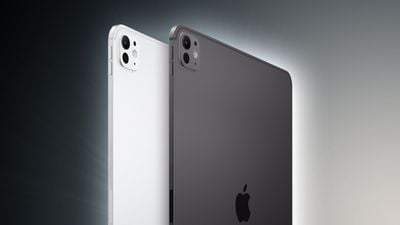
While the iPad Pro was updated with the M4 chip and more today, the latest 11-inch and 13-inch models lack two features that are available on some previous models, including mmWave 5G support and an Ultra Wide camera.
Apple's comparison page confirms that cellular configurations of the new iPad Pro models are limited to sub-6GHz bands for 5G. mmWave 5G was supported on the previous two iPad Pro generations, but in the U.S. only and never elsewhere.
Apple has yet to explain why it removed mmWave support from the iPad Pro. mmWave is a set of 5G frequencies that can provide very fast speeds at short distances, which is ideal for dense urban areas. By comparison, sub-6GHz 5G is generally slower than mmWave, but the signals travel further, better serving suburban and rural areas.
The 10-megapixel Ultra Wide rear camera on the last three iPad Pro generations is also absent on the latest models, which only have a 12-megapixel Wide rear camera.
As we previously noted, cellular configurations of the latest iPad Pro and iPad Air models also lack a physical SIM card slot, making them eSIM-only devices.
Popular Stories
Apple has reportedly abandoned plans for a foldable "iPad Ultra" following years of disappointing sales performance for the iPad Pro.
The claim predominantly comes from the Weibo leaker known as "Instant Digital," who posted the remark in response to a question about whether the iPad would join a rumored "Ultra" series of Apple devices. Instant Digital listed the Apple Watch Ultra, M-series...
Apple is expected to unveil iOS 27 during its WWDC 2026 keynote on June 8, and there are already many rumored features and changes for iPhones.
The first developer beta of iOS 27 will likely be available immediately following the keynote, and a public beta typically follows in July. Following beta testing, the software update should be released to all users with a compatible iPhone in...
Apple refreshed the 14-inch and 16-inch MacBook Pro with M5 Pro and M5 Max models in March 2026, but depending on your needs and interests, you might want to skip this generation because there's something better in the works.
The M5 Pro and M5 Max MacBook Pro models have faster chips, but the same design that Apple has used since 2021. An updated design with new display technology and faster ...