Apple Starts Sending 'Batterygate' Settlement Payments to iPhone Users

Apple in 2020 agreed to pay up to $500 million to settle a class action lawsuit in the U.S. that accused the company of "secretly throttling" some iPhone models, and payouts finally started going out this week to individuals who submitted a claim.
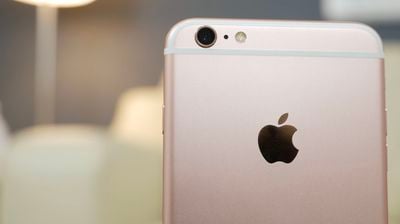
iPhone 6s MacRumors YouTube
The website for the so-called "batterygate" settlement said payments would likely start to be distributed this January, and payouts have began on schedule. MacRumors readers Ken Strand and Michael Burkhardt are among the individuals who have received payments of $92.17 per claim from Apple as part of the settlement.

The lawsuit was filed in December 2017, shortly after Apple revealed that it throttled the maximum performance of some iPhone models with "chemically aged" batteries when necessary to prevent the devices from unexpectedly shutting down. Apple introduced this power management system in iOS 10.2.1, but it initially failed to mention the change in that update's release notes. Apple apologized about its lack of transparency, and temporarily lowered the price of iPhone battery replacements to $29 in 2018.

Despite apologizing over the way it communicated the change, Apple repeatedly denied all allegations and never admitted to any legal wrongdoing. Apple said it agreed to the settlement only to "avoid burdensome and costly litigation."

The class included any U.S. resident who owned an affected iPhone 6, iPhone 6 Plus, iPhone 6s, iPhone 6s Plus, and/or iPhone SE that ran iOS 10.2.1 or later, and/or an iPhone 7 or iPhone 7 Plus that ran iOS 11.2 or later, before December 21, 2017. The deadline to submit a claim for a payment was in October 2020.

Apple continues to have a performance management system on the iPhone 6 and newer.

Popular Stories

Aston Martin CarPlay Ultra Screen

Apple's CarPlay Ultra to Expand to These Vehicle Brands Later This Year

Sunday February 1, 2026 10:08 am PST by
Last year, Apple launched CarPlay Ultra, the long-awaited next-generation version of its CarPlay software system for vehicles. Nearly nine months later, CarPlay Ultra is still limited to Aston Martin's latest luxury vehicles, but that should change fairly soon. In May 2025, Apple said many other vehicle brands planned to offer CarPlay Ultra, including Hyundai, Kia, and Genesis. In his Powe...
Apple Logo Black

Apple's Next Launch is 'Imminent'

Sunday February 1, 2026 12:31 pm PST by
The calendar has turned to February, and a new report indicates that Apple's next product launch is "imminent," in the form of new MacBook Pro models. "All signs point to an imminent launch of next-generation MacBook Pros that retain the current form factor but deliver faster chips," Bloomberg's Mark Gurman said on Sunday. "I'm told the new models — code-named J714 and J716 — are slated...
Apple MacBook Pro M4 hero

New MacBook Pros Reportedly Launching Alongside macOS 26.3

Sunday February 1, 2026 5:42 am PST by
Apple is planning to launch new MacBook Pro models with M5 Pro and M5 Max chips alongside macOS 26.3, according to Bloomberg's Mark Gurman. "Apple's faster MacBook Pros are planned for the macOS 26.3 release cycle," wrote Gurman, in his Power On newsletter today. "I'm told the new models — code-named J714 and J716 — are slated for the macOS 26.3 software cycle, which runs from...
iOS 26

iOS 26.3 and iOS 26.4 Will Add These New Features to Your iPhone

Tuesday February 3, 2026 7:47 am PST by
We are still waiting for the iOS 26.3 Release Candidate to come out, so the first iOS 26.4 beta is likely still at least a week or two away. Following beta testing, iOS 26.4 will likely be released to the general public in March or April. Below, we have recapped known or rumored iOS 26.3 and iOS 26.4 features so far. iOS 26.3 iPhone to Android Transfer Tool iOS 26.3 makes it easier...
14 inch MacBook Pro Keyboard

Apple Changes How You Order a Mac

Saturday January 31, 2026 10:51 am PST by
Apple recently updated its online store with a new ordering process for Macs, including the MacBook Air, MacBook Pro, iMac, Mac mini, Mac Studio, and Mac Pro. There used to be a handful of standard configurations available for each Mac, but now you must configure a Mac entirely from scratch on a feature-by-feature basis. In other words, ordering a new Mac now works much like ordering an...

Top Rated Comments

CWallace Avatar
27 months ago
One of the times Apple's penchant for secrecy bit them on the bum. It would likely have been seen as positive PR if they had been upfront as to why they were doing it - "rather than have your phone suddenly shut down, we're going to limit how much power it can draw for a short period of time".
Score: 20 Votes (Like | Disagree)
gnipgnop Avatar
27 months ago
The tech media STILL can't report on this issue correctly.

Throttling was not just for end-of-life batteries. It was also for new batteries that were operating below 20% charge or were operating in cold temperatures. All three of those scenarios could result in voltage demands that the battery couldn't supply which could potentially do permanent damage to the phone hardware.

This was always one of the stupidest lawsuits from a consumer perspective. Without throttling, the phone would simply shut off in either of those three scenarios. All the throttling did was allow the user to continue what they were doing albeit in a slower speed.
Score: 17 Votes (Like | Disagree)
bulbousnub Avatar
27 months ago
Woke up to three (Two 6 Plus and a 7 plus) $92.17 deposits this morning and was very confused but also very happy.
Score: 12 Votes (Like | Disagree)
dynamojoe Avatar
27 months ago
Three claims here, three payouts. The sad yet fun part is that Apple is probably just going to get this money back later on.
Score: 12 Votes (Like | Disagree)
vegetassj4 Avatar
27 months ago
Mine hasn't shown up yet and I gave them my Apple Savings Acct: #

I tried asking Siri:


Attachment Image
Score: 11 Votes (Like | Disagree)
WarmWinterHat Avatar
27 months ago

The tech media STILL can't report on this issue correctly.

Throttling was not just for end-of-life batteries. It was also for new batteries that were operating below 20% charge or were operating in cold temperatures. All three of those scenarios could result in voltage demands that the battery couldn't supply which could potentially do permanent damage to the phone hardware.

This was always one of the stupidest lawsuits from a consumer perspective. Without throttling, the phone would simply shut off in either of those three scenarios. All the throttling did was allow the user to continue what they were doing albeit in a slower speed.
I don't know why you, and several other people, refuse to see the reasons for this. It's not what Apple did, it's that they didn't tell anyone they did it., and there was no way for the end-user to know what was happening.

If they were upfront and said "we're enabling this, and here is how you know if it affects you", there would have been no lawsuit, no case, and no payouts..

Transparency would have solved this.
Score: 10 Votes (Like | Disagree)