Apple Reportedly Planning to Switch Technology Behind A17 Bionic Chip to Cut Costs Next Year - MacRumorsOpen MenuShow RoundupsShow Forums menuVisit ForumsOpen Sidebar
Skip to Content

Apple Reportedly Planning to Switch Technology Behind A17 Bionic Chip to Cut Costs Next Year

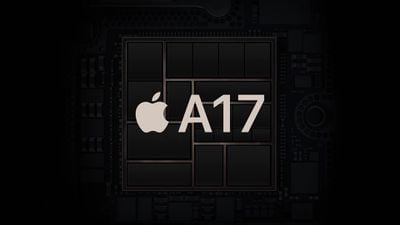
The A17 Bionic chip initially used in the iPhone 15 Pro and iPhone 15 Pro Max later this year will fundamentally differ from a version of the same chip set to be manufactured in 2024, a new rumor claims.
A17 Feature Dark
The A17 Bionic is expected to be Apple's first chip manufactured with a 3nm fabrication process, resulting in major performance and efficiency improvements over the 5nm technique used for the A14, A15, and A16 chips. The initial version of the A17 Bionic chip will reportedly be manufactured using TSMC's N3B process, but Apple is planning to switch the A17 over to N3E sometime next year. The move is said to be a cost-cutting measure that could come at the expense of reduced efficiency.

N3B is TSMC's original ‌3nm‌ node created in partnership with Apple. N3E, on the other hand, is the simpler, more accessible node that most other TSMC clients will use. N3E has fewer EUV layers and lower transistor density than N3B, resulting in efficiency tradeoffs, but the process can provide better performance. N3B has also been ready for mass production for some time longer than N3E, but it has much lower yield.

N3B was effectively designed as a trial node and is not compatible with TSMC's successor processes including N3P, N3X, and N3S, meaning that Apple will need to redesign its future chips to take advantage of TSMC's advancements. Apple was originally believed to be planning to use the N3B for the A16 Bionic chip, but had to revert to N4 because it was not ready in time. It may be the case that Apple is using the N3B CPU and GPU core design originally designed for the A16 Bionic for the initial A17 chips, before switching to the original A17 designs with N3E later in 2024. This architecture will presumably be iterated on through TSMC's successor nodes for chips like the "A18" and "A19."

It seems highly unlikely that Apple would make such a drastic change to the A17 Bionic during the product cycle of the iPhone 15 Pro and iPhone 15 Pro Max, so the N3E version of the chip may instead be destined for next year's standard iPhone 16 and ‌iPhone 16‌ Plus models. The A15 Bionic chip in the iPhone 14 and iPhone 14 Plus is a higher binned variant with one additional GPU core than the A15 used in the iPhone 13 and iPhone 13 mini, so some cross-generational differences despite outwardly featuring the same chip would not be unheard of.

The rumor comes from a Weibo user who claims to be an integrated circuit expert with 25 years of experience working on Intel's Pentium processors. Earlier this year, they were first to claim that the iPhone 15 and iPhone 15 Pro's USB-C port and accompanying charging cables will feature a Lightning-like authenticator chip, potentially limiting their functionality with Apple-unapproved accessories — a rumor that went on to be corroborated by more established sources. They were also first to say that the standard iPhone 14 models would retain the A15 Bionic chip, with the A16 being exclusive to the iPhone 14 Pro models.

Related Roundup: iPhone 16
Related Forum: iPhone

Popular Stories

imac video apple feature

Apple Released Yet Another New Product Today

Friday March 20, 2026 2:39 pm PDT by
Apple has unveiled a whopping nine new products so far this March, including an iPhone 17e, iPad Air models with the M4 chip, MacBook Air models with the M5 chip, MacBook Pro models with M5 Pro and M5 Max chips, the all-new MacBook Neo, an updated Studio Display, a higher-end Studio Display XDR, AirPods Max 2, and now the Nike Powerbeats Pro 2. iPhone 17e features the same overall design as...
iPhone 18 Pro Deep Red Feature

iPhone 18 Pro Launching Later This Year With These 12 New Features

Wednesday March 18, 2026 7:39 am PDT by
While the iPhone 18 Pro and iPhone 18 Pro Max are not expected to launch for another six months or so, there are already plenty of rumors about the devices. It was initially reported that the iPhone 18 Pro models would have fully under-screen Face ID, with only a front camera visible in the top-left corner of the screen. However, the latest rumors indicate that only one Face ID component...
ios 26 4 pastel

iOS 26.4: Top 10 New Features Coming to Your iPhone

Friday March 20, 2026 2:44 pm PDT by
iOS 26.4 isn't the major update with new Siri features that we hoped for, but there are some useful quality of life improvements, and a little bit of fun with an AI playlist generator and new emoji characters. Playlist Playground - Apple Music has a Playlist Playground option that lets you generate playlists from text-based descriptions. You can include moods, feelings, activities, or...

Top Rated Comments

NT1440 Avatar
36 months ago
I love it. The very first response (SenttoSchool) lays out why N3B was never long for this world as TSMC is completely abandoning it after finding issues with yields. It’s the reason why TSMC introduced N3E in the first place.

Apple will likely be the ONLY high volume purchaser of N3B, so it makes no sense from either TSMC or Apple’s business plans to continue that fab process, it will die.

THAT is the reason for the switch. This being MR however, the hot takes about greed, Tim Cook, shareholders, etc have to take their moment.

TSMC is winding down N3B in the future, NOBODY will be able to use it.

For those interested in the topic:
https://fuse.wikichip.org/news/7375/tsmc-n3-and-challenges-ahead/

Attachment Image
Score: 33 Votes (Like | Disagree)
36 months ago
N3B node is not design-compatible with N3E. This means the design doesn't just "work" between the nodes. It'll need to be manually ported over, which is often very costly.

I don't think anyone ever claimed that Apple would be foolish enough to switch from N3B to N3E midway during the 15 cycle. That's nuts.

So it always made sense that Apple would be using N3B for A17. N3E is not ready for the iPhone launch in September. Lastly, it makes sense that Apple would switch to N3E, which is a cheaper node.

N3B is sort of made for Apple because Apple needs a 3nm node for iPhone 15 launch. N3E wasn't ready. N3E is really the mass market node that everyone else will use such as Qualcomm, AMD, Nvidia, etc.
Score: 30 Votes (Like | Disagree)
36 months ago
I don't know, but for a phone does it need even more performance over efficiency of battery? To me, efficiency at this level is more important than performance since the performance is already great.
Score: 25 Votes (Like | Disagree)
36 months ago
Ummmm "The rumor comes from a Weibo user ('https://weibo.com/u/1833340431') who claims to be an integrated circuit expert..." Hmmmm okayyyyy?
Score: 20 Votes (Like | Disagree)
JPack Avatar
36 months ago

Ummmm "The rumor comes from a Weibo user ('https://weibo.com/u/1833340431') who claims to be an integrated circuit expert..." Hmmmm okayyyyy?
He’s not a nobody. Remember last year when the rumor first came out about Apple sticking with A15 for regular iPhone 14? He shared that info first, even before Kuo.
Score: 15 Votes (Like | Disagree)
36 months ago
Both sides in one comment ;)

1. As if Apple isn't making huge profits on the iPhone and they need to cut costs.

2. So what? At this point, who's buying an iPhone for the latest chip? It's much more about the features of the newer phone. The chips are fast enough so I doubt anyone will notice a bit of an efficiency loss.
Score: 15 Votes (Like | Disagree)
Related Apple News: Opinion | Travel | Motoring | Mac | Culture