Apple and Google Leading the Way on eSIM Adoption
The number of eSIMs installed in devices will increase from 1.2 billion in 2021 to 3.4 billion in 2025, mostly thanks to Apple and Google devices, according to a study conducted by Juniper Research.
eSIMs are small modules embedded directly into devices that provide cellular connectivity by storing multiple network operator profiles, removing the need for a physical SIM card in an ejecting tray.
The adoption of eSIMs in devices is expected to increase 180 percent by 2025, with as much as 94 percent of global eSIM installations being driven by the consumer electronics sector. Other contributors include the industrial and public sectors.
Although widespread adoption is reliant on network operators, Apple and Google devices are highlighted as the most important drivers in the adoption of eSIM frameworks, accelerating the growth of the technology in the industrial and public sectors. The research paper urges device manufacturers to place more pressure on operators to support eSIM frameworks and accelerate market maturation.
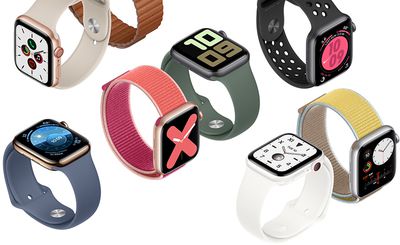
Apple has pioneered the commercialization of eSIM technology since the launch of the cellular Apple Watch Series 3. eSIM has since proliferated to the iPad Pro and iPhone in 2018.
The upcoming iOS 14.5 update is also expected to add support for dual 5G-band using the physical SIM as well as the eSIM chip. This functionality was previously only available in mainland China.
eSIM adoption by more carriers is likely to lead to the eventual removal of the SIM card tray on the iPhone and create more internal space, but as shown by the limited support for eSIM on cellular versions of the Apple Watch in some regions, there is still some way to go before the technology has truly widespread use.

Popular Stories
Last year, Apple launched CarPlay Ultra, the long-awaited next-generation version of its CarPlay software system for vehicles. Nearly nine months later, CarPlay Ultra is still limited to Aston Martin's latest luxury vehicles, but that should change fairly soon.
In May 2025, Apple said many other vehicle brands planned to offer CarPlay Ultra, including Hyundai, Kia, and Genesis.
In his Powe...
The calendar has turned to February, and a new report indicates that Apple's next product launch is "imminent," in the form of new MacBook Pro models.
"All signs point to an imminent launch of next-generation MacBook Pros that retain the current form factor but deliver faster chips," Bloomberg's Mark Gurman said on Sunday. "I'm told the new models — code-named J714 and J716 — are slated...
We are still waiting for the iOS 26.3 Release Candidate to come out, so the first iOS 26.4 beta is likely still at least a week or two away. Following beta testing, iOS 26.4 will likely be released to the general public in March or April.
Below, we have recapped known or rumored iOS 26.3 and iOS 26.4 features so far.
iOS 26.3
iPhone to Android Transfer Tool
iOS 26.3 makes it easier...
Apple is planning to launch new MacBook Pro models with M5 Pro and M5 Max chips alongside macOS 26.3, according to Bloomberg's Mark Gurman.
"Apple's faster MacBook Pros are planned for the macOS 26.3 release cycle," wrote Gurman, in his Power On newsletter today.
"I'm told the new models — code-named J714 and J716 — are slated for the macOS 26.3 software cycle, which runs from...
In 2022, Apple introduced a new Apple Home architecture that is "more reliable and efficient," and the deadline to upgrade and avoid issues is fast approaching.
In an email this week, Apple gave customers a final reminder to upgrade their Home app by February 10, 2026. Apple says users who do not upgrade may experience issues with accessories and automations, or lose access to their smart...