A12Z Bionic Chip in iPad Pro Allegedly a Renamed A12X With Extra GPU Core Enabled
Apple's new 2020 iPad Pro models are equipped with an A12Z Bionic processor that's remarkably similar to the A12X chip in the 2018 iPad Pro models, offering little in the way of performance improvements.
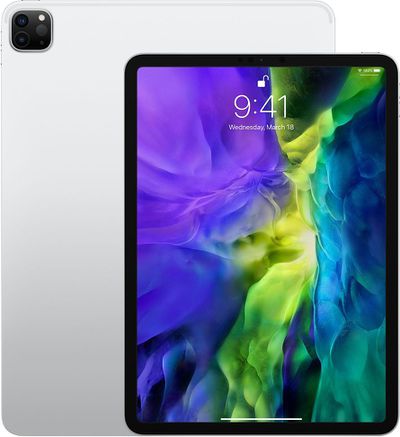
The A12Z does, however, feature an 8-core GPU while the A12X includes a 7-core GPU, which sets them apart, but new evidence shared by NotebookCheck suggests that the A12Z Bionic is simply a renamed A12X chip with a latent GPU core enabled.
According to NotebookCheck, teardown site TechInsights confirmed that the 2018 A12X chip physically has 8 GPU cores and not the 7 GPU cores that Apple includes in tech specs. One of the cores of the A12X is disabled.
The A12X and the A12Z appear to be the same physical chip on the surface, with the same number of physical CPU and GPU cores rather, suggesting the A12Z is not a new design. AnandTech has also speculated that the A12Z is a re-binned variant of the A12X.
There can be several speculative reasons as to why Apple chose to do this. It is not uncommon to see chip makers disabling physical cores and enabling them in higher SKUs. For instance, the NVIDIA Titan RTX has all 4,608 CUDA cores enabled while the RTX 2080 Ti offers only 4,352 cores despite both using the TU102 GPU.
The other likely explanation is that Apple's decision to disable one GPU core in the A12X could have been deliberate. Enabling the latent core in an interim refresh like the A12Z would save them from having to develop an A13X and instead, directly focus on the (5 nm?) A14X that is slated to debut with the 5G iPad Pro later this year.
In the future, TechInsights is planning to conduct a floorplan analysis to determine for certain whether there are any differences between the A12X and the A12Z in the new iPad Pro models.
NotebookCheck speculates that Apple is saving an updated chip design for future iPad Pro models, and there are indeed rumors of a second iPad Pro refresh this fall that could bring mini-LED displays and 5G connectivity.
Popular Stories
Last year, Apple launched CarPlay Ultra, the long-awaited next-generation version of its CarPlay software system for vehicles. Nearly nine months later, CarPlay Ultra is still limited to Aston Martin's latest luxury vehicles, but that should change fairly soon.
In May 2025, Apple said many other vehicle brands planned to offer CarPlay Ultra, including Hyundai, Kia, and Genesis.
In his Powe...
The calendar has turned to February, and a new report indicates that Apple's next product launch is "imminent," in the form of new MacBook Pro models.
"All signs point to an imminent launch of next-generation MacBook Pros that retain the current form factor but deliver faster chips," Bloomberg's Mark Gurman said on Sunday. "I'm told the new models — code-named J714 and J716 — are slated...
Apple is planning to launch new MacBook Pro models with M5 Pro and M5 Max chips alongside macOS 26.3, according to Bloomberg's Mark Gurman.
"Apple's faster MacBook Pros are planned for the macOS 26.3 release cycle," wrote Gurman, in his Power On newsletter today.
"I'm told the new models — code-named J714 and J716 — are slated for the macOS 26.3 software cycle, which runs from...
We are still waiting for the iOS 26.3 Release Candidate to come out, so the first iOS 26.4 beta is likely still at least a week or two away. Following beta testing, iOS 26.4 will likely be released to the general public in March or April.
Below, we have recapped known or rumored iOS 26.3 and iOS 26.4 features so far.
iOS 26.3
iPhone to Android Transfer Tool
iOS 26.3 makes it easier...
Apple recently updated its online store with a new ordering process for Macs, including the MacBook Air, MacBook Pro, iMac, Mac mini, Mac Studio, and Mac Pro.
There used to be a handful of standard configurations available for each Mac, but now you must configure a Mac entirely from scratch on a feature-by-feature basis. In other words, ordering a new Mac now works much like ordering an...