Apple Wanted to Use Qualcomm Chips for 2018 iPhones, But Qualcomm Wouldn't Sell Them - MacRumorsOpen MenuShow RoundupsShow Forums menuVisit ForumsOpen Sidebar
Skip to Content

Apple Wanted to Use Qualcomm Chips for 2018 iPhones, But Qualcomm Wouldn't Sell Them

As the FTC's antitrust trial against Qualcomm continues, Apple's chief operating officer, Jeff Williams, has taken the stand to share details on the terms of Apple's contracts with Qualcomm.

There's no live feed of the trial, but reporters including CNET's Shara Tibken and Florian Mueller of FOSS Patents are attending and sharing details on what Williams has to say.
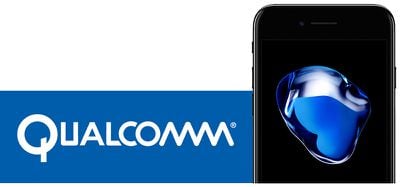
qualcomm iphone 7
Most interestingly, Williams says that Apple had wanted to use both Qualcomm and Intel chips in the iPhone XS, XS Max, and XR despite the ongoing legal battle between Apple and Qualcomm, but Qualcomm ultimately would not sell it the modems because of the fight.

"The strategy was to dual source in 2018 as well," said Williams. " "We were working toward doing that with Qualcomm, but in the end they would not support us or sell us chips."

Williams went on to explain that after Qualcomm CEO Steve Mollenkopf refused to sell Apple the chips, Apple had to contact Intel CEO Brian Krzanich to supply LTE chips for all of the 2018 iPhones. "We would have loved to continue to have access to Qualcomm's tech," said Williams.

Williams also detailed many of Apple's past interactions with Qualcomm. In 2011, when Apple negotiated a contract to use Qualcomm as a supplier for modems instead of Infineon because of Apple's need for CDMA-compatible chips, Qualcomm demanded a percentage of the iPhone's cost.

The two companies ultimately negotiated a rebate that brought the total royalty fee down to $7.50 per iPhone, though Apple had wanted to pay $1.50 per phone, equivalent to 5 percent of the value of the baseband chip, which was $30. Under the terms of that deal, though, Apple had to agree to a "marketing incentives agreement" to speak out against the WiMax standard that was popular at that time.

With the "marketing incentives agreement," rebates Apple received from Qualcomm would need to be reimbursed should Apple ship a device with a baseband chip from a Qualcomm competitor.

When it came time to renegotiate contracts in 2013, Qualcomm wanted to increase the $7.50 fee by an additional $8–$10, which would have cost Apple upwards of a billion dollars in annual licensing costs. To lower that fee, Qualcomm wanted exclusivity, which Apple accepted because it needed Qualcomm's chips.

Apple accepted the deal, which also prevented the company from challenging the fairness of Qualcomm's royalty rates or inducing others to challenge Qualcomm's licensing terms, which is the position Apple has been stuck in for several years.

Apple was finally able to diversify with the launch of the iPhone 7, the first iPhone to use chips from both Qualcomm and Intel, and it challenged Qualcomm's licensing terms in January 2017 with the launch of the initial Apple v. Qualcomm lawsuit.

Apple and many other Qualcomm partners are involved in Qualcomm's legal battle with the FTC, with the FTC suggesting that Qualcomm has been using anticompetitive tactics to remain the main supplier for baseband processors for smartphones.

The FTC v. Qualcomm trial will be continuing through most of January, so we are likely to hear additional details about Qualcomm and Apple's business practices.

Popular Stories

imac video apple feature

Apple Released Yet Another New Product Today

Friday March 20, 2026 2:39 pm PDT by
Apple has unveiled a whopping nine new products so far this March, including an iPhone 17e, iPad Air models with the M4 chip, MacBook Air models with the M5 chip, MacBook Pro models with M5 Pro and M5 Max chips, the all-new MacBook Neo, an updated Studio Display, a higher-end Studio Display XDR, AirPods Max 2, and now the Nike Powerbeats Pro 2. iPhone 17e features the same overall design as...
iPhone 18 Pro Deep Red Feature

iPhone 18 Pro Launching Later This Year With These 12 New Features

Wednesday March 18, 2026 7:39 am PDT by
While the iPhone 18 Pro and iPhone 18 Pro Max are not expected to launch for another six months or so, there are already plenty of rumors about the devices. It was initially reported that the iPhone 18 Pro models would have fully under-screen Face ID, with only a front camera visible in the top-left corner of the screen. However, the latest rumors indicate that only one Face ID component...
ios 26 4 pastel

iOS 26.4: Top 10 New Features Coming to Your iPhone

Friday March 20, 2026 2:44 pm PDT by
iOS 26.4 isn't the major update with new Siri features that we hoped for, but there are some useful quality of life improvements, and a little bit of fun with an AI playlist generator and new emoji characters. Playlist Playground - Apple Music has a Playlist Playground option that lets you generate playlists from text-based descriptions. You can include moods, feelings, activities, or...

Top Rated Comments

Numbah One Avatar
94 months ago
Why would they be in trouble? They're under no obligation to sell to anyone that's the beauty of a free market.
If a company has a standard-essential patent, they have to grant licenses on fair, reasonable, and non-discriminatory (FRAND) terms. The FTC and other companies are arguing that Qualcomm would not do it. I expect the outcome of this trial would affect all of the other lawsuits swirling around.
Score: 36 Votes (Like | Disagree)
ftaok Avatar
94 months ago
Apple don't want to pay their asking prices. Why would they expect Qualcomm to sell them even more?
The issue is that QCOM's patents have been granted as SEP (standard-essential patent). Because the patent is included in an international standard that everyone has to follow, the patent holder must license the technology at a fair and reasonable rate (FRAND).

This was basically the same thing that Samsung tried to pull on Apple many years ago. QCOM is trying to charge users of the CDMA standard a royalty fee based on the entire cost of the device, as opposed to the cost of the component that actually uses the patent.

Some would argue that QCOM is abusing the fact that their patent is part of a standard and they are not making the patent available at FRAND rates. Some would argue the opposite.

I think Apple would be happy (as happy as a company would be paying a supplier Billions of dollars) if QCOM based the royalty on the cost of the chip $30 as opposed to the cost of the iPhone.
Score: 32 Votes (Like | Disagree)
keysofanxiety Avatar
94 months ago
Apple don't want to pay their asking prices. Why would they expect Qualcomm to sell them even more?
Do you know what an antitrust trial is for?
Score: 30 Votes (Like | Disagree)
94 months ago
If this is true - Qualcomm refusing - then it is in a lot of trouble.
iPhone suffers because of Apple is litigious.
iPhone is suffering in its modem ability how? All specs are beyond available spectra.
Score: 25 Votes (Like | Disagree)
Wanted797 Avatar
94 months ago
“Qualcomm wanted to up the $7.50 fee by another $8 to $10,“

What?

Edit: Its been pointed out this is some bad wording. MR might I suggest.

‘Qualcomm wanted to up the $7.50 fee by $8-$10’.
Score: 22 Votes (Like | Disagree)
94 months ago
If this is true - Qualcomm refusing - then it is in a lot of trouble.
Why would they be in trouble? They're under no obligation to sell to anyone that's the beauty of a free market.
Score: 18 Votes (Like | Disagree)
Related Apple News: Travel | News | South Africa | Iphone | Culture