

The Lumos Smart Bike Helmet, which got its start as a Kickstarter project back in 2015, is the first bike helmet to make its way to Apple retail stores.
Available from the online Apple Store and in retail locations in the United States and Europe as of today, the $180 Lumos Helmet has integrated LEDs to keep you safe when riding at night and built-in gesture controlled turn signals.
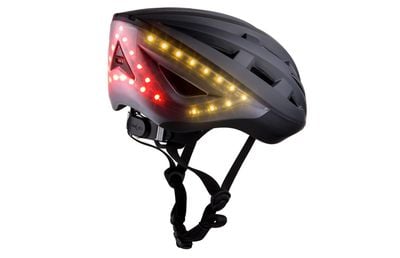
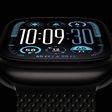
There are 10 white LEDs on the front, 16 red LEDs on the back, and 11 amber/red LEDs on each side that can serve as the aforementioned turn signals. You control the turn signals built into the helmet with a connected Apple Watch, with the helmet able to interpret your hand gestures to activate the lights on the helmet.
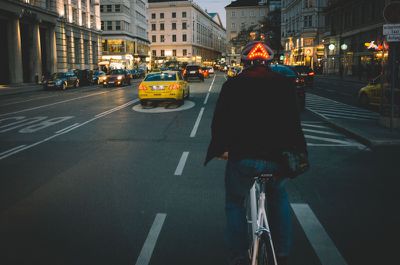
Previously, the helmet's built-in turn signals were controlled via a remote attached to the handlebars of a bike, but the new Apple Watch integration makes it simpler than ever to signal your intentions to drivers on the road.
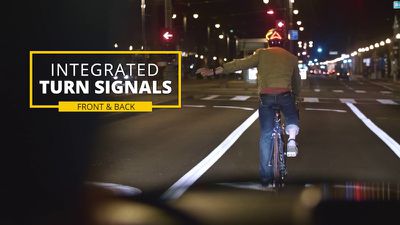
The Lumos Helmet also has a beta feature that's able to detect when you're braking hard on your bike, flashing the lights on the helmet to a bright red.
Through a Bluetooth connection to the iPhone, the Lumos Helmet records your bike riding activity and uploads it to the Apple Health or Strava app.
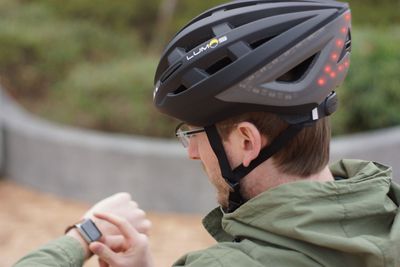
Design wise, the helmet is safety certified and meets gold standard safety certifications in the United States and Europe, and it has been created to be durable and weatherproof so it can be used in rain, snow, and fog. There's just a single size available, which can fit most adult head sizes in the range of 21.3 to 24.4 inches.
The Lumos Helmet can be purchased from the online Apple Store or through an Apple retail store for $179.95.
















Top Rated Comments
Ever see anyone go down without a helmet? Not a pretty sight.
I live I Denmark, properly the country in the world with most bikes per capita. We use out bikes for everything, especially in our big cities as cars is an inconvenience. We see a lot of bike related accidents, and those which wear a helmet generally get out in a better condition then those without.
The helmet is also effective in solo accidents were no other persons is involved. had a friend fall on the parking lot once, he broke his helmet, literally made a crack in it, that would have been his head otherwise...
So if you thinks it is safer to not wear a helmet, I wish that you will not go biking, both for your and your loved once sake
It does help prevent, and or, minimize head injuries.
Riding skills have nothing to do with mechanical problems, sudden animals, children running jumping into the road in front of you, getting knocked off because of some jerk driving too close/ drunk.
I'll keep my helmet on and and take that extra margin of safety.
Good luck with being a vegetable.
You mean as opposed to knee pads and wrist protectors for rollerblading? or knee pads for volleyball? Or the gazillions of protective products for football, baseball, hockey, or any other sport? Heck, they make protective knee pads for gardeners...does that make it a horribly dangerous thing to do (fear of snakes aside)?
While the article you link to makes some level of clinical sense, you miss the whole point of the product above, which is to add turn and reflective signals to a helmet, where they are highly visible. Regardless of how you feel about helmets or how you feel about biking in general, having those turn signals on a helmet seems like a more logical solution than having them, say, tattooed directly on your scalp.
Personally, I smell a ton of cow manure in that article. Like the idea of riders without helmets being appearing more vulnerable. Sorry, but if you're going to drive like a hosebag and run a rider off the road, you're not going to care whether the rider's noggin is covered.
[doublepost=1525191181][/doublepost]In all honesty the cost of this thing isn't much more than a reasonably high-end helmet. I can easily shop for a regular helmet at that price (not that I'd want to). So either way if you get in a crash you're out some bucks. The same could be said for buying a bike.