

Late last month Apple revealed it had partnered with hearing aid company Cochlear to launch the first Made For iPhone Cochlear implant, which can stream audio from an iOS device directly to a surgically embedded sound processor.
Now, in a new Wired article titled "How Apple is Putting Voices in Users' Heads – Literally", the company has offered up a few more details on how it was able to achieve the technical feat of transmitting high bandwidth data to such a low-powered device.
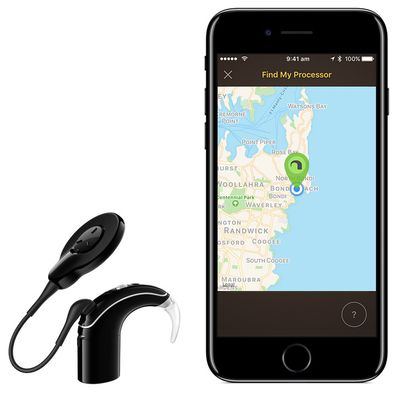
To solve the problem of streaming high-quality audio without draining the tiny zinc batteries in hearing aids, Apple's accessibility team essentially had to create a more advanced version of the existing Bluetooth Low Energy profile.
Bluetooth LE is only meant to be used to send low-bandwidth data signals, like getting heart rate monitor readings from wearables, so Apple developed a more advanced version called Bluetooth Low Energy Audio (BLEA), which can stream high quality audio whilst preserving the LE profile's battery-extending properties.
Apple has had BLEA in the works for some time, and the profile appeared in patents dating back to 2014, but this is the first time Apple has spoken about using the profile in an actual consumer product.
Sarah Herrlinger, Apple's director of global accessibility policy, summarized the company's efforts with the following comments:
While our devices have been built to support hearing aids for years, we found that the experience of people trying to make a phone call was not always a good one. So we brought together a lot of people in different areas around the company to start investigating ways to make the process easier.
Our goal was to get rid of all those extra things that need batteries and can get in the way, so when a phone call comes in you just hit the button to answer it and that sound is streaming into your hearing aid.
The technical detail about the Bluetooth profile is revealed in the context of the story of implant wearer Mathias Bahnmueller, a 49-year-old who suffers from hearing loss and uses the system developed by Apple and Cochlear. Called the Nucleus 7 sound processor, the device won FDA approval in June and is the first of its kind in the hearing aid industry.
The extended article is certainly worth a read, and Tim Cook has already shared the piece on Twitter, saying he is proud of the work Apple is doing in this area.









Top Rated Comments
There is a much smaller version of my hearing aid, with exactly the same features, but I'd only get perhaps 2 days on a set of batteries. Using BTLE instead of normal Bluetooth might mean I can get the life I'm getting now out of the smaller aids, or perhaps close to 2 weeks with my current aids.
I think the greater good here though, is to eliminate the Zinc Air batteries completely. There are rechargeable hearing aids already but the battery life vs. size is a huge concern, they are quite a bit larger than a Zinc Air aid with similar battery life. Zinc Air batteries have an enormous energy potential because they're catalytic, they draw air through pores and use the reaction to create electricity. So, they need to only hold the catalyst and fuel, not the reactant (the air). Most batteries are self-contained with all components internal. This chart shows how much more energy a Zinc Air battery has by weight or by volume, vs LiIon:
But, Zinc Air has drawbacks. It's a disposable battery of course so there's the cost of constant replacement, and the waste of discarded shells. If the power needs can be reduced enough, then hearing aids could be made the same size or smaller than mine, with rechargeable batteries that will last at least a couple of days and still have all the MFi features.
I'm sure by the time I'm due for replacements (every 4 years under insurance) the BTLE will be in many of the MFi aids, and hopefully they'll be rechargeable.
I would never use a cochlear implant since they cost an arm and a leg, requiring intense speech therapy all over again and a re-adjustment phase. I'm old school and liked the analog hearing aids better due to the rich sonorous sound uncompressed. The digital one I have is pretty good but the way you listen to music with it sounds different than analog. Most of the music had dropped bass on certain parts of the track that didn't sound normal, so I had to get my audiologist to remove the compression so that it sounds better with my open-air Sennheiser headphones with standard headphone jack ( one reason why I'm not a fan of the Air Pod design ).
If I wanted to make a video call on Skype, for example, I have to use a special headset that sits next to my hearing aid tethered with a 3.5 jack wire to the phone or iPad. That way the headset uses t-coil mode, blocking the entire background in total silence while I can only hear the person or the music. That headset has no need to be recharged.
I'm aware of a bluetooth hearing aid that Apple partnered up with another company that uses the iPhone to control it, but I'm skeptical about the idea behind it. If the phone gets lost, the person is not going to be able to manipulate the hearing aid's control settings.
And lastly, cochlear implants are a big issue with the deaf community as many refuse to touch it, preferring to stay with hearing aids or none. I don't use sign language but the majority of those I've met are extremely fluent with it.
- this is a cochlear implant, not a hearing aid
- most hearing aids still have replaceable batteries (last for a week~)