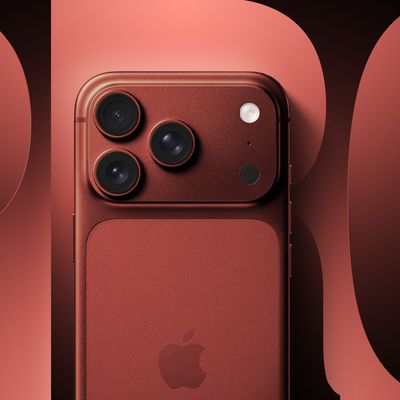
Apple's ramping up of "iPhone 8" component production is causing some electronics manufacturers to scramble for parts, particularly DRAM chips and NAND memory chips, ahead of the expected September launch of the three 2017 iPhones. The companies are said to be "paying a premium" to sign longer-term contracts as well as placing component orders ahead of time to prevent low inventories from disappearing completely amid Apple's supply chain dominance.

One of the manufacturers looking to make sure it doesn't run out of parts is LG Electronics, which said it has decided on an earlier procurement strategy for gathering components "to ensure a stable supply." NAND chip maker SK Hynix also told Reuters that its supply conditions were "tight" and that its inventory levels "were at an all-time low," with no clear indication in sight when they would rise to normal again.
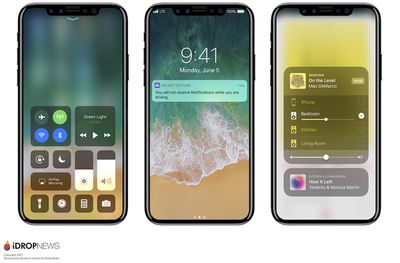
iphone 8 renders ios 11

iPhone 8 renders combined with iOS 11 via iDrop News

Analysts believe that the NAND memory chip market will be particularly affected, given Apple's move in recent years to bump up storage on the smartphone. The current shortage is said to have been making waves through various smartphone device suppliers beginning in the first half of 2017.

Some analysts say device makers could be forced to cut down on the amount of DRAM chips, which help devices perform multiple tasks at once, or NAND chips that are used for long-term data storage, on new products if the cannot get enough chips.

"The problem will be more acute for the NAND market, where the iPhone remains a critical source of demand given the huge sales volumes and recent moves to increase storage capacity on the device," said the source, who declined to be identified as he was not authorized to speak publicly on the matter.

"Heavyweight" NAND suppliers, like Samsung, are said to be in the clear in regards to the predicted component shortage, but in the worst case scenario it has already hit smartphone maker Huawei in China. Customers in the country have raised criticisms at the company after it used a collection of "less advanced and powerful chips" in its flagship smartphone, the P10, resulting in drastic performance variations among users.

In total, Apple is said to purchase 18 percent of the world's supply of NAND memory chips and that number will only increase if Apple decides to ship more iPhones than usual, or further bump up the storage tiers on the 2017 iPhone models. A rumored premium price tag on the iPhone 8 suggests that Apple might be planning to introduce a storage capacity above the iPhone 7's top-tier option of 256GB, but reports still vary, with TrendForce believing the device will come in 64GB and 256GB only.

In separate supply chain reports this week made by DigiTimes, smaller Apple component suppliers have begun ramping up manufacturing for parts believed to be coming to iPhone 8, iPhone 7s, and iPhone 7s Plus. Metal-alloy chassis maker Catcher Technology is gearing up production for the 2017 iPhone 7s' aluminum metal casing -- stainless steel is reportedly coming only to iPhone 8 -- as well as its glass back covers.

Similarly, Lite-On Semiconductor is said to have entered the supply chain for the three new 2017 iPhones by becoming a provider of glass passivated package bridge rectifiers "for the support of fast wireless charging."

Analysts believe Apple could ship as many as 100 million iPhone 8 devices this year, and that "meaningful new supply" for NAND and DRAM chips won't arrive in the supply chain until 2018.

Related Forum: iPhone

Top Rated Comments

BJMRamage Avatar
113 months ago
wasn't this the same story last year for the last iPhone?
Score: 1 Votes (Like | Disagree)
69Mustang Avatar
113 months ago
Does anyone know why can't the big players such as Apple, LG, Sony, Huawei build their own NAND memory manufactories? This would ensure they had a steady supply of such important component for their products, plus they could become suppliers as well. The strain on the NAND memory supply chain has been going on for a couple of years now, and it will only get worse as more players enter the smartphone race, and as smartphones come with higher memory capacities.

This would make total sense.
They can build their own factories. It just doesn't make financial sense. The cost of building, maintaining, and upgrading a factory far outweighs the cost associated with buying components. Manufacturing typically subsists on high volume, low margins, and multiple customers. Unless Apple, LG, Sony, etc. plan on getting into the NAND business as suppliers, there's really no value in setting up a manufacturing concern just to serve their individual needs. Besides, the market will correct itself to the new volumes quickly enough. The shortage is temporary.
Score: 1 Votes (Like | Disagree)

Popular Stories

iOS 26

iOS 26.3 and iOS 26.4 Will Add These New Features to Your iPhone

Tuesday February 3, 2026 7:47 am PST by
We are still waiting for the iOS 26.3 Release Candidate to come out, so the first iOS 26.4 beta is likely still at least a week or two away. Following beta testing, iOS 26.4 will likely be released to the general public in March or April. Below, we have recapped known or rumored iOS 26.3 and iOS 26.4 features so far. iOS 26.3 iPhone to Android Transfer Tool iOS 26.3 makes it easier...
Apple Logo Black

Apple's Next Launch is 'Imminent'

Sunday February 1, 2026 12:31 pm PST by
The calendar has turned to February, and a new report indicates that Apple's next product launch is "imminent," in the form of new MacBook Pro models. "All signs point to an imminent launch of next-generation MacBook Pros that retain the current form factor but deliver faster chips," Bloomberg's Mark Gurman said on Sunday. "I'm told the new models — code-named J714 and J716 — are slated...
iOS 26 Home Feature

Apple Gives Final Warning to Home App Users

Tuesday February 3, 2026 8:55 am PST by
In 2022, Apple introduced a new Apple Home architecture that is "more reliable and efficient," and the deadline to upgrade and avoid issues is fast approaching. In an email this week, Apple gave customers a final reminder to upgrade their Home app by February 10, 2026. Apple says users who do not upgrade may experience issues with accessories and automations, or lose access to their smart...
Aston Martin CarPlay Ultra Screen

Apple's CarPlay Ultra to Expand to These Vehicle Brands Later This Year

Sunday February 1, 2026 10:08 am PST by
Last year, Apple launched CarPlay Ultra, the long-awaited next-generation version of its CarPlay software system for vehicles. Nearly nine months later, CarPlay Ultra is still limited to Aston Martin's latest luxury vehicles, but that should change fairly soon. In May 2025, Apple said many other vehicle brands planned to offer CarPlay Ultra, including Hyundai, Kia, and Genesis. In his Powe...
imac video apple feature

Apple Makes Its Second-Biggest Acquisition Ever

Tuesday February 3, 2026 12:45 pm PST by
Apple recently acquired Israeli startup Q.ai for close to $2 billion, according to Financial Times sources. That would make this Apple's second-biggest acquisition ever, after it paid $3 billion for the popular headphone maker Beats in 2014. This is also the largest known Apple acquisition since the company purchased Intel's smartphone modem business and patents for $1 billion in 2019....