

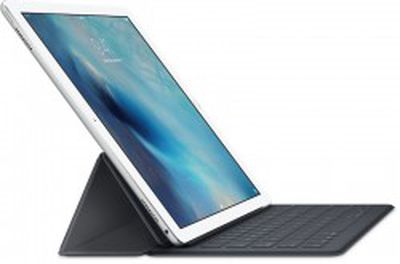
 Microsoft will require an Office 365 subscription to use Office apps on an iPad Pro, reports Ars Technica. The reason is that the tablet's 12.9-inch screen size exceeds Microsoft's 10.1-inch threshold for free access to viewing and editing features.
Comparatively, the Office suite of apps on the iPad Air and iPad mini allow viewing and editing documents for free, since their screen sizes are 9.7" and 7.9" respectively. iPhones also have access to viewing and editing features at no cost.
The Office apps on the current iPads offer both viewing and editing documents for free. A handful of features require Office 365 subscriptions, available as in-app purchases, but the core editing capabilities are all zero cost.
Install those same apps on the iPad Pro once it arrives in November, however, and all those editing features will go away. Office on the iPad Pro will require an Office 365 subscription for any and all editing.
Office 365 Home costs $99.99 per year, or $9.99 per month, and includes access to Word, Excel, PowerPoint, OneNote, Outlook, Publisher and Access on 5 PCs or Macs, 5 tablets and 5 smartphones. Up to five subscribers also get 1 TB of OneDrive cloud storage and 60 Skype minutes of calling per month to mobile phones and landlines.
Office 365 Personal is also available for $69.99 per year, or $6.99 per month, and includes access to Word, Excel, PowerPoint, OneNote, Outlook, Publisher and Access on 1 PC or Mac, 1 tablet and 1 smartphone. One subscriber also gets 1 TB of OneDrive cloud storage and 60 Skype minutes of calling per month to mobile phones and landlines.
iPad Pro launches in November starting at $799 in the United States.


















Top Rated Comments
This is a significant reason for developing near-speed-of-light travel.
I could use Apple's free apps that do the same thing, and read and write MS formatted documents just fine. No thanks, Microsoft.
The average Mac user doesn't need MS's bloatware? Speak for yourself. If that would really be the case, why are Microsoft Office for Mac and Windows (which is then used in either "Boot Camp", VMware Fusion or Parallels Dekstop) selling like crazy? The answer is awfully simple: Even the average Mac users very obviously NEEDS Microsoft's products.
Malware injected via Macros. If a product can be in any way programmed or scripted, that risk goes with the territory. And if it's a product that is used by hundreds of millions of people on the planet, that risk naturally is exponentially higher than someone writing a, let's say, Mac-compatible Python script that will potentially harm your machine in some way. After all, Macs do come with a pre-installed Python interpreter, and Python is a full blown programming language that's not only loved by sys-admins.
People using a 12" iPad Pro have most certainly a choice other than MS Office? Theoretically, yes. In the real world, the target audience for the 12" iPad Pro -- which will most likely be BUSINESS USERS -- will not be satisfied with a second or third class office suite but will be needing the real thing that all of their peers are using.
The very simple reason why everybody still buys Microsoft Office instead of using ANY of the alternatives is that the Microsoft office suite is the best product on the market when it comes to business use. With Microsoft Office, it's not just about the client applications like Word, Excel, Powerpoint, Visio, Access or Outlook -- it's about the back-end as well. Sharepoint and Exchange are the real killer applications, and the client apps integrate perfectly into those server applications. Try working on a globally distributed team WITHOUT Microsoft's products and then try it WITH their products. Everything else - from Google's over Apple's solutions to whatever else you might find on the market just pales in comparison.
I understand where your attitude comes from - I've been there myself. For 25 years now - even as part of my daily job - I've been constantly evaluating alternatives to all (expensive) commercial software products on the market. In some cases, alternatives are there and are being used where it makes sense. But the fact remains that Microsoft just OWNS certain niches like Active Directory (which alone is a killer application without ANY serious competition), Groupware like Sharepoint and Exchange, Terminal Servers, Office suites and business-grade multi-platform communication software like Skype.
Hate Microsoft, love them, don't care about them -- it doesn't matter because when you work in and with professional IT, there is no way around them.