Apple Regains Top Spot in China's Smartphone Market

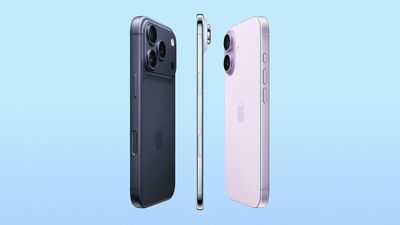
Apple reclaimed the leading position in China's smartphone market in the fourth quarter of 2025 as strong demand for the iPhone 17 lineup offset a contracting market and growing supply-chain pressure from memory chip shortages.
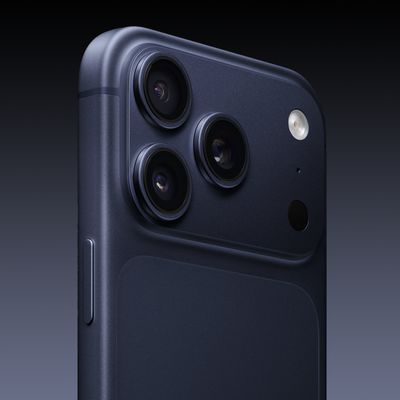
better iphone 17 lineup
New data from Counterpoint Research shows that smartphone shipments in China declined 1.6% year over year in the fourth quarter of 2025 and fell 0.6% for the full year, reflecting weaker consumer demand driven primarily by rising prices linked to escalating memory costs. Within that environment, Apple's performance diverged sharply from the market as a whole. Counterpoint said Apple's shipments in China rose 28% year over year during the holiday quarter, allowing the company to rank first in the market with a 22% share in the fourth quarter.

The improvement marks a notable reversal from earlier in 2025, when Apple trailed domestic competitors in China. According to Counterpoint, the change was driven by strong demand for the ‌iPhone 17‌ lineup, which accounted for roughly 20% of Apple's shipments in China during the quarter. The firm noted demand was particularly concentrated among the Pro models. Counterpoint added that Apple benefited from an accelerated supply ramp up late in the year, enabling it to meet holiday demand more effectively than some rivals that were constrained by component availability.

The notable exception within Apple's lineup was the iPhone Air. Counterpoint said the model captured only a low single-digit share of Apple's China shipments following its debut. This is attributed to a slower start due to the device's later launch compared with other regions and to perceived trade-offs between its ultra-thin design and overall feature set.

For the full year, Apple did not lead the Chinese market, but it narrowed the gap with domestic competitors. Counterpoint said Huawei ranked first in China for 2025 with a 16.4% market share, followed closely by Apple and vivo at around 16% each. Xiaomi and Oppo trailed slightly behind at roughly 15% each.

According to IDC's Worldwide Quarterly Mobile Phone Tracker, global smartphone shipments reached 1.26 billion units in 2025, up 1.9% year over year. Globally, Apple remained the largest smartphone vendor in 2025, shipping 247.8 million iPhones for a 19.7% market share. Apple's shipments grew 6.3% year over year. Samsung ranked second with 241.2 million units shipped and a 19.1% share, while Xiaomi placed third with 165.3 million units and a 13.1% share, despite a year-over-year decline.

Popular Stories

Aston Martin CarPlay Ultra Screen

Apple's CarPlay Ultra to Expand to These Vehicle Brands Later This Year

Sunday February 1, 2026 10:08 am PST by
Last year, Apple launched CarPlay Ultra, the long-awaited next-generation version of its CarPlay software system for vehicles. Nearly nine months later, CarPlay Ultra is still limited to Aston Martin's latest luxury vehicles, but that should change fairly soon. In May 2025, Apple said many other vehicle brands planned to offer CarPlay Ultra, including Hyundai, Kia, and Genesis. In his Powe...
Apple Logo Black

Apple's Next Launch is 'Imminent'

Sunday February 1, 2026 12:31 pm PST by
The calendar has turned to February, and a new report indicates that Apple's next product launch is "imminent," in the form of new MacBook Pro models. "All signs point to an imminent launch of next-generation MacBook Pros that retain the current form factor but deliver faster chips," Bloomberg's Mark Gurman said on Sunday. "I'm told the new models — code-named J714 and J716 — are slated...
Apple MacBook Pro M4 hero

New MacBook Pros Reportedly Launching Alongside macOS 26.3

Sunday February 1, 2026 5:42 am PST by
Apple is planning to launch new MacBook Pro models with M5 Pro and M5 Max chips alongside macOS 26.3, according to Bloomberg's Mark Gurman. "Apple's faster MacBook Pros are planned for the macOS 26.3 release cycle," wrote Gurman, in his Power On newsletter today. "I'm told the new models — code-named J714 and J716 — are slated for the macOS 26.3 software cycle, which runs from...
iOS 26

iOS 26.3 and iOS 26.4 Will Add These New Features to Your iPhone

Tuesday February 3, 2026 7:47 am PST by
We are still waiting for the iOS 26.3 Release Candidate to come out, so the first iOS 26.4 beta is likely still at least a week or two away. Following beta testing, iOS 26.4 will likely be released to the general public in March or April. Below, we have recapped known or rumored iOS 26.3 and iOS 26.4 features so far. iOS 26.3 iPhone to Android Transfer Tool iOS 26.3 makes it easier...
14 inch MacBook Pro Keyboard

Apple Changes How You Order a Mac

Saturday January 31, 2026 10:51 am PST by
Apple recently updated its online store with a new ordering process for Macs, including the MacBook Air, MacBook Pro, iMac, Mac mini, Mac Studio, and Mac Pro. There used to be a handful of standard configurations available for each Mac, but now you must configure a Mac entirely from scratch on a feature-by-feature basis. In other words, ordering a new Mac now works much like ordering an...

Top Rated Comments

zarmanto Avatar
2 weeks ago

1 in 5 phones in China are Apple. 4 in 5 are not.
You may have misread the statistics. The article cited the top five phone vendors and their respective market shares -- but those five vendors make up less than 80% of the total. Apple's 16% is more like slightly less than 1 in 6 phones.

Why are we celebrating?
Are we? I thought we were just making interesting observations.
Score: 9 Votes (Like | Disagree)
justanotherdave Avatar
2 weeks ago

The words "accomplishment" and "dominate" are doing some heavy lifting there. They went from 15.4% market share to 16.7%. I don't see any metrics breaking out flagships, but no one really dominates in China. There are too many brands. OPPO, Huawei, vivo, Xiaomi, and HONOR are all huge there. I was listening to the Vergecast this morning and they were saying there are over 100 car brands in China. Can anyone really dominate with that kind of fragmentation?
I’ve posted this before, but Counterpoint also produces charts of phone sales by selling price.

This is for phones over $600, well below the ASP for iPhones. When Counterpoint used higher selling prices, the iPhone had an even larger market share.

Apple does, in fact, completely dominate the flagship market.


Attachment Image

Attachment Image
Score: 5 Votes (Like | Disagree)
I7guy Avatar
2 weeks ago

This success doesn't silence longstanding concerns about innovation stagnation in Apple's R&D! Critics, including analysts like Daniel Newman (Futurum Group) around the iPhone 17 launch, have pointed to incremental upgrades—thinner designs like the underperforming iPhone Air, minor camera tweaks, and no major breakthroughs—as evidence Apple has been "playing it safe" rather than pushing boundaries, especially in AI where competitors have moved faster and now we are going to be forced to use google so they can spy on everything we do on our phones..
What long standing concerns?
Score: 3 Votes (Like | Disagree)
HouseLannister Avatar
2 weeks ago

"Is the smartphone industry stagnating?"
Yes.

And that's not a bad thing.

It's a mature platform. It doesn't need a big year-over-year improvement. People shouldn't be buying new phones every year anyway. We don't need breakthroughs. We just need to accept the boredom and realize that a gadget doesn't need to impress us. Apple puts on a good presentation and tries to build the FOMO, but it's all just marketing. If it doesn't get your blood pumping, that's not a problem with the industry.

Also, none of this has to do with the phone's popularity in China.
Score: 3 Votes (Like | Disagree)
Abazigal Avatar
2 weeks ago

1 in 5 phones in China are Apple. 4 in 5 are not. Why are we celebrating?
To me, it's less of celebrating, and more a reaffirmation that Apple has managed to carve out a very profitable niche for itself, and that it's not going anywhere.

For as long as I can remember, Apple was constantly being positioned as 1 flop away from implosion. iOS is too closed, the hardware too expensive, developers would abandon the App Store due to its smaller market share, the list of doomsday predictions went on.

But what these critics didn't seem to realise that 16% or 20% or whatever minority share Apple commands still works out to an impressive number of iPhones sold in an absolute sense. What more when iPhones are as profitable as they are, and when Apple has numerous ways of monetising their user base after the sales of the initial device. This is in contrast to android phones, where 30% of an app purchase goes to Google, not the smartphone OEM. Making this an extremely unprofitable endeavour for all but a few smartphone brands who probably are still not that profitable either way.

But they would have you believe that profitless market share is somehow better, or more sustainable, and that Apple's business model is "wrong". Perhaps the real moral of the story here is that you don't run a successful business by giving your customers everything they want (especially if what they are clamouring for are lower prices and more "specs").

Somehow, the myriad of supposed limitations and drawbacks just don't seem to matter to Apple's billion strong install base worldwide. ?
Score: 2 Votes (Like | Disagree)
justanotherdave Avatar
2 weeks ago

Not in China. You know, the topic of this article.

I don't even know what I am looking at with your charts. You are talking about US dollars, not Yuan (¥), and posting a 2-year-old image of 2022 and 2023 market share without saying whose market. China? US? Global?
They absolutely dominate in China. Unless you want to show me any vendor in
China with an ASP even remotely close to Apple.

Not really sure why you’re having a hard time understanding this. It’s been common knowledge for years Apple owns the flagship market. ASP and revenues prove this.
Score: 2 Votes (Like | Disagree)