Meta this week sent out an email (via The Verge) to Meta Ray-Ban customers informing them about upcoming privacy changes to the smart glasses, which will increase the amount of data that Meta is collecting by default.
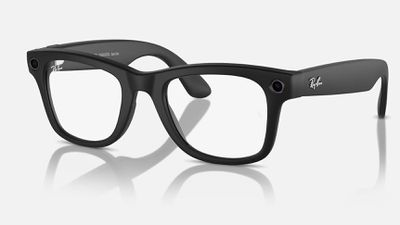
Meta says that voice recordings are stored by default when using Meta AI, and used to improve Meta products. Meta has eliminated the option to disable voice recording storage, and recordings need to be manually deleted in settings. Further, the "camera use" setting for Meta AI is now enabled by default.
From Meta's email:
- Meta AI with camera use is always enabled on your glasses unless you turn off "Hey Meta."
- Recordings of your voice are stored by default when using Meta AI and may be used to improve AI at Meta and other Meta products. The option to disable voice recordings storage is no longer available, but you can delete recordings anytime in Settings.
- You're still in control. You can turn off "Hey Meta" or delete Meta AI interactions anytime.
Photos and videos taken with the built-in camera are stored on a connected smartphone and are not used by Meta for training, unless those photos are used by a Meta product. If a photo or video is used with Meta AI, or if cloud processing is turned on and media is sent to Meta's servers, it can be used to improving Meta's services. Of course, uploading images and video to Instagram and other Meta apps also gives Meta the exact same access.
So if you say "Hey Meta, record a video," by default Meta records the voice command and stores the recording and an audio transcript of it, a feature that is now turned on by default and can't be turned off. If cloud processing is also on, or if you ask Meta AI a question about the video, Meta can access and use the video for AI training purposes.
Turning off Meta AI entirely on the Ray-Ban glasses and using manual controls for snapping photos and videos is the best method to ensure that Meta isn't collecting excessive data. More information is available in Meta's privacy policy.