FTC 'Click to Cancel' Rule Aims to Make Canceling Subscriptions Easier
The Federal Trade Commission (FTC) has announced a final "click to cancel" rule that aims to simplify the process of ending subscriptions and memberships for US consumers.
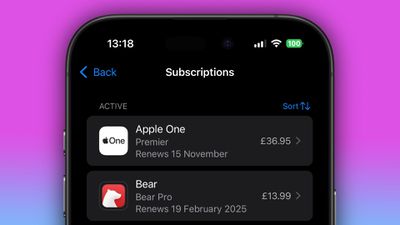
The new rule will require businesses to make cancellation processes as straightforward as sign-up procedures, and companies will be prohibited from forcing customers to use chatbots or speak with agents to cancel subscriptions that were originally initiated online or through an app. For memberships started in person, businesses must offer cancellation options by phone or online.
In a statement accompanying the Commission's press release, FTC Chair Lina M. Khan said: "Too often, businesses make people jump through endless hoops just to cancel a subscription. The FTC's rule will end these tricks and traps, saving Americans time and money. Nobody should be stuck paying for a service they no longer want."
The rule will apply to almost all negative option programs across all media. It also requires sellers to provide clear information before obtaining billing details and to secure informed consent for negative option features prior to charging customers.
The move follows a significant increase in consumer complaints about subscription practices, according to the FTC. In 2024, the government agency received an average of nearly 70 complaints per day related to negative option and recurring subscription issues, up from 42 per day in 2021.
The Commission voted 3-2 to approve the final rule, with two Republican commissioners opposing it. Some initially proposed measures were dropped, including requirements for businesses to send annual reminders about recurring charges. The new regulation is set to take effect 180 days after publication in the Federal Register.
The regulation is part of the FTC's efforts to modernize its 1973 Negative Option Rule and address unfair practices, and follows recent legal actions against major companies like Amazon and Adobe over their subscription practices.
Popular Stories
Last year, Apple launched CarPlay Ultra, the long-awaited next-generation version of its CarPlay software system for vehicles. Nearly nine months later, CarPlay Ultra is still limited to Aston Martin's latest luxury vehicles, but that should change fairly soon.
In May 2025, Apple said many other vehicle brands planned to offer CarPlay Ultra, including Hyundai, Kia, and Genesis.
In his Powe...
Apple today confirmed to Reuters that it has acquired Q.ai, an Israeli startup that is working on artificial intelligence technology for audio.
Apple paid close to $2 billion for Q.ai, according to sources cited by the Financial Times. That would make this Apple's second-biggest acquisition ever, after it paid $3 billion for the popular headphone and audio brand Beats in 2014.
Q.ai has...
The calendar has turned to February, and a new report indicates that Apple's next product launch is "imminent," in the form of new MacBook Pro models.
"All signs point to an imminent launch of next-generation MacBook Pros that retain the current form factor but deliver faster chips," Bloomberg's Mark Gurman said on Sunday. "I'm told the new models — code-named J714 and J716 — are slated...
Apple recently updated its online store with a new ordering process for Macs, including the MacBook Air, MacBook Pro, iMac, Mac mini, Mac Studio, and Mac Pro.
There used to be a handful of standard configurations available for each Mac, but now you must configure a Mac entirely from scratch on a feature-by-feature basis. In other words, ordering a new Mac now works much like ordering an...
Apple is planning to launch new MacBook Pro models with M5 Pro and M5 Max chips alongside macOS 26.3, according to Bloomberg's Mark Gurman.
"Apple's faster MacBook Pros are planned for the macOS 26.3 release cycle," wrote Gurman, in his Power On newsletter today.
"I'm told the new models — code-named J714 and J716 — are slated for the macOS 26.3 software cycle, which runs from...