Why Apple Didn't Need FDA Approval for the Blood Oxygen Tracking Feature in the Apple Watch Series 6

Prior to releasing ECG functionality in the Apple Watch Series 4, Apple needed FDA approval for the feature, but the same isn't true of Blood Oxygen monitoring in the Apple Watch Series 6 because Apple doesn't see it as a medical feature.
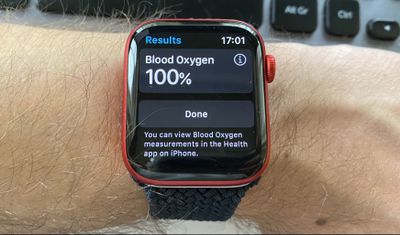
1blood oxygen app
As outlined by The Verge, pulse oximeters like the blood oxygen tracking feature in the Apple Watch are considered Class II Medical devices and documentation is generally required, but there's a way around that. If a pulse oximeter is marketed as being for general wellness or fun rather than for a medical purpose, FDA documentation is not required.

That's the reason why the blood oxygen tracking feature is not being marketed by Apple as a medical feature, and an Apple Support document clearly states that measurements taken using blood oxygen tracking are "not intended for medical use" and are designed for "general fitness and wellness purposes."

The Apple Watch Series 6 Blood Oxygen app provides no insight into blood oxygen readings, nor does it send alerts when a lower than normal blood oxygen level is detected, because that would be a medical feature.

Apple is prohibited from using the blood oxygen tracking feature from impacting the medical care that someone receives, which is a deviation from how the ECG functionality works. ECG readings from the watch are used to alert users of an abnormal heart rhythm (atrial fibrillation) and thus required greater oversight. Apple was required to provide the FDA with data proving that the feature can detect atrial fibrillation, which could be examined by experts.

Avoiding regulatory approval in the United States and in other countries permitted Apple to launch the blood oxygen feature in more than 100 countries. ECG availability is still limited because it requires medical approval in each country it launches in.
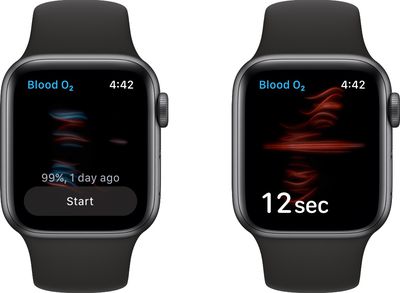
bloodoxygenprocess
Michael Matheny, co-director of the Center for Improving the Public's Health through Informatics at Vanderbilt University, told The Verge that when he went to find data on how well the pulse oximeter in the Apple Watch works, there wasn't much out there. "It was concerning to me," he said.

It's also potentially confusing to customers because Apple's marketing is sometimes unclear. "Patients and consumers don't really understand the difference," said Matheny. "So they'll start using the device and relying on the information."

There have been multiple reports from Apple Watch Series 6 owners suggesting the blood oxygen tracking feature isn't particularly accurate when compared to a finger worn pulse oximeter, with successive readings that can be all over the place.

We here at MacRumors have also noticed problems with unusual readings that don't seem to be right and that are suggestive of breathing problems when there are none, which is potentially problematic and could lead to panic over nothing. The feature can also be hard to use, requiring little arm movement with results potentially impacted by cold weather, tattoos, and other factors. Some users have no problem, though, and all Apple Watch Series 6 owners should remember that blood oxygen tracking isn't a medical feature and should not be relied on as a measurement of health, even if it may have some utility as an alert in an emergency situation.
Related Roundup: Apple Watch 11
Buyer's Guide: Apple Watch (Buy Now)

Popular Stories

iOS 26

iOS 26.4 and iOS 27 Features Revealed in New Leak

Friday December 12, 2025 10:56 am PST by
Macworld's Filipe Espósito today revealed a handful of features that Apple is allegedly planning for iOS 26.4, iOS 27, and even iOS 28. The report said the features are referenced within the code for a leaked internal build of iOS 26 that is not meant to be seen by the public. However, it appears that Espósito and/or his sources managed to gain access to it, providing us with a sneak peek...
apple beta 26 lineup

Apple Leak Confirms Work on Foldable iPhone, AirTag 2, and Dozens More Devices

Monday December 15, 2025 2:05 pm PST by
Last week, details about unreleased Apple devices and future iOS features were shared by Macworld. This week, we learned where the information came from, plus we have more findings from the leak. As it turns out, an Apple prototype device running an early build of iOS 26 was sold, and the person who bought it shared the software. The OS has a version number of 23A5234w, and the first...
Apple Logo Top Half

Early iOS 26 Software Leak Uncovers Dozens of Upcoming Apple Features

Monday December 15, 2025 3:05 pm PST by
Software from an iPhone prototype running an early build of iOS 26 leaked last week, giving us a glimpse at future Apple devices and iOS features. We recapped device codenames in our prior article, and now we have a list of some of the most notable feature flags that were found in the software code. In some cases, it's obvious what the feature flags are referring to, while some are more...
Apple Foldable Thumb

Leak Reveals Foldable iPhone Details

Monday December 15, 2025 9:09 am PST by
The first foldable iPhone will feature a series of design and hardware firsts for Apple, according to details shared by the Weibo leaker known as Digital Chat Station. According to a new post, via machine translation, Apple is developing what the leaker describes as a "wide foldable" device, a term used to refer to a horizontally oriented, book-style foldable with a large internal display....
iOS 26

Apple Releases iOS 26.2 With Alarms for Reminders, Lock Screen Changes, Enhanced Safety Alerts and More

Friday December 12, 2025 10:10 am PST by
Apple today released iOS 26.2, the second major update to the iOS 26 operating system that came out in September, iOS 26.2 comes a little over a month after iOS 26.1 launched. ‌iOS 26‌.2 is compatible with the ‌iPhone‌ 11 series and later, as well as the second-generation ‌iPhone‌ SE. The new software can be downloaded on eligible iPhones over-the-air by going to Settings >...
iOS 26

iOS 26.2 Coming Soon With These 8 New Features on Your iPhone

Thursday December 11, 2025 8:49 am PST by
Apple seeded the second iOS 26.2 Release Candidate to developers earlier this week, meaning the update will be released to the general public very soon. Apple confirmed iOS 26.2 would be released in December, but it did not provide a specific date. We expect the update to be released by early next week. iOS 26.2 includes a handful of new features and changes on the iPhone, such as a new...
iOS 26

iOS 26.3 Beta 1 Features: What's New So Far

Monday December 15, 2025 4:23 pm PST by
Apple is testing iOS 26.3, the next version of iOS 26 that will launch around January. Since iOS 26.3's testing is happening over the holidays, it is a smaller update with fewer features than we've seen in prior betas. We've rounded up what's new so far, and we'll add to our list with subsequent betas if we come across any other features. Transfer to Android Apple is making it simpler...
airpods max 2024 colors

AirPods Max 2 Likely to Offer These 10 New Features

Monday December 15, 2025 7:41 am PST by
Apple released the AirPods Max on December 15, 2020, meaning the over-ear headphones launched five years ago today. While the AirPods Max were updated with a USB-C port and new color options last year, followed by support for lossless audio and ultra-low latency audio this year, the headphones lack some of the features that have been introduced for newer generations of the regular AirPods and the ...

Top Rated Comments

terraphantm Avatar
68 months ago

The ECG app doesn't diagnose heart attacks, per all the warnings that show up when you start using it. But the health apps, and the information they provide, are a good way to keep track of your personal "normal" and get a warning if something begins to go haywire.
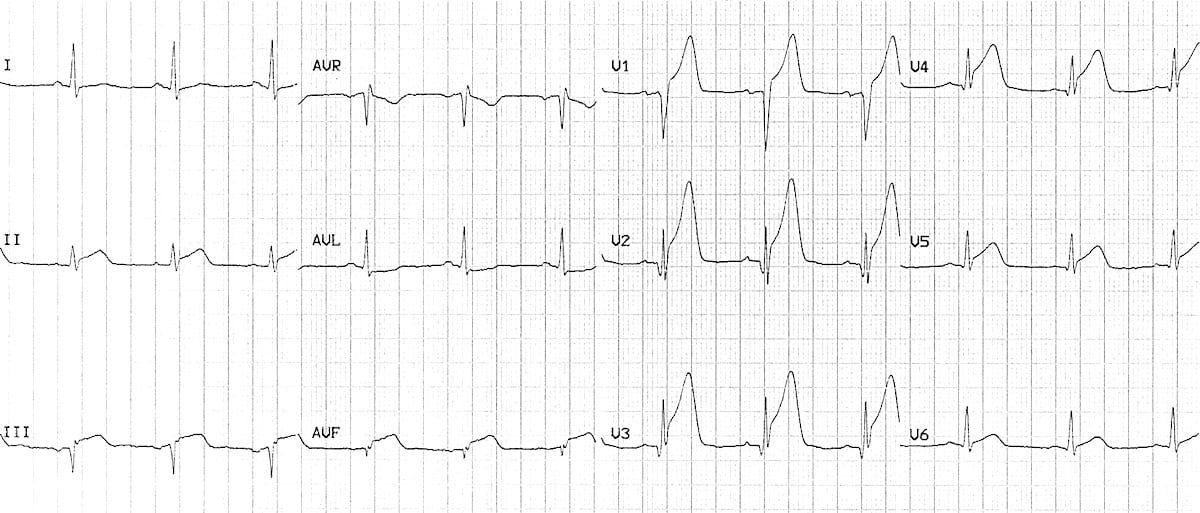
The ECG physically can't diagnose heart attacks because you're not getting a full picture. Take a look at this 12-lead of a STEMI


This guy is having an anterior and probably inferior STEMI based on leads V1-V5 as well is II/III/AVF. But lead I, which is equivalent to the lead your Apple watch checks, is pretty much normal. The Apple watch would have totally missed it, which is why they warn you every time that it cannot diagnose a heart attack.

It is useful for detecting afib, since that shows up in all leads. And it could probably also be useful for detecting things like heart block or QT prolongation and various other arrhythmias, but Apple decided to focus on afib.
Score: 14 Votes (Like | Disagree)
Apple_Robert Avatar
68 months ago
Apple was smart to do this. Maybe down the line they will see FDA approval.

I compared my watch pulse ox to a medical fda proved device yesterday, and each time, there was only a 1% differential between the watch and the device.
Score: 14 Votes (Like | Disagree)
randolorian Avatar
68 months ago
The worst part of reading an article about Apple Watch is being subjected to the unflattering close-up photos of peoples' hairy arms. ;-).
Score: 12 Votes (Like | Disagree)
derTeHa Avatar
68 months ago
Prior to releasing ECG functionality in the Apple Watch Series 5
ECG was available since Apple Watch Series 4.
Score: 12 Votes (Like | Disagree)
JRobinsonJr Avatar
68 months ago
It doesn't have to be 100% accurate, but absolutely should/must be consistent. Doesn't matter what my 'normal' is as long as I can trust the deviation number. Sounds like the Watch version is neither accurate NOR consistent. So... why bother?
Score: 10 Votes (Like | Disagree)
Killbill2 Avatar
68 months ago
Mine has been accurate, 1% variability plus it tracks at intervals through out the day without me walking around with a big ass hunk of electronics on my finger tip. I used my Masimo ($200-$300) not a $20 amazon meter, the watch seems to be very stable when using manual measures. I'd have to leave the Masimo on and pull the data from both to do a comparison on the auto measurements... but I'm feeling lazy maybe another day I'll do that another day.

Attachment Image
Score: 9 Votes (Like | Disagree)