Qualcomm Wants Apple to Pay $31 Million in Damages in Patent Battle

Qualcomm today told a San Diego jury that it wants Apple to pay $31 million in damages for patent infringement violations, which is allegedly equivalent to $1.40 per infringing iPhone.

The new information comes from CNET, which has been covering the Qualcomm vs. Apple patent trial that's in court this week.
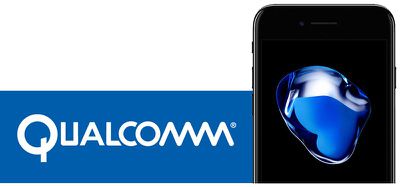
qualcomm iphone 7
$1.40 per ‌iPhone‌ and a total of $31 million in damages suggests that Qualcomm believes only 22 million iPhones are infringing on its technology. Qualcomm came up with that total with the help of economist Patrick Kennedy, who took the stand as an expert witness for Qualcomm today. Kennedy calculated the figure based on iPhones sold from July 2017 on that used chips by Intel. Apple started using a mix of chips from both Intel and Qualcomm in the ‌iPhone‌ 7, and later transitioned to all Intel chips due to the legal troubles with Qualcomm.

Qualcomm and Apple are fighting over three patents that Qualcomm says Apple infringed on with its iPhones. As CNET describes, one of the patents covers a method for allowing a smartphone to quickly connect to the internet once turned on, while another covers graphics processing and battery life. The third patent Apple is accused of violating allows apps to download data more easily by directing traffic between the apps processor and modem.

Apple just last quarter earned more than $20 billion in profit, so $31 million in damages wouldn't be a hit to the company's bottom line. If Qualcomm wins the trial, though, its claim that its technology is at the "heart of every ‌iPhone‌" would be more credible.

Apple and Qualcomm have been fighting since January 2017, when Apple sued Qualcomm for $1 billion in unpaid royalty fees. Qualcomm countersued, and since then, the two companies have levied multiple lawsuits against one another. Two of Qualcomm's lawsuits have resulted in import bans in Germany and China, both of which Apple was able to skirt with hardware and software updates.

The current patent trial between Apple and Qualcomm will last through next week.

Popular Stories

iOS 26

iOS 26.4 and iOS 27 Features Revealed in New Leak

Friday December 12, 2025 10:56 am PST by
Macworld's Filipe Espósito today revealed a handful of features that Apple is allegedly planning for iOS 26.4, iOS 27, and even iOS 28. The report said the features are referenced within the code for a leaked internal build of iOS 26 that is not meant to be seen by the public. However, it appears that Espósito and/or his sources managed to gain access to it, providing us with a sneak peek...
Apple Foldable Thumb

Leak Reveals Foldable iPhone Details

Monday December 15, 2025 9:09 am PST by
The first foldable iPhone will feature a series of design and hardware firsts for Apple, according to details shared by the Weibo leaker known as Digital Chat Station. According to a new post, via machine translation, Apple is developing what the leaker describes as a "wide foldable" device, a term used to refer to a horizontally oriented, book-style foldable with a large internal display....
iOS 26

Apple Releases iOS 26.2 With Alarms for Reminders, Lock Screen Changes, Enhanced Safety Alerts and More

Friday December 12, 2025 10:10 am PST by
Apple today released iOS 26.2, the second major update to the iOS 26 operating system that came out in September, iOS 26.2 comes a little over a month after iOS 26.1 launched. ‌iOS 26‌.2 is compatible with the ‌iPhone‌ 11 series and later, as well as the second-generation ‌iPhone‌ SE. The new software can be downloaded on eligible iPhones over-the-air by going to Settings >...
iOS 26

iOS 26.2 Coming Soon With These 8 New Features on Your iPhone

Thursday December 11, 2025 8:49 am PST by
Apple seeded the second iOS 26.2 Release Candidate to developers earlier this week, meaning the update will be released to the general public very soon. Apple confirmed iOS 26.2 would be released in December, but it did not provide a specific date. We expect the update to be released by early next week. iOS 26.2 includes a handful of new features and changes on the iPhone, such as a new...
macOS Tahoe 26 Thumb

Apple Releases macOS Tahoe 26.2 With Edge Light

Friday December 12, 2025 10:08 am PST by
Apple today released macOS Tahoe 26.2, the second major update to the macOS Tahoe operating system that came out in September. macOS Tahoe 26.2 comes five weeks after Apple released macOS Tahoe 26.1. Mac users can download the macOS Tahoe update by using the Software Update section of System Settings. macOS Tahoe 26.2 includes Edge Light, a feature that illuminates your face with soft...
apple beta 26 lineup

Apple Leak Confirms Work on Foldable iPhone, AirTag 2, and Dozens More Devices

Monday December 15, 2025 2:05 pm PST by
Last week, details about unreleased Apple devices and future iOS features were shared by Macworld. This week, we learned where the information came from, plus we have more findings from the leak. As it turns out, an Apple prototype device running an early build of iOS 26 was sold, and the person who bought it shared the software. The OS has a version number of 23A5234w, and the first...
AirPods Pro Firmware Feature

Apple Releases New Firmware for AirPods Pro 2 and AirPods Pro 3

Thursday December 11, 2025 11:28 am PST by
Apple today released new firmware designed for the AirPods Pro 3 and the prior-generation AirPods Pro 2. The AirPods Pro 3 firmware is 8B30, up from 8B25, while the AirPods Pro 2 firmware is 8B28, up from 8B21. There's no word on what's include in the updated firmware, but the AirPods Pro 2 and AirPods Pro 3 are getting expanded support for Live Translation in the European Union in iOS...
airpods max 2024 colors

AirPods Max 2 Likely to Offer These 10 New Features

Monday December 15, 2025 7:41 am PST by
Apple released the AirPods Max on December 15, 2020, meaning the over-ear headphones launched five years ago today. While the AirPods Max were updated with a USB-C port and new color options last year, followed by support for lossless audio and ultra-low latency audio this year, the headphones lack some of the features that have been introduced for newer generations of the regular AirPods and the ...

Top Rated Comments

EBone12355 Avatar
88 months ago
Oh Qualcomm, you're really setting yourself up for disaster. Do you know why Apple is opening a tech campus here in San Diego with 1,200+ employees? It's so they can poach your best and brightest away from you.
Score: 9 Votes (Like | Disagree)
AngerDanger Avatar
88 months ago
I like to imagine the collective sigh of MacRumors' writers whenever more news of patent litigation comes in. Then they all gather around and draw straws to see who has to type it up.


Did… did I just write and animate MacRumors fan fiction? :eek:

And, yes, that's Tim Hardwick, @earthTOmitchel, and @jclo all on @Joe Rossignol's body. I got lazy.

Attachment Image
Score: 8 Votes (Like | Disagree)
Crowbot Avatar
88 months ago
I would say PAY and move on. Indeed lawyers are probably more expensive. These court actions will go at the expense of going forward.
I'd be inclined to pay too. But it would create legal precedents. That's all Apple would be worried about.
Score: 5 Votes (Like | Disagree)
5105973 Avatar
88 months ago
You guys are missing the big picture here in all of this. A few have tried to point it out, the 31 million is nothing, yes, we all know that. It’s what it means for them if they roll over on this and accept that. Sets a precedent for the rest of their ongoing battles going forward with Qualcomm
Nobody missed it. That got pointed out in several posts already.
Score: 4 Votes (Like | Disagree)
Carnegie Avatar
88 months ago
Doesn't make sense to me. If Apple used Intel chips, and it's the chips that violate the patent, then shouldn't they be suing Intel?
Intel could, existing contractual commitments to Intel aside, sue Intel for infringement. In theory it could also sue users of infringing iPhones. If the iPhones infringe the patents in question, and no license has been granted (to, e.g., Intel or Apple), then users of those iPhones are infringing those patents as well. Qualcomm, of course, isn't going to sue iPhone users.

But Qualcomm doesn't want to sue Intel either because, among other reasons, it wants to be able to collect royalties based on the value of end devices rather than, e.g., on the value of chips. A reasonable royalty rate applied to the value of chips would net Qualcomm far less than it's been forcing device makers to pay. It's desperately trying to cling to a model that no longer makes sense and which, likely, is already effectively lost.

Here's the long and short of the business model Qualcomm has been trying to hold onto. There was a time when it perhaps made sense to base cellular technology licensing on the value of the devices which used it. The cellular technology is what those devices were. There wasn't much else noteworthy to them. They were pieces of plastic with buttons, crude displays, microphones, speakers, etcetera - mostly basic stuff that had been around forever. Cell phones were, fundamentally, the cellular technology inside of them. There wasn't much else interesting or useful about them, and the other aspects of them were there to make use of the cellular technology.

That changed over time, but fairly quickly after - and in part due to - the iPhone. The smartphone consumed the cellular technology which it made use of. The cellular technology became just one aspect of what a modern phone was. There were now many other interesting - and technologically advanced - parts to a phone. Hoping to cash in on the increased value and role of smartphones, and seeking to prevent the loss of the revenue which had rightfully for a time come from the proliferation of basic cell phones, some industry participants - to include Qualcomm - tried hard to hold onto the device-level royalty base model which had made sense before but which now really didn't. Simply put, modems were now just parts of phones rather than, meaningfully, what phones were.

Those industry participants used a number of tactics to try to hold onto the outdated model. Things moved so quickly that existing contracts served the purpose to some extent. But Qualcomm at least did a number of other things (which have been discussed at length elsewhere) to force industry participants to continue to agree to the outdated model. At the same time, some industry participants likely went along happily. Those making inexpensive smartphones benefited from the model, as did the cellular licensors - at least those like Qualcomm with the leverage needed to impose higher (actual as opposed to published) royalty rates. But continuing with the outdated model wasn't the choice of some industry participants. They went along because they had to.

Being able to extend the model a little longer, Qualcomm could then point and say - look, this is industry standard practice (at least when it came to the royalty base aspect). It was industry standard not because it still made sense, but because it once made sense with a very different class of products which - rather than being displaced by - quickly evolved into a new class of products. And it was industry standard in part because Qualcomm was in a position - thanks in part to its improper tactics - to unilaterally impose it.

Anyway... Qualcomm is suing Apple rather than Intel because it still wants to hold onto device-level royalty bases.
[doublepost=1552223927][/doublepost]
Aside from the scale and scope of the rocks that each company is throwing at each other is this: Apple is legendary for really putting the screws to its suppliers, often unfairly. That's what leverage will do. In this case, they don't have that kind of leverage.
In this case, it was a matter of Qualcomm putting the screws to an entire industry - and using illegal and contract-violative tactics to do so. Apple isn't the only industry participant that believes Qualcomm's behavior has been improper. And, of course, a number of regulatory bodies have concluded the same.

It was Qualcomm which had the leverage, and it wielded that leverage, arguably illegally, to great effect. Qualcomm's leverage has, for a number of reasons, been greatly reduced though. Now it's, e.g., Apple which has the leverage. That's what this suit is about. It's Qualcomm desperately seeking any bit of leverage it can find in hopes of eventually being able to negotiate slightly better terms.
[doublepost=1552224067][/doublepost]
What you just stated is the reason the FTC brought a suit against Qualcomm for anti-competitive practices. The reason these fees are being assessed against the Intel phones is because Qualcomm's policy has been that you can't license their patents unless you buy their hardware. Since Apple was still using Qualcomm's licensed technologies with phones that they weren't paying Qualcomm to put chips in, they feel entitled to extra money to offset the "loss" in profits by not being the chipset provider for those devices.

Legally speaking, the practice of tie-in purchases is monopolistic which is forbidden by anti-trust laws in the US. Hence the FTC's suit. I find it interesting, therefore, that they are so boldly asserting a right to EXTRA royalties on these Intel devices. To me, this is a flagrant admission of serious anti-competitive practices and I am starting to side more and more with Apple.
To be clear, the FTC and other parties allege the reverse: That Qualcomm wouldn't sell someone chips - to include chips it effectively had a monopoly on - unless they agreed to Qualcomm's licensing terms (and not just with regard to the chips they bought from Qualcomm).
[doublepost=1552224393][/doublepost]
For Pete's sake Apple, pay Qualcomm and get some decent modems back in your damn phones! It's a pittance for you and I'm paying $1000 per phone for a vastly inferior setup from Intel. My Verizon iPhone 6 with had better reception than my iPhone Xs. This is going to magnified when you move to 5G and Qualcomm is the international leader
That's cheap compared to losing customers due to inferior Intel radios.
It's unfortunate that, e.g., Intel was behind Qualcomm with regard to certain kinds of modems. But that was in part due to the illegal and/or contract-violative tactics Qualcomm had employed. Qualcomm was intentionally stifling competition. At some point, parties with the power to do so needed to step up and try to disrupt Qualcomm's stranglehold on the industry.

Apple, among others, did that. It meant taking some pain in the short-term. It was going to take a while to get certain Intel chips to be competitive with certain Qualcomm chips. But there was no way around that, other than to continue to let Qualcomm do what it had been doing - while the industry in general, and chip competition in particular, suffered. Going forward chip competition, and the industry in general, should benefit.

Also, as others have pointed out... Apple paying Qualcomm $31 million wouldn't resolve the broader dispute between Apple and Qualcomm. This case is just a bit of a sideshow. It was filed at the same time as an ITC action, and as part of Qualcomm's attempts to find some leverage against Apple when it comes to negotiating a resolution of the broader dispute. But of the two cases - this district court case and the ITC case - the ITC case was likely the more important. If Qualcomm could have somehow gotten an exclusion order from the ITC (which it could, in theory, still get), that might have mattered some. This district court case is more about getting a win that Qualcomm could publicly point to - see, Apple is infringing our patents. The money doesn't much matter.
Score: 4 Votes (Like | Disagree)
DocMultimedia Avatar
88 months ago
Seems tiny by Apple standards. Probably less than court fees for this endless case.
Score: 3 Votes (Like | Disagree)