Tony Fadell Talks Apple's Pre-iPhone Days of Failed Motorola Rokr and Touchscreen MacBook Prototype

Over the past few weeks, former Apple executives that originally led the team behind the iPhone's creation have been reminiscing about the time before the smartphone's debut, which will see its tenth birthday tomorrow, June 29. The latest interview has been posted by Wired, with "father of the iPod" Tony Fadell discussing the multiple prototypes of the original iPhone, Apple's attempt to create a touchscreen MacBook, the poorly received collaboration between Apple and Motorola in the Rokr, and more.

Addressing the "many different origin stories for the iPhone," Fadell pointed out that such stories were the result of Apple's multiple running projects and prototypes that it had for the iPhone. These included four big brands: "a large screen iPod" with a touch interface, an "iPod phone" that was about the size of an iPod mini and used a click wheel interface, the Motorola Rokr, and even an ongoing attempt to get a touchscreen onto a MacBook Pro to further prove the feasibility of the technology that would eventually end up in the iPhone, and never in a MacBook.
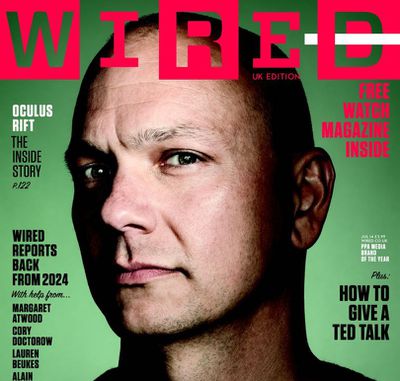
tony fadell wired

The touchscreen Macbook project was basically trying to get touchscreen technology into a Mac to try to compete with Microsoft tablets. Steve was pissed off, and wanted to show them how to do it right. Well, that might have been the project to show Microsoft how to do it right, but they quickly realised there was so much software and there were so many new apps needed, and that everything had to be changed that it was very difficult. Plus the multitouch itself, we didn't know we could scale it that large to a full-screen display. Those were the challenges over on Mac.

At the time before the launch of the iPhone, the iPod was Apple's most popular product, and Fadell remembered the company's yearly pressure to continue to grow the brand and entice customers "every holiday." Eventually, Apple's collaboration with Motorola was catalyzed by the company's concern over its users asking themselves, "Which one am I going to take, my iPod or my cell phone?" Apple didn't want to lose that argument, so it introduced the first iTunes support in a cell phone in 2005 with the Rokr, which Fadell said "was not deliberately made poor."

Limitations of the Rokr included a firmware restriction of 100 songs to be loaded at any one time on the cell phone, as well as a slow music transfer process from a computer in comparison to devices at the time specifically dedicated to music playback. Motorola eventually ditched iTunes in the Rokr line as Apple continued releasing iPods like the 2005 iPod nano and its ability to hold up to 1,000 songs, which Motorola saw as undercutting Rokr. Of course, rumors were also ramping up surrounding Apple's work on a phone of its own.

No, it was not deliberately made poor. Not at all. We tried our best. Motorola would only do so much with it. Their software team was only so good. Their operations system was only so good. And that experience just didn't work very well. It was a clash of all kinds of problems, it wasn't a case of trying to not make it good.

We were trying to do this because we didn't want cell phones to come eat our lunch, OK? The Motorola Rokr died much earlier than the arrival of the iPhone. This was us trying to dip our toe in the water, because we said, 'Let's not make a phone, but see how we can work with phones to see if we can have a limited number of songs on a phone'. So people could use iTunes and then they would want to move over to an iPod. It wasn't about making it less good because the iPhone was coming. This was well before the iPhone was even thought of.

The company's concerns during its iPod days even looked forward into current technology, particularly over storage capacities and the "celestial jukebox." Fadell said that Apple foresaw users no longer needing to be concerned with storage tiers and paying more for more space, because it "could see a time" when network speeds would ramp up alongside better technology and lead to streaming and downloading directly on a mobile device, like Apple Music and Spotify.

It was very clear, after the Rokr, and after everything we had learned in what it was going to take, that the worry was about the 'celestial jukebox' - people wouldn't have to buy large capacity iPods, 150GB or so, because they were soon going to be able to download. So we had an existential problem, people were not going to have to buy larger and larger iPods. The high-capacity iPods were where we were making all our money, and if they could download at any time - and we could see the time when the networks were going to get faster because of 3G - we were like 'oh my God, we're going to lose this business' to this music jukebox in the sky, which is basically what Spotify is.

In the rest of the interview, Fadell dives into the iPhone team's massive dissection of every possible mobile device at the time to scope out the competition, the remaining similarities between current generation iPhones and original iPods, and the ongoing legacy of 2007's first iPhone.

Fadell said that it changed his life, and "how my kids are growing up compared to how I and my wife grew up," but he hopes iPhone users remember to unplug every now and then: "...it requires all of us to make the proper changes in our lives to make sure we don't lose the analogue portion of our life and we don't just stay digital and mobile all the time."

Popular Stories

iOS 26

iOS 26.4 and iOS 27 Features Revealed in New Leak

Friday December 12, 2025 10:56 am PST by
Macworld's Filipe Espósito today revealed a handful of features that Apple is allegedly planning for iOS 26.4, iOS 27, and even iOS 28. The report said the features are referenced within the code for a leaked internal build of iOS 26 that is not meant to be seen by the public. However, it appears that Espósito and/or his sources managed to gain access to it, providing us with a sneak peek...
apple beta 26 lineup

Apple Leak Confirms Work on Foldable iPhone, AirTag 2, and Dozens More Devices

Monday December 15, 2025 2:05 pm PST by
Last week, details about unreleased Apple devices and future iOS features were shared by Macworld. This week, we learned where the information came from, plus we have more findings from the leak. As it turns out, an Apple prototype device running an early build of iOS 26 was sold, and the person who bought it shared the software. The OS has a version number of 23A5234w, and the first...
Apple Logo Top Half

Early iOS 26 Software Leak Uncovers Dozens of Upcoming Apple Features

Monday December 15, 2025 3:05 pm PST by
Software from an iPhone prototype running an early build of iOS 26 leaked last week, giving us a glimpse at future Apple devices and iOS features. We recapped device codenames in our prior article, and now we have a list of some of the most notable feature flags that were found in the software code. In some cases, it's obvious what the feature flags are referring to, while some are more...
Apple Foldable Thumb

Leak Reveals Foldable iPhone Details

Monday December 15, 2025 9:09 am PST by
The first foldable iPhone will feature a series of design and hardware firsts for Apple, according to details shared by the Weibo leaker known as Digital Chat Station. According to a new post, via machine translation, Apple is developing what the leaker describes as a "wide foldable" device, a term used to refer to a horizontally oriented, book-style foldable with a large internal display....
iOS 26

Apple Releases iOS 26.2 With Alarms for Reminders, Lock Screen Changes, Enhanced Safety Alerts and More

Friday December 12, 2025 10:10 am PST by
Apple today released iOS 26.2, the second major update to the iOS 26 operating system that came out in September, iOS 26.2 comes a little over a month after iOS 26.1 launched. ‌iOS 26‌.2 is compatible with the ‌iPhone‌ 11 series and later, as well as the second-generation ‌iPhone‌ SE. The new software can be downloaded on eligible iPhones over-the-air by going to Settings >...
iOS 26

iOS 26.2 Coming Soon With These 8 New Features on Your iPhone

Thursday December 11, 2025 8:49 am PST by
Apple seeded the second iOS 26.2 Release Candidate to developers earlier this week, meaning the update will be released to the general public very soon. Apple confirmed iOS 26.2 would be released in December, but it did not provide a specific date. We expect the update to be released by early next week. iOS 26.2 includes a handful of new features and changes on the iPhone, such as a new...
macOS Tahoe 26 Thumb

Apple Releases macOS Tahoe 26.2 With Edge Light

Friday December 12, 2025 10:08 am PST by
Apple today released macOS Tahoe 26.2, the second major update to the macOS Tahoe operating system that came out in September. macOS Tahoe 26.2 comes five weeks after Apple released macOS Tahoe 26.1. Mac users can download the macOS Tahoe update by using the Software Update section of System Settings. macOS Tahoe 26.2 includes Edge Light, a feature that illuminates your face with soft...
airpods max 2024 colors

AirPods Max 2 Likely to Offer These 10 New Features

Monday December 15, 2025 7:41 am PST by
Apple released the AirPods Max on December 15, 2020, meaning the over-ear headphones launched five years ago today. While the AirPods Max were updated with a USB-C port and new color options last year, followed by support for lossless audio and ultra-low latency audio this year, the headphones lack some of the features that have been introduced for newer generations of the regular AirPods and the ...

Top Rated Comments

jmgregory1 Avatar
111 months ago
"Plus the multitouch itself, we didn't know we could scale it that large to a full-screen display. "

Congrats to all, we are 10 years later now and I still hear that stoplap.
We have 13" overcapable iPads - limited by running a phone OS because a couple of grey veterans never took the challenge to make a dedicated OS for that category of "Pro" systems, that actually aren't that much Pro because of that bad decision - or lack of...
Isn't it time that the absolutist Kim Y. Phil revises his (No, we can't)- position, starts thinking out of the box, stops alienating the issue via the already redundant TouchBar, and now starts realizing a touch-Mac running MacOS with multitouch (yes it will have limitations, but that stems from earlier mental lamentation...)
I'm so bored by the lack of real courage by these overpaid conservatives...
Laptops and desktops with touchscreens are a bad idea, not because of technical limitations, but because it is a really bad user experience. I'm currently sitting at my desk, typing this response on a 21" iMac. My arms are comfortably at my side, with my forearms resting on the desk and my hands / fingers easily typing and moving the cursor as needed using the trackpad. If I had to incorporate screen touches into the process, it would not only slow down my work, as at least one hand and arm would need to be held up to the screen, supported only by muscles, doing things on-screen that are far more easily done on the trackpad or with the keyboard that is in the exact same plane as my arms and hands - not the vertical plane of the screen.

Other big negatives with a touch screen desktop or laptop are finger prints and the need to have the screens have resistance to your touch. I can't stand people touching my screens as they point to something on my desktop. It's one thing to take my iPhone or even iPad and rub my shirt sleeve across the screen to clean it, but on a 15" laptop or the 21" desktop screen, once you have fingerprints on it, it generally requires getting a cloth and water cleaning the whole thing.

And the resistance issue is something people don't often think about. On a laptop, there is an amount of resistance built in to the hinge, that keeps the screen held at a certain angle. But once you factor in touch to the equation, you need to add in additional resistance. But the way a hinge works, it takes very little effort to push at the top of the screen to get it to move. Too much resistance, and you can make the keyboard or base move with the screen.

And regardless of how much resistance is built into the hinge, you're forced to control the amount of effort in touching the screen, which isn't natural given the fact that your hands and arms have to be held free and unsupported in the air while touching the screen. It's one thing to write on a chalkboard / dry erase board, as the pressure you exert on the board is resisted by the board, providing a point of rest for your arm that you don't get when you have to be careful to not push a screen too far.

I think that the solution we'll all see in the coming years, is a two screen product, where the keyboard and trackpad will become is single screen meant to lay flat on you lap or desk, allowing for infinitely adjustable keyboards and track pad manipulation - while keeping your hands and arms supported and in the natural horizontal plane in front of you. The screen you look at will continue to be facing your eyes in the natural vertical plane in front of you.
Score: 13 Votes (Like | Disagree)
Chupa Chupa Avatar
111 months ago
Why is Tony Fadell everywhere all of a sudden? And is he really the authority on the iPhone? We already know he lied about Phil Schiller insisting that the iPhone have a physical keyboard. I don’t trust much of what he says.
Who else on the 10 year anniversary of the iPhone? Jobs has passed. Fadell is the "Podfather." Most of history is reinvented. Why would this be any different? Is Tony being 100% accurate? Probably not. But is Schiller? Guessing not. He loves a good spin. He makes unbelievable over-the-top statements every Apple Special Event. That is his job. Everyone at Apple, warranted or not, has ginormous egos. Recollections are going to "blur." So just sit back and believe what you want. We'll never know the true truth. But it makes a heck of an enjoyable tale. We'll at least if you don't let Hollywood make a movie of it because they just don't "get it" based on the Jobs movies.
Score: 12 Votes (Like | Disagree)
CasinoOwl Avatar
111 months ago
The iPod initiated the demise of the music industry.
I would say that Apple and iTunes helped save the music industry. Napster was happening with or without the iPod. The record labels were still being run by executives that barely understood email, much less mp3 music files. Apple came up with the iTunes Store with a reasonable price of 99¢ a track, and a way to carry the music with you. This brought a lot of people back to buying music rather than download files from the internet that were often fakes or bad quality. As an added bonus, Apple tech allowed musicians to create sellable music at home. Now, that was actually a blow to the music "industry" in that they lost some control over artists.
Score: 11 Votes (Like | Disagree)
loby Avatar
111 months ago
iPod....what a wonderful product. Still use mine even today even though I have an iphone...
Score: 10 Votes (Like | Disagree)
Bacillus Avatar
111 months ago
"Plus the multitouch itself, we didn't know we could scale it that large to a full-screen display. "

Congrats to all, we are 10 years later now and I still hear that stoplap.
We have 13" overcapable iPads - limited by running a phone OS because a couple of grey veterans never took the challenge to make a dedicated OS for that category of "Pro" systems, that actually aren't that much Pro because of that bad decision - or lack of...
Isn't it time that the absolutist Kim Y. Phil revises his (No, we can't)- position, starts thinking out of the box, stops alienating the issue via the already redundant TouchBar, and now starts realizing a touch-Mac running MacOS with multitouch (yes it will have limitations, but that stems from earlier mental lamentation...)
I'm so bored by the lack of real courage by these overpaid conservatives...
Score: 9 Votes (Like | Disagree)
Internet Enzyme Avatar
111 months ago
Interesting stories from an interesting man. Hearing anecdotes about Steve is always great.
Score: 7 Votes (Like | Disagree)